Finding the best mesh wifi system for a large home involves balancing coverage, speed, and ease of setup. The TP-Link Deco XE75 stands out as the overall top pick thanks to its extensive coverage and Wi-Fi 6E support. For those on a budget, the TP-Link Deco M5 offers solid performance at a lower price, though it lacks the latest Wi-Fi standards. If you need premium features like multi-gig wired ports and the newest Wi-Fi 7 tech, the TP-Link Deco 7 Pro BE63 is worth considering. The main tradeoffs involve choosing between maximum coverage, speed, ease of use, and overall cost. Continue reading for a detailed breakdown of each system and which might be best for your home.
Key Takeaways
- Wi-Fi 6E systems like the TP-Link Deco XE75 offer future-proof performance for large homes demanding high speeds.
- Wired backhaul support is a common feature in premium systems, improving reliability and speed in expansive spaces.
- Coverage area varies significantly, with some systems reaching over 8,000 sq. ft., making them suitable for sprawling properties.
- Ease of setup and app controls are consistent across most models, but advanced features often come with a steeper learning curve.
- Pricing varies widely; investing in higher-end models generally delivers better coverage and faster speeds, but budget options still provide decent performance.



More Details on Our Top Picks
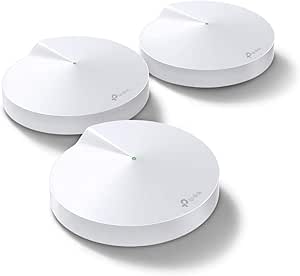
TP-Link Deco XE75 AXE5400 Tri-Band WiFi 6E Mesh System – Wi-Fi up to 7200 Sq.Ft, Engadget Rated Best Mesh for Most People, Replaces WiFi Router and Extender, AI-Driven Mesh New 6GHz Band, 3-Pack
This Deco XE75 stands out for its incorporation of WiFi 6E, offering the latest 6 GHz band to reduce interference and boost performance—compared to the Deco S4, which relies on older WiFi standards. Its true tri-band speeds reaching up to 5,400 Mbps ensure robust capacity for large households with many devices, making dead zones a thing of the past. The AI-driven mesh system intelligently adapts to your environment, providing seamless roaming and a stable connection across up to 7,200 sq.ft. However, this model involves a higher upfront cost and may be overkill for smaller, less device-intensive homes. The setup via the Deco app is straightforward, and security features like TP-Link HomeShield add peace of mind. Ideal for tech-savvy homeowners who want maximum future-proofing and coverage. Not ideal for users seeking a basic, budget-friendly WiFi solution or those with small homes.
Pros:- Supports WiFi 6E for less interference
- Unmatched coverage up to 7,200 sq.ft.
- AI-driven mesh for adaptive performance
- Advanced security features included
Cons:- Higher price point
- Overkill for small or average-sized homes
Verdict: This system is best for large, tech-forward households seeking top-tier future-proof coverage.Pros:- Supports WiFi 6E for less interference
- Coverage up to 7,200 sq.ft.
- AI-driven mesh adapts intelligently
Cons:- Relatively expensive compared to older models
- May be unnecessary for homes with fewer devices
Best for: Homeowners with large, multi-story homes needing the latest WiFi technology and extensive coverage.
Not ideal for: Small apartments or users on a tight budget who only need basic WiFi coverage.
- Coverage:7200 sq.ft.
- Speed:Up to 5400 Mbps
- Bands:Tri-Band (6 GHz, 5 GHz, 2.4 GHz)
- Ports:N/A (mesh nodes)
- Security:TP-Link HomeShield
- Mesh Type:AI-Driven Mesh
Bottom line: Ideal for large homes that demand cutting-edge WiFi 6E coverage and future-proof performance.
TP-Link Deco M5 Mesh WiFi System – Up to 5,500 sq. ft. Whole Home Coverage and 100+ Devices,WiFi Router/Extender Replacement, Anitivirus, 3-Pack
This Deco M5 offers excellent value, covering up to 5,500 sq.ft. with a 3-pack, making it a strong alternative to pricier systems like the Deco XE75. Its dual-band AC1900 speeds support over 100 devices, suitable for most large households, but it shares the 5 GHz band between clients and backhaul, which can limit maximum speed when wired backhaul isn’t used. Setup is effortless through the Deco app, and its robust security via TP-Link HomeCare adds value. Compared to the Deco S4, which is more basic, the M5 provides a better balance of performance and affordability, though it lacks WiFi 6E and some advanced features. Reliability and ease of use make this ideal for those who want solid coverage without breaking the bank. Best suited for users who prioritize coverage and security over the latest WiFi standards. Not ideal for users seeking WiFi 6E or premium wired backhaul options.
Pros:- Good coverage up to 5,500 sq.ft.
- Supports over 100 devices
- Easy setup and management via app
- Built-in antivirus and parental controls
Cons:- Shares 5 GHz band for backhaul and clients (not dedicated)
- No WiFi 6E support
Verdict: A budget-friendly choice for large homes needing reliable WiFi coverage and security.Pros:- Coverage up to 5,500 sq.ft.
- Supports 100+ devices
- Includes security and parental controls
Cons:- Shared 5 GHz for backhaul and clients
- Lacks WiFi 6E support
Best for: Large households seeking dependable coverage with built-in security at an affordable price.
Not ideal for: Homes requiring WiFi 6E or dedicated wired backhaul for maximum speed.
- Coverage:5500 sq.ft.
- Speed:Up to 1900 Mbps
- Bands:Dual-Band
- Ports:N/A (mesh nodes)
- Security:TP-Link HomeCare
- Device Support:100+
Bottom line: Best for budget-conscious users wanting dependable large-home coverage with security features.
TP-Link Deco 7 Pro BE63 Tri-Band WiFi 7 BE10000 Whole Home Mesh System – 6-Stream 10 Gbps, 4×2.5G Ports Wired Backhaul, 4X Smart Internal Antennas, VPN, HomeShield, Free Expert Support (3-Pack)
This Deco 7 Pro BE63 delivers WiFi 7’s cutting-edge features, including multi-link operation and 10 Gbps combined speeds across the three bands, supporting up to 7,600 sq.ft. and over 200 devices—ideal for demanding smart homes and high-speed activities. Its four 2.5G ports and wired backhaul options provide flexibility and ultra-fast wired connections, surpassing the capabilities of WiFi 6 systems like the Deco S4. The self-learning AI-rotation and VPN support add advanced security and future-proof features. However, the system’s high cost and complexity may be unnecessary for average users or small homes. Setup via the Deco app is straightforward, and comprehensive security with HomeShield offers peace of mind. Perfect for users who want the latest WiFi 7 technology and extensive wired options. Not ideal for users who need a simple, budget-friendly WiFi setup.
Pros:- WiFi 7 with speeds up to 10 Gbps
- Supports large homes up to 7,600 sq.ft.
- 4×2.5G ports for wired backhaul
- Supports 200+ devices
Cons:- Very high price
- More complex setup and management
Verdict: Best for tech enthusiasts and large, future-ready smart homes needing top-tier WiFi 7 features.Pros:- WiFi 7 with 10 Gbps speeds
- Coverage up to 7,600 sq.ft.
- Multiple wired 2.5G ports
Cons:- High cost and complexity
- Overkill for basic needs
Best for: High-demand households seeking the latest WiFi 7 speeds and extensive wired connectivity.
Not ideal for: Users looking for a straightforward, budget-friendly WiFi system for small homes.
- Coverage:7600 sq.ft.
- Speed:Up to 10 Gbps
- Bands:Tri-Band WiFi 7
- Ports:4x 2.5G Ethernet
- Security:HomeShield
- Device Support:200+
Bottom line: Excellent for large, modern homes that want the latest WiFi 7 technology and wired flexibility.
Amazon eero 6+ mesh wifi system – Supports internet plans up to a Gigabit, Coverage up to 4,500 sq. ft., Connect 75+ devices, 3-pack
The eero 6+ offers a compelling combination of affordability and performance, supporting WiFi speeds up to 1 Gbps over 4,500 sq.ft. with a 3-pack, making it suitable for large homes with moderate device use. Its TrueMesh technology intelligently routes traffic, reducing dead zones and drop-offs—comparable to the more advanced mesh systems but with less fuss. While it doesn’t support WiFi 6E or the latest WiFi 7, it handles up to 75 devices comfortably and includes a built-in Zigbee smart home hub. The setup via the eero app is quick, and security updates are automatic, but it might struggle with very high-bandwidth tasks or extremely device-dense environments. This system is perfect for users who want reliable WiFi without a premium price. Best for budget-conscious households needing good coverage and smart home integration. Not ideal for those seeking WiFi 6E or ultra-high speeds.
Pros:- Supports WiFi 6 with 1 Gbps speed
- Coverage up to 4,500 sq.ft.
- Connects 75+ devices
- Built-in Zigbee hub included
Cons:- No WiFi 6E or WiFi 7 support
- Limited wired backhaul options
Verdict: Excellent choice for large homes on a budget wanting reliable WiFi 6 performance and smart home features.Pros:- Supports WiFi 6 with 1 Gbps speeds
- Coverage up to 4,500 sq.ft.
- Includes Zigbee smart home hub
Cons:- No WiFi 6E support
- Limited wired backhaul options
Best for: Large households wanting dependable WiFi 6 coverage at a lower cost with integrated smart home hub.
Not ideal for: Homes that need WiFi 6E or the latest WiFi 7 speeds for high-bandwidth tasks.
- Coverage:4500 sq.ft.
- Speed:Up to 1 Gbps
- Bands:Dual-Band WiFi 6
- Ports:N/A (mesh nodes)
- Smart Home:Zigbee hub
- Device Support:75+
Bottom line: A cost-effective, reliable WiFi 6 system ideal for large homes with moderate device needs.
TP-Link Deco S4 Whole Home Mesh WiFi System – Up to 3,800 Sq.ft. Coverage, AC1900 WiFi Router and Extender Replacement, Parental Controls, Deco S4(2-Pack)
The Deco S4 offers solid coverage for homes up to 3,800 sq.ft. with a 2-pack, making it suitable for medium-sized or budget-conscious large homes. Its AC1900 speeds support multiple devices and streaming in different rooms, with seamless roaming and a single network name. Setup is simple via the Deco app, and parental controls along with QoS help manage connected devices effectively. While it doesn’t support WiFi 6 or WiFi 6E, it’s a reliable choice for users who prioritize affordability and straightforward performance. The lack of wired backhaul and fewer advanced features mean it’s less suited for extremely device-dense or demanding smart homes. Still, for most users, it provides dependable coverage at a competitive price. Ideal for budget-minded families needing reliable WiFi in medium to large homes. Not suitable for high-speed or future-proofing needs.
Pros:- Supports coverage up to 3,800 sq.ft.
- Supports 75+ devices
- Easy setup with parental controls
Cons:- No WiFi 6 support
- Limited wired backhaul options
Verdict: A great budget option for medium to large homes needing dependable WiFi and parental controls.Pros:- Coverage up to 3,800 sq.ft.
- Supports 75+ devices
- Parental controls included
Cons:- No WiFi 6 support
- No wired backhaul
Best for: Families looking for reliable WiFi coverage in medium to large homes on a budget.
Not ideal for: Homes requiring WiFi 6 support or ultra-high speeds for demanding tasks.
- Coverage:3800 sq.ft.
- Speed:Up to 1300 Mbps
- Bands:Dual-Band AC1900
- Ports:N/A (mesh nodes)
- Parental Controls:Yes
- Device Support:75+
Bottom line: Best for budget-conscious households needing reliable, straightforward WiFi coverage in medium-large spaces.
WAVLINK AX3000 WiFi 6 Mesh System 3 Pack – 2026 Latest, Up to 3.0 Gbps Speed & 7,300 Sq. Ft. Coverage, Replaces Wireless Router and WiFi Extender Signal Booster, Support Wired Backhaul, App Control
This WAVLINK AX3000 system stands out for its impressive coverage of up to 7,300 sq. ft. and support for over 256 devices, making it a top pick for large, device-heavy households. Its WiFi 6 technology ensures fast speeds up to 3.0 Gbps, which is competitive with the NETGEAR Orbi 370 Series, though it offers more extensive device handling and wired backhaul options. Compared to the TP-Link Deco 7, WAVLINK provides enterprise-grade WPA3 encryption and flexible modes, but it involves a more complex setup process. The dual-band design with multiple antennas guarantees reliable coverage, yet the system’s performance can be affected if not connected via Ethernet backhaul. This pick makes the most sense for users needing large coverage and high device support, especially in expansive homes or offices.
Pros:- Exceptional coverage up to 7,300 sq. ft. with 5 high-gain antennas
- Supports over 256 devices simultaneously, ideal for busy households
- Supports wired backhaul to maximize speed and reduce latency
- Enterprise-grade WPA3 encryption for robust security
Cons:- Setup process is more involved compared to simpler systems like the Deco S4
- Performance may decline without Ethernet backhaul, requiring additional wiring
Best for: Homeowners with large, multi-floor homes and numerous connected devices who prioritize speed, security, and flexible connectivity options
Not ideal for: Users seeking simple, plug-and-play setups or those with smaller homes, as the system’s configuration complexity may be a hurdle
- Coverage:up to 7,300 sq. ft.
- Speed:up to 3.0 Gbps
- Device Support:256+ devices
- Backhaul:Wireless or Ethernet
- Encryption:WPA3
- Antenna:5 high-gain antennas
Bottom line: This system suits tech-savvy users who need extensive coverage and device capacity in large homes or offices.
NETGEAR Orbi 370 Series Dual-Band WiFi 7 Mesh Network System for Home (RBE373) – Wireless Router + 2 Extenders, Security Features, 5 Gbps, Covers 6,000 sq.ft., 70 Devices, 2.5GB Internet Port, BE5000
The NETGEAR Orbi 370 Series leverages WiFi 7 to deliver speeds up to 5 Gbps across a coverage area of 6,000 sq. ft., making it ideal for households with multiple streaming, gaming, and smart devices. It offers a reliable mesh experience with dual-band technology and enhanced backhaul, outperforming WiFi 6 systems like the TP-Link Deco S4 in speed and compatibility with the latest devices. Its design supports up to 70 devices, suitable for tech-heavy homes, yet it requires a WiFi 7 compatible internet plan for full performance. Compared with the TP-Link Deco 7, it offers better security features and backward compatibility, but it comes at a higher price point. This system is perfect for users wanting cutting-edge WiFi technology with extensive coverage and device support.
Pros:- Supports WiFi 7 speeds up to 5 Gbps
- Covers up to 6,000 sq. ft. with reliable mesh performance
- Supports up to 70 devices simultaneously
- Includes built-in security and automatic firmware updates
Cons:- Higher cost compared to WiFi 6 systems like the Deco S4
- Requires compatible internet plan to maximize WiFi 7 benefits
Best for: Tech enthusiasts and large households seeking the latest WiFi 7 speeds with robust security features
Not ideal for: Users with small homes or limited budget who do not prioritize the newest WiFi standards
- Coverage:up to 6,000 sq. ft.
- Speed:up to 5 Gbps
- Device Support:70+ devices
- WiFi Standard:WiFi 7
- Ports:2.5 Gbps Ethernet
- Security:Advanced security features
Bottom line: Ideal for households aiming to future-proof with the latest WiFi 7 technology and extensive coverage.
NETGEAR Orbi 770 Series Tri-Band WiFi 7 Mesh Network System (RBE773) – Router + 2 Satellite Extenders, Security Features, Up to 11Gbps, Covers up to 8,000 sq. ft., 100 Devices, 2.5 Gig Internet Port
The NETGEAR Orbi 770 Series sets a new standard with its tri-band WiFi 7 technology, offering speeds up to 11 Gbps and coverage of up to 8,000 sq. ft., ideal for large properties with many smart devices and demanding applications. Its tri-band architecture with enhanced backhaul ensures stable, high-speed connectivity across every corner of a sprawling home, outperforming systems like the WAVLINK AX3000 in both coverage and device support. The system supports up to 100 devices, making it perfect for busy households or small offices. Its security features include WPA3 and automatic firmware updates, but it demands a high investment and full WiFi 7 compatibility for optimal performance. This is the best choice for those needing super-fast speeds and extensive coverage in very large properties.
Pros:- Coverage up to 8,000 sq. ft. with three satellite extenders
- Supports WiFi 7 speeds up to 11 Gbps
- Handles up to 100 devices simultaneously
- Includes WPA3 security and automatic updates
Cons:- High price point, suitable mainly for large estates
- Requires WiFi 7 compatible internet plan for full benefits
Best for: Homeowners with very large, multi-story homes requiring top-tier speed, coverage, and device support
Not ideal for: Small households or users on a budget who do not need ultra-wide coverage or maximum speed
- Coverage:up to 8,000 sq. ft.
- Speed:up to 11 Gbps
- Device Support:up to 100 devices
- WiFi Standard:WiFi 7
- Ports:2.5 Gbps Ethernet
- Security:WPA3
Bottom line: Best suited for users with expansive properties needing top speeds, massive coverage, and maximum device capacity.
TP-Link Deco S4 Mesh AC1900 WiFi System – Up to 5,500 Sq.ft. Coverage, Replaces WiFi Router and Extender, Gigabit Ports, Works with Alexa, Deco S4(3-Pack)
The TP-Link Deco S4 offers solid coverage of up to 5,500 sq. ft. and supports over 100 devices, making it a cost-effective choice for large households seeking reliable WiFi without the complexity of advanced standards. Its AC1900 speeds are sufficient for streaming, browsing, and light gaming, though it lags behind WiFi 6 and WiFi 7 systems in raw speed and future-proofing. Compared to the WAVLINK AX3000, Deco S4 is simpler to set up and manage via the app, but it may experience slower speeds and less device support in very busy environments. The system’s seamless roaming and Alexa compatibility enhance usability, but users expecting ultra-fast speeds or wired backhaul may find it limiting. It makes a strong case for budget-conscious large-home users who prioritize ease of use and decent coverage.
Pros:- Covers up to 5,500 sq. ft. with three units
- Supports over 100 devices simultaneously
- Easy setup via mobile app
- Works with Alexa for voice control
Cons:- Limited to AC1900 speeds, less future-proof
- No support for wired backhaul, potentially reducing performance in dense usage scenarios
Best for: Large households wanting a reliable, easy-to-manage mesh WiFi system at a good price point
Not ideal for: Power users seeking WiFi 6/7 speeds or extensive wired backhaul options
- Coverage:up to 5,500 sq. ft.
- Speed:up to 1.9 Gbps
- Device Support:100+ devices
- WiFi Standard:AC1900
- Ports:Gigabit Ethernet ports
- Compatibility:Alexa
Bottom line: This system is best suited for budget-conscious families needing straightforward large coverage and easy management.
Google WiFi – AC1200 – Mesh WiFi Router System Bundle (3-Pack) – 4500 Sq Ft Coverage – Retail Packaging – Easy Setup, Seamless Signal for Smart Home Devices – Snow
This Google WiFi system excels in delivering reliable, whole-home coverage with minimal fuss, making it perfect for users who prioritize ease of use over raw speed. Compared with the TP-Link Deco X55, it offers a more straightforward setup process, thanks to its intuitive app, but it falls behind in speed and advanced features. Its design is sleek and unobtrusive, blending into most home decor, while its dual-band AC1200 performance ensures smooth streaming and browsing across a 4,500 sq ft area. The system’s simplicity is a major plus for less tech-savvy households, but it limits customization and advanced network management. The 3-pack provides enough coverage for most large homes, with automatic band steering and seamless device roaming. However, it doesn’t support Wi-Fi 6, which could be a drawback for future-proofing. Overall, this pick makes the most sense for families seeking reliable, easy-to-manage WiFi with solid coverage and minimal setup effort.
Pros:- Very simple to set up and manage via the Google Home app
- Reliable coverage of up to 4,500 sq ft with three units
- Minimalist design that blends into any decor
Cons:- Limited to Wi-Fi 5 (AC1200), not future-proof with Wi-Fi 6
- Lacks advanced features like QoS and detailed network controls
Best for: Homeowners who want a plug-and-play mesh system that covers large areas without fuss.
Not ideal for: Tech enthusiasts or users needing ultra-fast speeds and advanced network controls, as it lacks Wi-Fi 6 and customization options.
- Coverage Area:4500 sq ft
- Wi-Fi Standard:Wi-Fi 5 (802.11ac)
- Data Transfer Rate:1200 Mbps
- Number of Units:3
- Frequency Band:Dual-Band
- Smart Home Compatibility:Yes
Bottom line: This system is ideal for large homes where ease of use and reliable coverage are the top priorities for non-technical users.
TP-Link Deco X55 AX3000 WiFi 6 Mesh System – Covers up to 6500 Sq.Ft, Replaces Wireless Router and Extender, 3 Gigabit Ports per Unit, Supports Ethernet Backhaul, Deco X55(3-Pack)
The TP-Link Deco X55 leverages Wi-Fi 6 to deliver faster speeds and higher device capacity, making it ideal for busy households with many connected gadgets. Compared with the Google WiFi AC1200, it supports more devices—up to 150—thanks to Wi-Fi 6’s efficiency, and offers wired Ethernet backhaul for improved stability. Its coverage extends up to 6,500 sq ft, surpassing the Google system, with three gigabit Ethernet ports per unit for wired connections. While setup via the Deco app is straightforward, it requires a bit more technical comfort to optimize advanced features like QoS and security. The inclusion of TP-Link’s HomeShield adds robust security, but the higher price point reflects its premium capabilities. This system makes the most sense for tech-savvy users or large families wanting top-tier speed, device support, and future-ready features, but it may be overkill for smaller or less demanding homes.
Pros:- Supports Wi-Fi 6 for faster speeds and higher capacity
- Coverage up to 6,500 sq ft with three units
- Supports wired Ethernet backhaul for improved stability
Cons:- Higher price compared to Wi-Fi 5 systems like Google WiFi
- Requires more technical knowledge for advanced features
Best for: Large households with many smart devices, gamers, or users seeking Wi-Fi 6’s speed and security enhancements.
Not ideal for: Users seeking a simple, budget-friendly setup or those with small homes, as the advanced features may be unnecessary and the cost higher.
- Coverage Area:up to 6500 sq ft
- Wi-Fi Standard:Wi-Fi 6 (802.11ax)
- Data Transfer Rate:AX3000 (2402 Mbps + 574 Mbps)
- Number of Units:3
- Ethernet Ports per Unit:3
- Supports Ethernet Backhaul:Yes
Bottom line: This mesh system is best for large, tech-savvy homes that need high speed and extensive device support now and in the future.
How We Picked
Our evaluation focused on coverage area, maximum throughput, Wi-Fi standards supported, ease of installation, and value for money. We prioritized systems that specifically cater to large homes, meaning they need to cover at least 4,000 sq. ft. reliably. Reliability and future-proofing, such as Wi-Fi 6 or 7 support, were key considerations, along with wired backhaul options for stability. We also looked at user-friendly features like app control, security, and customer support, ensuring the picks provide a good balance for different types of users. The ranking reflects a combination of performance, features, and cost-effectiveness suited for large properties.Factors to Consider When Choosing Best Mesh Wifi Systems For Large Homes
Choosing the best mesh wifi system for a large home involves understanding several key factors. Larger spaces require extensive coverage, but other considerations like speed, wired connectivity, and ease of setup can significantly influence your satisfaction. Making the right choice depends on your specific needs, internet plan, and whether you’re willing to invest in premium features or prefer budget-friendly options. Here are some factors to keep in mind when selecting your ideal mesh system.Coverage Area and Scalability
For large homes, coverage is paramount. Look for systems that advertise coverage of at least 4,000 sq. ft., but consider models that support additional units or nodes for expansive properties. Scalability is also important; some systems allow adding more units easily, ensuring your network can grow with your needs. Avoid systems with limited coverage if your property exceeds typical apartment sizes, as dead zones will undermine your experience.
Wi-Fi Standards and Speed
Wi-Fi 6 and Wi-Fi 7 are game-changers for large homes because they provide faster speeds and handle more devices simultaneously. If future-proofing matters to you, prioritize systems supporting these standards. Keep in mind that actual speeds depend on your internet plan, so a system with higher throughput capacity ensures your network remains fast as your usage grows. Budget models with older standards may struggle with multiple high-bandwidth devices.
Wired Backhaul Support
Wired backhaul allows nodes to connect via Ethernet, greatly improving reliability, especially in large, multi-story homes. If you have existing wiring or plan to run Ethernet cables, choosing systems that support wired backhaul can dramatically enhance network stability. Without wired backhaul, wireless links can suffer interference or congestion, reducing overall performance. This feature is particularly vital for high-demand activities like streaming 4K video or gaming across multiple rooms.
Ease of Setup and Management
Most modern mesh systems focus on user-friendly setup through mobile apps, but some are more straightforward than others. Consider whether you want advanced controls or simple plug-and-play operation. For large homes, a system with clear instructions, remote management, and robust security features can save time and reduce frustration. Avoid overly complex systems if you prefer quick installation and minimal maintenance.
Price and Value
High coverage and advanced features come at a cost, but they often deliver better long-term value. Budget options may suffice for smaller or less demanding environments, but large homes often justify investing in premium systems. Balance your budget against required features like Wi-Fi 6/7, wired backhaul, and security. Remember that cheaper systems may need upgrades sooner, while premium models tend to last longer and perform better over time.
Frequently Asked Questions
Will a mesh wifi system work with my existing internet plan?
Yes, most mesh wifi systems are designed to be compatible with a wide range of internet plans, from basic broadband to gigabit connections. However, to maximize performance, ensure your internet plan provides sufficient bandwidth for your needs. For large homes with multiple users, a higher-speed plan paired with a capable mesh system ensures all devices can operate smoothly without bottlenecks.
How many nodes do I need for a large home?
The number of nodes depends on your home’s size and layout. For homes over 4,000 sq. ft., a 3-pack or more is generally recommended, with additional nodes for multi-story or complex layouts. Some systems allow easy expansion, but starting with an adequate initial setup ensures better coverage and fewer dead zones. Consider your home’s unique structure, including thick walls and multiple floors, which may require more units.
Is Wi-Fi 6 or Wi-Fi 7 worth the extra cost?
Wi-Fi 6 and Wi-Fi 7 offer improved speeds, lower latency, and better device handling, making them worthwhile investments for large homes with many connected devices. Wi-Fi 7 is the latest and provides even higher performance, but it’s still emerging technology. If you have an internet plan capable of supporting these standards and plan to future-proof, choosing a system with Wi-Fi 6 or 7 can extend the lifespan of your setup.
Can I set up a mesh network myself, or do I need professional help?
Most modern mesh wifi systems are designed for easy self-installation, often taking less than 30 minutes through intuitive apps. They typically include step-by-step instructions and automatic configuration features. For large, complex homes, some users prefer professional help to optimize placement, but for most homeowners, DIY setup is straightforward. Proper placement of nodes is key to maximizing coverage, so follow the manufacturer’s guidelines carefully.
How does wired backhaul improve my network in a large home?
Wired backhaul allows nodes to connect via Ethernet cables, providing a dedicated high-speed link that reduces interference and congestion common in wireless links. In large or multi-story homes, wired backhaul can significantly boost network stability, speed, and overall performance, especially when multiple devices are streaming or gaming simultaneously. Investing in a system with wired backhaul support can be a smart move if you have existing wiring or plan to run Ethernet cables.