
🔍 Read the full analysis: The Stakes Behind Altman’s Meeting With 50 Samsung Executives on ThorstenMeyerAI.com

Get the latest gadgets delivered free with Prime
- Fast, free delivery on millions of items
- Prime Video, Amazon Music and more included
- Member-only deals all year
TL;DR
Samsung confirmed that OpenAI CEO Sam Altman met about 50 senior executives from its electronics, finance and biotech affiliates on Oct. 31 in Yongin. Reports linked the visit to memory-chip and AI infrastructure cooperation, but neither company announced a new supply agreement or confirmed details about OpenAI’s chip plans.
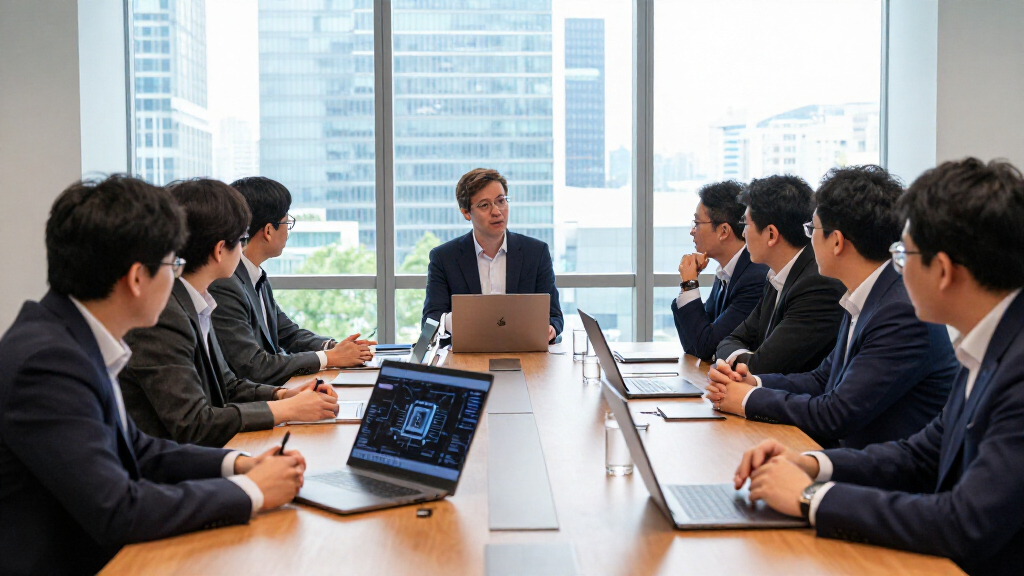
OpenAI CEO Sam Altman met about 50 senior Samsung executives on Oct. 31 at the company’s training center in Yongin, south of Seoul, as competition for memory chips intensifies between AI data centers and other buyers. Samsung confirmed the meeting and described it as a leadership program about AI; no new chip-supply agreement was announced, leaving the visit’s commercial outcome undisclosed.
Samsung said the attendees were presidents and senior executives from its electronics, finance and biotech affiliates. The session was titled “The Next 10 Years Shaped by AI: The Enterprise’s Choice,” according to the Korea Herald’s translation of Samsung’s account. The company said participants discussed AI’s direction, its effects on business decisions and management, and markets that could emerge from the technology.
Samsung relayed that Altman urged business leaders to use AI to improve speed and products, rather than treating adoption alone as an advantage. Bloomberg separately reported that the meeting was intended to deepen cooperation on memory chips and AI infrastructure as shortages intensify. The Seoul Economic Daily reported that OpenAI executive Richard Ho, who leads the company’s in-house AI chip work, accompanied Altman. These reports provide possible commercial context, but neither company disclosed meeting minutes, supply volumes, prices or an agreement.
The strategic backdrop is substantial: OpenAI and four Samsung companies signed a letter of intent in October 2025. Samsung said at the time that OpenAI’s projected demand could reach “up to 900,000 DRAM wafers per month.” That was a projection in the letter, not confirmation of current orders or delivered supply. The Seoul Economic Daily also reported that OpenAI’s accelerator could use Samsung’s next-generation HBM4 memory, citing industry sources. That design claim has not been confirmed by either company.
Infographic 01 · Confirmed, reported, not announced
What we actually know about Altman’s Samsung meeting
Samsung confirmed the meeting and framed it as AI leadership training. The memory angle comes from reporting. No deal was announced.
- Meeting with about 50 presidents and executivesConfirmed by Samsung
Electronics, finance and biotech affiliates; Samsung Human Resources Development Center. Theme: “The Next 10 Years Shaped by AI: The Enterprise’s Choice”.
- Altman: the edge comes from how you use AI, not from adopting itConfirmed by Samsung
As relayed by Samsung via Yonhap; quoted similarly by the Seoul Economic Daily.
- Aim: deeper cooperation on memory chips and AI infrastructureReported
Bloomberg, “as global shortages intensify”.
- OpenAI’s chip-hardware chief traveled along; HBM4 linkOne outlet
Seoul Economic Daily, citing industry sources. Not confirmed by either company.
- SK chairman Chey Tae-won met Altman the same dayOne outlet
Yonhap, citing industry sources. Content not disclosed.
- Volumes, prices, a new contractNot announced
Nothing announced. No statement from OpenAI on the visit.
How Samsung and OpenAI got here
- 1 Oct 2025Letter of intent: memory for Stargate, data centers, floating data centersSamsung and OpenAI announcement
- Jun 2026Samsung rolls out ChatGPT Enterprise and Codex to employeesOpenAI, as reported by the Korea Herald
- Jul 2026Samsung chairman Lee Jae-yong visits OpenAI in San FranciscoKorea Herald
- 29 Oct 2026Samsung’s record quarter; Altman’s “quite terrible” DRAM remarkSamsung results · Cheeky Pint podcast
- 31 Oct 2026Altman meets about 50 Samsung executives in YonginSamsung via Yonhap · Bloomberg
“Confirmed by Samsung” means Samsung’s own account, as relayed by Yonhap and the Korea Herald. A letter of intent is a statement of plans, not a purchase order.
Sources: Samsung via Yonhap, 31 Oct 2026, Korea Herald, 31 Oct 2026, Bloomberg via The Straits Times, 31 Oct 2026, Seoul Economic Daily, 1 Nov 2026, Samsung and OpenAI letter of intent, 1 Oct 2025.
Powered by Thorsten Meyer AI
AI Demand Meets Memory Supply
The meeting matters because memory is a key input for AI computing, and major technology companies are seeking reliable supplies for servers and accelerators. Samsung is a major memory producer, while OpenAI is expanding the infrastructure behind its AI services. Any deeper commercial relationship could affect how much capacity is available to data-center operators and other customers, but the Yongin meeting itself does not establish that supply has been secured.
Altman’s remarks about personal computers put a consumer-facing question into the same debate: how should limited memory be allocated when devices are often idle but AI data centers need large quantities? On the Cheeky Pint podcast, published Oct. 29, he described it as “quite terrible” from a global allocation perspective that much of the world’s memory sits in personal computers and is used only a small share of the time. The 5% figure was Altman’s estimate, not a published measurement. His argument reflects the perspective of a company that offers cloud AI services; it does not show that personal computers are the cause of the shortage.
The market pressure could reach buyers through higher prices or product changes, rather than an immediate absence of devices. The source material cites TrendForce’s forecast that contract prices for conventional DRAM would rise 10% to 15% in the fourth quarter of 2026. It also reports TrendForce warned that PC memory supply could decline in 2027 as capacity shifts toward servers. Those are forecasts, not confirmed outcomes, and the eventual effects on retail prices and device configurations remain uncertain.
Popular right now

Dyson Car+Boat Cordless Handheld Vacuum

TCL QM64L 85-Inch QD-Mini LED 4K Smart Fire TV

Vitamix Propel Series 510 Professional-Grade Blender, 3 Programs, Black
As an affiliate, we earn on qualifying purchases.
A Year of Deepening Ties
The Oct. 31 meeting followed several public steps in the relationship. In October 2025, OpenAI and four Samsung companies signed a letter of intent covering cooperation, including projected demand for DRAM. In June 2026, OpenAI said Samsung Electronics would make ChatGPT Enterprise and Codex available to employees in Korea and in its global device division. The Korea Herald reported that Samsung Executive Chairman Lee Jae-yong visited OpenAI in San Francisco in July. The Seoul Economic Daily described Altman’s Yongin visit as his first to Samsung in about a year.
South Korea is also a central meeting ground for the memory industry. Bloomberg noted that Nvidia CEO Jensen Huang and AMD CEO Lisa Su had each visited the country twice since 2025 to strengthen supply ties. Yonhap, citing industry sources, reported that SK Group chairman Chey Tae-won met Altman in Seoul on Oct. 31 with executives from SK hynix, another major Korean memory maker. Details of that discussion were not disclosed, and no related agreement was announced in the source material.
Samsung’s financial results underline why memory matters to the company. The source material reports that its chip division generated 106.5 trillion won of Samsung’s 107.4 trillion won in operating profit in the third quarter of 2026. It also reports that the phone and network business posted a 0.6 trillion won operating loss, partly amid cost pressures. These figures show the weight of chips in the company’s reported results; they do not establish that the Altman meeting was driven by any single financial consideration.
““From a global allocation perspective,” it is “quite terrible” that so much memory sits in people’s computers while being used “5% of the time.””
— Sam Altman, speaking on the Cheeky Pint podcast on Oct. 29
No Supply Terms Disclosed
The content and commercial result of the Yongin meeting remain unclear. Samsung described an AI leadership session, while Bloomberg characterized the purpose as deepening cooperation on chips and infrastructure. The public accounts do not establish whether the executives negotiated a specific supply arrangement, and neither company announced volumes, pricing, delivery timing or a contract.
It is also unconfirmed whether Richard Ho attended, whether an OpenAI accelerator will use Samsung HBM4, or whether the reported meeting produced a change to the 2025 letter of intent. The projected 900,000 DRAM wafers per month should not be read as a confirmed current requirement or order. Further details have not been provided in the source material.
Watch for Supply Announcements
The next clear sign of a commercial outcome would be a public announcement from OpenAI or Samsung specifying a supply agreement, product partnership or chip-development plan. Until then, the meeting confirms senior-level contact but not a change in memory allocation. Any later claims about HBM4 or OpenAI’s accelerator should be treated as reported, rather than confirmed, unless the companies verify them.
Industry watchers will also be following DRAM pricing and capacity forecasts, including whether the projected fourth-quarter price increases and possible 2027 shift toward server memory materialize. For PC makers and buyers, the practical effects will depend on supply, prices and product decisions that have not yet been established.
Key Questions
What happened at the Samsung meeting?
Samsung confirmed that Sam Altman met about 50 senior executives from its electronics, finance and biotech affiliates on Oct. 31, 2026, at a training center in Yongin. Samsung described it as a leadership program focused on AI.
Did OpenAI and Samsung announce a new memory-chip deal?
No new deal was announced in the available accounts. The companies did not disclose supply volumes, prices or delivery terms from the meeting.
Is Samsung confirmed to be supplying HBM4 for OpenAI’s chip?
No. The Seoul Economic Daily reported, citing industry sources, that OpenAI’s accelerator may use Samsung’s HBM4. Neither company has confirmed that report.
What did Altman say about memory in personal computers?
On the Cheeky Pint podcast, Altman argued that memory in personal computers is often underused compared with demand from shared data centers. His “5%” figure was an estimate, not a published measurement.
Could this affect PC prices or memory availability?
It is possible that tighter supply could contribute to higher prices or changes in device specifications, but the meeting alone does not confirm those effects. TrendForce’s reported price and supply outlooks are forecasts, not settled outcomes.
Source: ThorstenMeyerAI.com