
TL;DR

Get the latest gadgets delivered free with Prime
- Fast, free delivery on millions of items
- Prime Video, Amazon Music and more included
- Member-only deals all year
A developer has released a tool on Show HN enabling users to generate intentionally distorted fonts, such as Times New Bastard, by manipulating OpenType ligatures. The tool runs entirely in the browser using Python compiled to WebAssembly, enabling quick, client-side font creation. The development has sparked interest among font enthusiasts and meme creators, though its broader impact remains uncertain.
A developer has introduced a new tool on Show HN that allows users to generate intentionally distorted and humorous fonts, such as ‘Times New Bastard,’ by exploiting the ligature features of OpenType fonts. The tool operates entirely in the browser, leveraging Python compiled to WebAssembly, enabling fast, client-side font manipulation. This development has drawn attention from font enthusiasts, meme creators, and developers interested in font hacking.
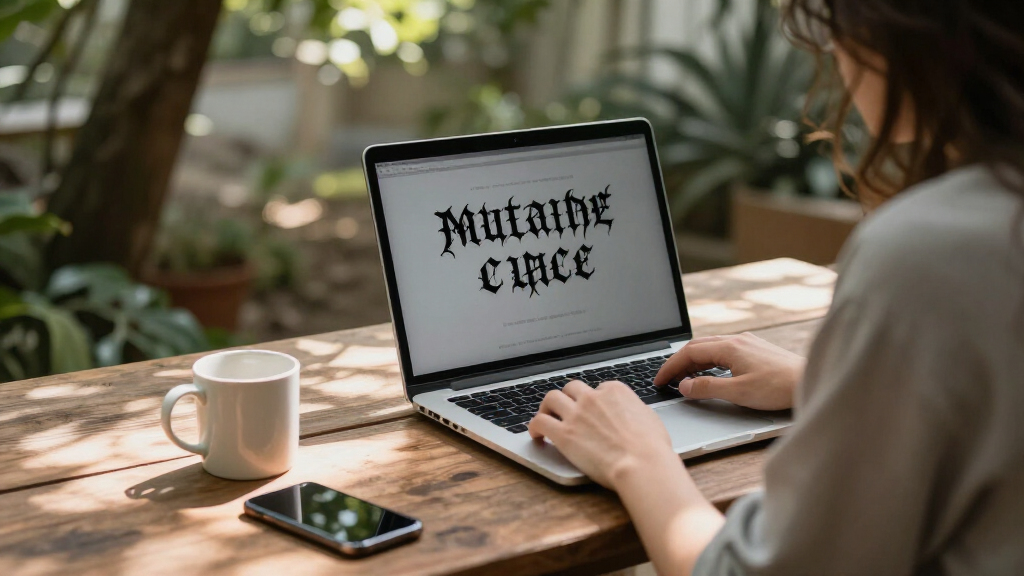
The tool, shared on Show HN, uses OpenType’s ligature feature—normally intended for stylistic character combinations—to create ‘cursed’ fonts with irregular or nonsensical letter forms. By abusing this feature, users can produce fonts that appear distorted, chaotic, or intentionally malformed, exemplified by the playful name ‘Times New Bastard.’
According to the creator, the implementation loads Python code compiled to WebAssembly directly in the browser, allowing for quick font processing without server-side dependencies. The process is designed to be fast, with font generation happening client-side, making it accessible and immediate for users experimenting with font design or meme creation.
The tool’s interface and code are openly shared on Show HN, inviting community feedback and further experimentation. While primarily a joke or novelty tool, it demonstrates how open font specifications can be exploited creatively, raising questions about font rendering and licensing implications.
Implications of Cursed Font Generation for Digital Creativity
This development highlights how open font technologies like OpenType can be repurposed for creative and humorous effects, expanding the boundaries of digital font manipulation. It also underscores the growing interest in browser-based, client-side font tools that do not rely on server infrastructure, making font hacking more accessible to a wider audience.
For meme culture and digital art, tools like this could enable more widespread experimentation with distorted typography, potentially influencing online aesthetics and meme formats. However, it also raises questions about the security and licensing of font files, as abuse of ligature features could lead to unforeseen misuse or copyright issues.
As an affiliate, we earn on qualifying purchases.
Background on OpenType Ligatures and Font Hacking Trends
OpenType fonts include features like ligatures, which combine multiple characters into single glyphs for stylistic purposes. Developers and font hackers have long experimented with these features to create novel visual effects or to explore the limits of font rendering.
Recently, interest in playful or ‘cursed’ fonts has surged on platforms like Show HN and Reddit, driven by meme culture and digital art communities. This trend is fueled by the accessibility of font editing tools and the ability to manipulate font features directly in the browser or via scripts.
This particular project is part of a broader movement exploring the boundaries of font technology, though it is among the first to use WebAssembly and embedded Python for client-side font generation at this scale.
As an affiliate, we earn on qualifying purchases.
Unclear Impact and Future of Cursed Font Tools
It is not yet clear how widely adopted or influential this tool will become beyond niche communities. The broader implications for font licensing, copyright enforcement, or security are still uncertain, as the tool is primarily experimental and playful.
Additionally, the longevity and future development of this project remain unknown, as it appears to be a community-driven, open-source effort without formal backing or planned updates.
As an affiliate, we earn on qualifying purchases.
Potential Developments and Community Response
Further experimentation by users may lead to more sophisticated or varied cursed fonts, possibly inspiring new meme formats or digital art styles. Developers might also explore integrating similar features into existing font editors or online platforms.
Community feedback on Show HN and social media could influence whether this project gains traction or remains a niche curiosity. Meanwhile, discussions about the legal and security implications of abusing font features are likely to increase.
As an affiliate, we earn on qualifying purchases.
Key Questions
What exactly does the tool do?
The tool allows users to generate distorted or humorous fonts by exploiting OpenType ligature features, running entirely in the browser using Python compiled to WebAssembly.
Is this tool safe to use?
As a client-side, open-source project, it is generally safe, but users should be cautious about downloading or sharing generated fonts, especially if they contain unusual or corrupted data.
Can this be used for professional font design?
While primarily a novelty or experimental tool, it is not suitable for professional font production due to its playful and intentionally distorted output.
What are ligatures in fonts?
Ligatures are special character combinations in fonts that are designed to be displayed as a single glyph, often for stylistic or readability purposes. This tool manipulates those features for humorous effects.
Will this affect font licensing or copyright?
Exploiting font features like ligatures can raise legal questions, especially if used to create or distribute modified fonts. The legal implications depend on font licenses and intended use.
Source: hn
Halloween Picks
halloween
As an affiliate, we earn on qualifying purchases.