TL;DR

Get the latest gadgets delivered free with Prime
- Fast, free delivery on millions of items
- Prime Video, Amazon Music and more included
- Member-only deals all year
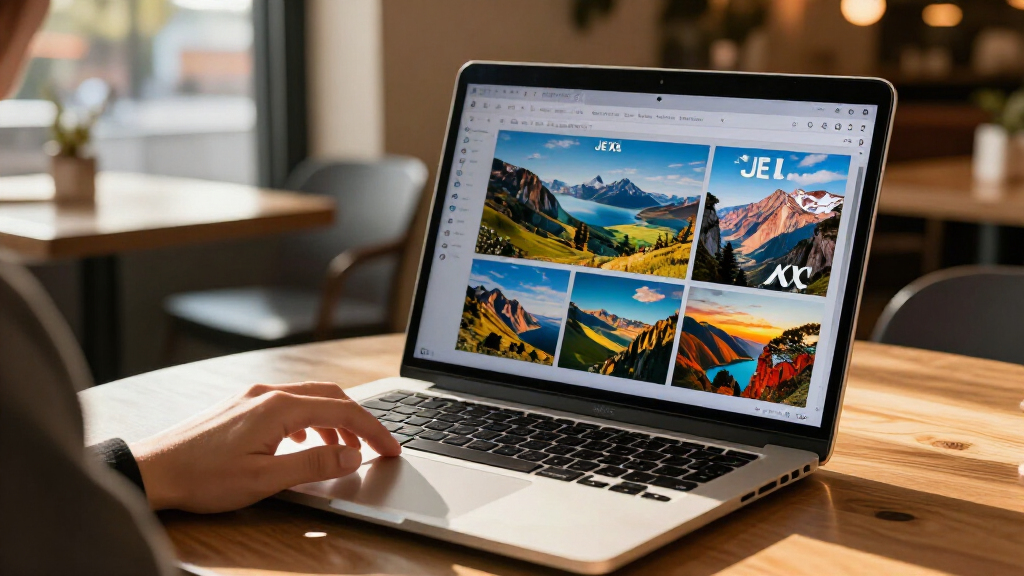
Google says Chrome will add JPEG XL image decoding in version 155, following developer requests and browser interoperability work. Chrome’s implementation uses the Rust-based jxl-rs decoder; the announced support is for decoding, and the source does not specify a release date for Chrome 155.
Google says Chrome 155 will decode JPEG XL (.jxl) images, bringing the image format to the browser after requests from web developers and work on cross-browser testing. The announcement, published by Chrome for Developers on October 6, 2026, describes a Rust-based decoder and performance engineering, but does not give a release date for Chrome 155.
The Chrome team says its implementation uses jxl-rs, a JPEG XL decoder written in Rust. Google said it chose the memory-safe implementation because image decoders handle complex, untrusted data in the browser’s renderer process, where coding errors can create security risks. Sandboxing remains part of Chrome’s defenses, but the team described it as a secondary layer rather than a substitute for addressing risks in the decoder itself.
Google also outlined work to improve decoding speed. It said the Rust implementation uses SIMD, a way to take advantage of processor instructions for parallel operations, through a cross-platform abstraction called jxl_simd. The team said this approach limits unsafe code to a small number of reviewed locations while allowing hardware-specific optimization. It also described a processing pipeline intended to reduce data copying and said it tracks performance across hardware platforms.
The company said jxl-rs has been tested with techniques including fuzzing and AI code review, and that no memory-safety bugs had been found during its development. That is a statement about the project’s development history, not a guarantee that the decoder is free of vulnerabilities. Chrome also participated in the Interop 2026 JPEG XL investigation, which the announcement says was intended to develop browser tests covering the format’s features and check that those tests pass in Chrome.
JPEG XL’s Place in Web Images
Chrome support could make JPEG XL usable by more people browsing the web without requiring a separate application or browser. For publishers, photographers and platform teams, native decoding in a major browser may make it easier to serve .jxl images to Chrome users. The announcement, however, covers decoding support; it does not say Chrome will encode images into JPEG XL or that websites should replace other formats immediately.
Google describes JPEG XL as offering 30–50% better compression than JPEG, along with lossless compression, HDR support and lossless transcoding from JPEG. Those are claims in the Chrome announcement, and actual file size or quality depends on the image and encoding settings. The team recommends developers test both JPEG XL and AVIF, saying JPEG XL may suit photographic images, high-fidelity or lossless compression, and uses that need fine-grained progressive decoding.
The security approach is also relevant beyond the format choice. Browsers routinely process images supplied by websites, so the implementation language and testing of a decoder matter as well as its speed and features. Chrome’s decision to ship a Rust decoder reflects an effort to combine memory-safety measures with performance work, though the announcement does not provide independent security results or comparative benchmark figures.
As an affiliate, we earn on qualifying purchases.
From Developer Requests to Chrome
JPEG XL is a modern image format intended for web and photography use. The Chrome team says it had received ongoing developer feedback through channels including bug reports, surveys, Developer Signals and the Interop project. It said the format was a popular proposal in Interop in 2026 and previous years, and cited that feedback as part of the reason for adding support.
The browser work involved more than adding a file extension to Chrome. Google said it integrated jxl-rs, developed SIMD support for the Rust decoder, tracked performance on different hardware and took part in interoperability testing. The announcement also thanks contributors to the decoder and its Chrome integration, including Helmut Januschka, and names Martin Bruse, Zoltan Szabadka, Sami Boukortt and Wonwoo Choi as contributors to jxl-rs.
The post presents JPEG XL alongside, rather than as a replacement for, AVIF. It advises teams to try both formats to decide what fits their needs. It does not provide a browser-by-browser support table or describe how websites should manage fallback images for visitors whose browsers cannot decode JPEG XL.
“In general, we recommend trying both AVIF and JPEG XL to find what works best for you.”
— Chrome for Developers
JPEG XL compatible browser extension
As an affiliate, we earn on qualifying purchases.
As an affiliate, we earn on qualifying purchases.
Release Timing and Browser Reach
The announcement identifies Chrome 155 as the version that will add JPEG XL decoding, but gives no release date or information about whether the feature will roll out gradually. It also does not specify which platforms or Chrome channels will receive support first, or whether any configuration will be needed to use it.
Details about compatibility across other browsers are not provided. Participation in the Interop 2026 investigation signals testing work, but does not establish which other browser makers will ship support or when. Google also does not publish benchmark results in the announcement, so the speed of jxl-rs relative to other decoders and the practical performance on different devices remain unclear. Its statement that development found no memory-safety bugs is not a claim that future vulnerabilities are impossible.
As an affiliate, we earn on qualifying purchases.
Testing Ahead of Chrome 155
The next stated milestone is the arrival of Chrome 155, though Google has not given a date. Developers can test JPEG XL images and animations in their own pipelines, as the Chrome team encourages, and report issues to help identify problems with decoding or interoperability. The announcement does not provide a separate testing guide or instructions for enabling support before Chrome 155.
As the release approaches, useful details to watch for include platform availability, performance measurements, compatibility with other browsers and guidance for serving fallback formats. Until those details are published, teams considering adoption can compare JPEG XL with AVIF against their own image quality, file size and delivery requirements rather than assume one format suits every site.
As an affiliate, we earn on qualifying purchases.
Key Questions
When will Chrome support JPEG XL?
Google says support for decoding JPEG XL is planned for Chrome 155. Its October 6, 2026, announcement does not give a release date for that version.
Will Chrome create JPEG XL images?
The announcement describes decoding .jxl images in Chrome. It does not announce browser-based JPEG XL encoding.
What decoder will Chrome use?
Chrome’s announcement says the implementation integrates jxl-rs, a Rust-based JPEG XL decoder, with SIMD work intended to improve performance.
Should websites switch from AVIF to JPEG XL?
Google recommends trying both AVIF and JPEG XL and choosing based on a project’s needs. The post says JPEG XL may be especially suitable for photographic images, high-fidelity or lossless compression, and fine-grained progressive decoding.
Does the announcement confirm support in other browsers?
No. Chrome says it took part in the Interop 2026 JPEG XL investigation, but the announcement does not confirm release plans or timing for other browsers.
Source: hn
Halloween Picks
halloween
As an affiliate, we earn on qualifying purchases.