
TL;DR
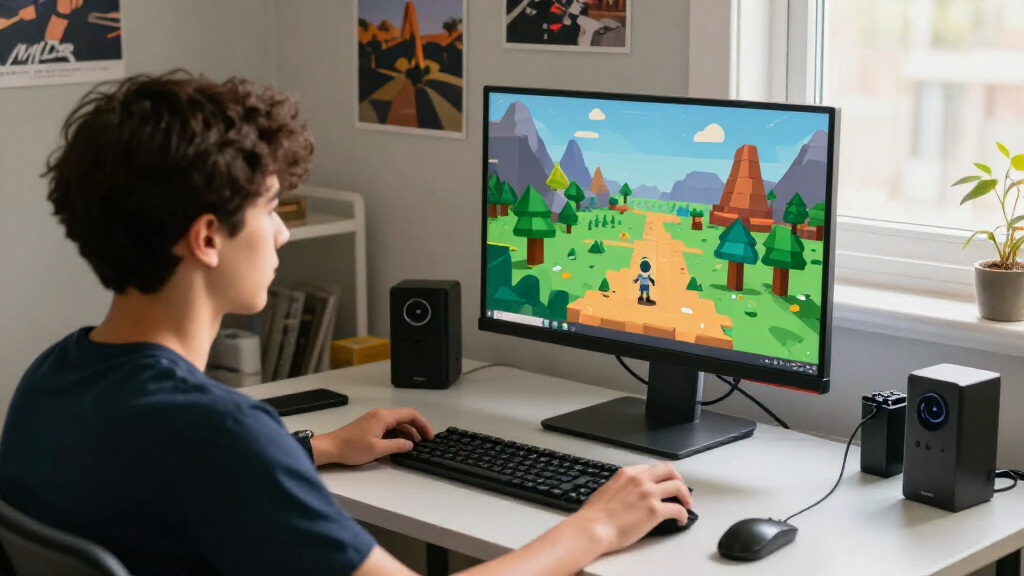
Hedra is a low-poly, procedurally generated open-world RPG and game engine that its creator says he started in high school to learn OpenGL. The GitHub project page describes its systems and features, but does not establish the game’s release status, current development activity or how much is playable.
Hedra, a low-poly 3D open-world role-playing game and custom game engine, is documented in a GitHub project page by its creator, who says he began the work at about 15 years old while in high school. The project stands out for the breadth of systems described, including procedural world generation, a renderer built with OpenGL and support for mods, though the page does not establish whether the game is currently finished or publicly playable.

Get the latest gadgets delivered free with Prime
- Fast, free delivery on millions of items
- Prime Video, Amazon Music and more included
- Member-only deals all year
The creator describes Hedra as an RPG in which players can choose a class, explore procedurally generated worlds, gain skills and complete generated quests. Listed game features include four classes, each with two specializations, more than 100 items with rarity levels, bosses, companions, pets, crafting, fishing and trading with non-player characters. The page also mentions multiple dimensions, maps and a soundtrack.
The project combines the game with an engine and supporting tools. Its documentation lists a modern OpenGL renderer, animation and model loading, lighting and visual effects, sound through OpenAL, Python scripting, a user interface, localization and Steam integration. It also describes a modding system and a division between the Hedra game module and the underlying engine. These are features claimed in the project documentation, not independently verified performance or release details.
The creator says the codebase contains around 100,000 lines of code and that the project supports Linux and Windows. The page separately refers to “a million lines” in a feature description, creating an inconsistency in its stated code size. It also lists more than 1,000 test cases. The documentation’s own wording includes unfinished or informal notes, so the figures and feature descriptions should be understood as the creator’s account.
A Student Project With Engine-Level Scope
Hedra is notable as a documented example of a personal game project growing beyond a single playable concept into a custom engine and development framework. For readers interested in game development, the project page offers a view of how world generation, rendering, scripting and mod support can be brought together in one codebase.
The technical details also clarify the scale of the work the creator describes. Hedra’s terrain is generated from voxel data and processed with Marching Cubes, a method for turning that data into a continuous surface. The creator says the world is created at runtime from a seed rather than stored as a complete world save. This approach has implications for how the game builds environments and saves progress, but the page does not report benchmarks, player numbers or commercial results.
Popular right now

Bose QuietComfort Wireless Noise-Cancelling Over-Ear Headphones, Cypress Green

Vitamix VX1 Professional-Grade Blender, 64 oz, Black

Dyson V15 Detect Cordless Vacuum
As an affiliate, we earn on qualifying purchases.
From Learning OpenGL to Hedra
According to the project page, the creator began Hedra in high school, at approximately age 15, as a way to learn OpenGL. The original aim expanded over several years into a 3D game and engine. The supplied project material does not give exact start or completion dates, identify the creator beyond the project account, or describe a formal launch.
The architecture separates the game from a base engine: Hedra contains gameplay and world-generation systems, while Hedra.Engine handles rendering, sound, the game loop and platform functions. The documentation says this separation was intended to keep the modding API in use and encourage access to modding. It also describes past multiplayer support using peer-to-peer connections and a server for UDP hole punching, while noting that networking elements may remain in the code.
The project page says the world has no complete world save file: it stores player contents and a world seed, then generates the rest at runtime. It describes support for plaintext .PLY and .DAE models, and says the project’s name comes from tetrahedra, a reference to an earlier implementation of Marching Tetrahedra.
“I started this project when I was in highschool (around 15 yo) in order to learn how OpenGL worked.”
— Hedra creator, in the GitHub project description
Release Status and Scope Remain Unclear
The GitHub material describes the project’s intended features and technical architecture, but does not say whether Hedra is currently complete, maintained or available to play. It points to screenshots and build instructions, yet the supplied page text includes a note that screenshots still need to be added. No release date, store listing, download status or current development roadmap is provided.
Some claims are also difficult to reconcile from the page alone. It gives a codebase estimate of around 100,000 lines while elsewhere referring to a million lines, and the extensive feature list does not specify which systems are finished or tested in a released build. The documentation mentions former multiplayer support, but does not clarify whether it remains usable. Independent confirmation of the listed platform support, performance and test coverage is not included in the material.
Build Instructions Offer a Practical Check
The project page gives a basic path for building Hedra: check out its submodules, run dependency scripts and compile the C# solution. It also points readers to GitHub Actions workflows as examples for Linux and Windows builds. Whether those instructions work with the repository’s current state is not established by the supplied account.
Further information from the creator or updated project documentation would clarify the game’s present status, whether screenshots or playable builds are available, and which listed systems remain active. Until then, Hedra is best described as a documented game-and-engine project whose creator says it began as a high-school learning exercise.
Key Questions
What is Hedra?
Hedra is described by its creator as a low-poly, procedurally generated 3D open-world RPG built alongside a custom game engine.
When did its creator start the project?
The creator says he began Hedra in high school, at about 15 years old, to learn how OpenGL worked. The project page does not give an exact year.
Can people play Hedra now?
The supplied project information does not confirm whether a public playable build is currently available or whether development is ongoing. It includes build instructions, but not a clear release status.
How does Hedra generate its world?
The creator says the world is generated at runtime from a seed. The project uses voxel-based terrain and applies Marching Cubes to create continuous surfaces; the stated save data includes player contents and the world seed.
Which platforms does the project support?
The project page claims Linux and Windows support. The supplied material does not independently verify compatibility with current operating systems or builds.
Source: hn