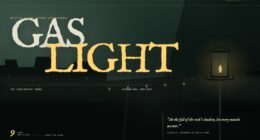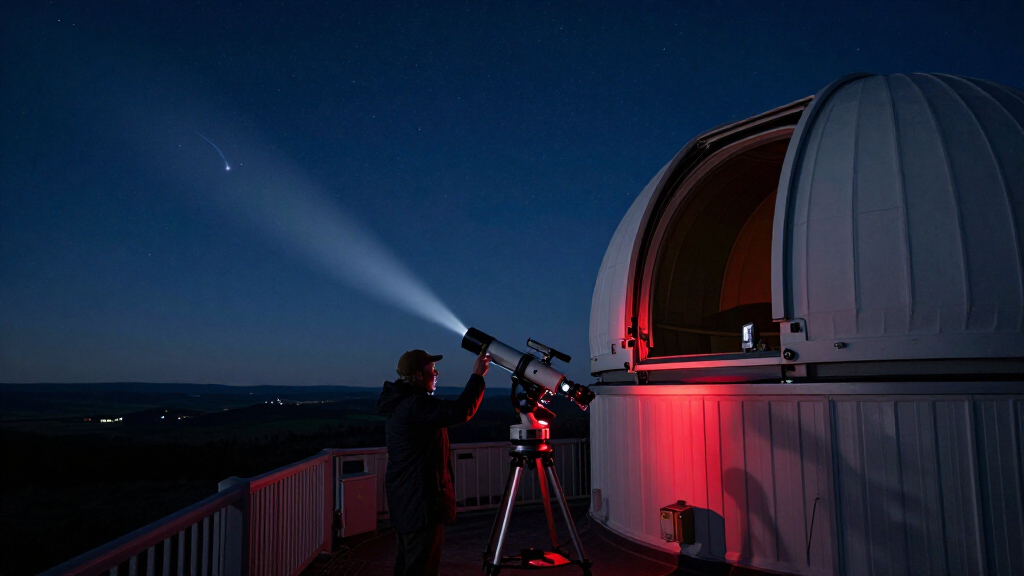

🔍 Read the full analysis: A Visual Guide To Held Light In “OORT — Comet Vigil For P/2043 K1 Vesper” on ThorstenMeyerAI.com

Get the latest gadgets delivered free with Prime
- Fast, free delivery on millions of items
- Prime Video, Amazon Music and more included
- Member-only deals all year
TL;DR
OORT is an AI-built, interactive web exhibition about a fictional observatory watching a fictional comet, P/2043 K1 Vesper. Its central feature is a star field that accumulates light as visitors stay, while other controls animate the comet’s imagined journey and record a simulated act of observation.
OORT — Comet Vigil for P/2043 K1 Vesper, an AI-built web exhibition, turns a fictional comet watch into an interactive artwork: the longer a visitor stays, the more the page’s star trails grow. The piece is room 170 of 175 in the FABLE exhibition series, and its fictional comet and observatory are presented as art rather than astronomical reporting.
The site’s defining effect is a canvas star field whose points draw curved trails over time. A repeatable seed keeps the sky consistent on the visitor’s device, while local storage preserves elapsed time so the field can resume when someone returns. The display treats a visit’s duration as part of the image, rather than as time spent waiting for content.
A second instrument links scrolling to an inline SVG comet diagram. The fictional comet moves through its imagined orbit as the visitor progresses down the page; its ion tail points away from the sun, while its dust tail curves along the orbit. The source says both shapes use the same progress value, keeping the geometry, distance and displayed year coordinated. A separate range control changes a defocus view and its associated brightness estimate.
Visitors can also hold a control to open a simulated shutter. The site records a timestamp, but does not claim to show a real comet image: in the artwork’s framing, the comet remains unseen and in transit. The design notes say animation stops when the page is hidden and a still version is provided for reduced-motion settings.
FABLE / ROOM 170 OF 175 · INTERACTIVE WEB EXHIBITION
A Visual Guide to Held Light in OORT
Comet Vigil for P/2043 K1 Vesper turns a fictional observatory’s watch into an interactive artwork. Here, time spent on the page becomes part of the image: the longer you stay, the farther the star trails grow.
Your visit is the exposure.Art direction brief reproduced in the room
01 / THE CENTRAL IDEA
How the Page Makes Waiting Visible
OORT treats elapsed time as an artistic material. Staying, scrolling, and returning become part of the work’s visual record.
Light gathers
A canvas star field draws longer, curved trails as the visit continues. The changing image makes duration visible.
The sky resumes
A repeatable seed keeps the local star field consistent. Local storage preserves elapsed time so the scene can continue when a visitor returns.
A shutter records attention
Holding a control opens a simulated shutter and records a timestamp. It does not create or claim to show a real comet image.
Arrive
Enter the imagined observatory.
Stay
Let the star trails gather light.
Follow
Scroll through the comet’s imagined orbit.
Return
Resume the locally saved exposure.
02 / SCROLL-DRIVEN ORBIT
One Journey, Two Tails
Scrolling moves the fictional comet through an inline SVG diagram. The source describes both tail shapes as responding to the same progress value, keeping the geometry, distance, and displayed year coordinated.
The ion tail points away from the sun; the dust tail curves along the orbit. The diagram describes an imagined journey, not a tracked celestial object.
03 / THE MEANING OF THE IMAGE
The Comet Remains Unseen
Astronomy’s visual language frames the artwork, while its own description keeps the boundary clear: this is a fictional observatory watching a fictional comet.
“The comet remains unseen and in transit.”OORT exhibition description
A gesture, not evidence
The simulated shutter marks a pause to look. The site records a timestamp as part of the artwork, without presenting a fabricated observation as scientific evidence.
P/2043 K1 Vesper is fictional in the source material. Details such as a decades-long watch, a prior sighting in 1608, and amateur observers are creative elements, not verified astronomical history.
What the work describes
An interactive artwork, an imagined observatory, a changing star field, and a simulated act of observation.
What is not established
No real comet image, scientific discovery, or verified astronomical history is reported by the source.
04 / INSIDE FABLE
An Exhibition Room and a Technical Study
OORT is presented as room 170 in a 175-piece series of AI-built exhibition works.
The room’s design guide explains its star-trail effect, SVG orbit, palette, and typography. A “Prompt” link in the footer exposes the art-direction brief behind the piece.
The brief calls for a dark observatory atmosphere, responsive layouts, reduced-motion behavior, pausing animation when a tab is hidden, and a three-pass review process. These are described intentions; the source does not independently verify that each check was completed.
The source does not provide independent results for performance, accessibility, browser support, local-storage behavior, or the stated review process. It also gives no publication date or update schedule.
Observatory art direction
Display lettering meets monospaced, logbook-style text to evoke a working observatory.
05 / KEY QUESTIONS
What to Know Before You Visit
Is P/2043 K1 Vesper a real comet?
No. The source explicitly describes the comet and its observatory as fictional.
What changes during a visit?
The canvas star field draws longer curved trails. A repeatable seed and local storage are described as helping the local sky resume on return.
Does the shutter capture a real image?
No real comet image is reported. The simulated shutter records a timestamp as a gesture of attention.
How does scrolling affect the comet?
It moves the fictional comet through an SVG diagram. Both tail shapes follow the same progress value.
Where does OORT fit in FABLE?
It is identified as room 170 of 175, with a design guide and links to the wider exhibition hub.
What can visitors verify?
The source directs readers to the live room and guide. It does not supply independent tests or an update schedule.
THE WORK’S TRACE · ATTENTION BECOMES IMAGE
How the Page Makes Waiting Visible
OORT makes elapsed time an artistic material. Its central image changes because a visitor remains on the page, and the saved state lets that attention persist across visits. That approach turns an ordinary web interaction—staying, scrolling, returning—into the subject of the piece.
The simulated shutter is also a deliberate choice: it records that someone paused to look without inventing a discovery or presenting a fabricated observation as evidence. For readers, the distinction matters. The site uses the language and visual conventions of astronomy, but the source describes an imagined observatory and fictional comet, not a scientific instrument or a report of a real celestial object.
As an affiliate, we earn on qualifying purchases.
Inside the FABLE Exhibition Series
The source places OORT at room 170 in a series of 175 AI-built exhibition pieces. It describes the room as both an artwork and a technical study, with a design guide explaining the star-trail effect, SVG orbit, palette and typography. A “Prompt” link in the room’s footer exposes the art-direction brief that informed the piece.
That brief calls for a dark observatory atmosphere, with black, cyan, dust-toned white and red-orange accents, alongside display lettering and monospaced logbook-style text. It also specifies responsive layouts, reduced-motion behavior, pausing animation when a tab is hidden, and a three-pass review process. The source says the room was made through the FABLE/175 pipeline, but does not provide independent verification of its development or review process.
“The page makes duration part of the artwork instead of treating it as time spent before the content.”
— OORT exhibition description
As an affiliate, we earn on qualifying purchases.
What the Source Leaves Unverified
The source describes the room’s intended behavior and identifies a live site, but provides no independent testing results for its performance, accessibility, browser support or local-storage behavior. It also does not establish that every item in the design brief—such as the three review passes or checks at specified screen widths—was completed as written.
P/2043 K1 Vesper is fictional in the source material. Details in the brief about an imagined decades-long watch, a prior sighting in 1608 and amateur observers are creative elements, not verified astronomical history. The material does not give a publication date for the room or say whether its live version has changed since the description was written.
interactive star projector for kids
As an affiliate, we earn on qualifying purchases.
As an affiliate, we earn on qualifying purchases.
Visit the Room and Its Guide
The source directs readers to the live OORT room and its design guide, where the interactive sky and accompanying notes can be viewed. It also points to the wider hub for the other rooms in the 175-piece series. No future release, scientific observation or update schedule is specified; the next step for visitors is to explore the artwork and distinguish its fictional observatory from real astronomy.
As an affiliate, we earn on qualifying purchases.
Key Questions
Is P/2043 K1 Vesper a real comet?
No. The source explicitly describes P/2043 K1 Vesper as fictional, as well as the observatory built to watch it.
What changes while someone visits OORT?
A canvas star field draws longer curved trails as time passes. The site’s description says a repeatable seed and local storage let the same local sky resume when a visitor returns.
Does the shutter interaction capture a real image?
No real comet image is reported. Holding the control opens a simulated shutter and records a timestamp as a gesture of attention; the comet remains unseen in the artwork.
How does the comet diagram respond to scrolling?
Scrolling moves the fictional comet through an inline SVG diagram. The source says the ion tail points away from the sun and the dust tail bends along the imagined orbit, with both responding to the same progress value.
Where does OORT fit in the exhibition?
It is identified as room 170 of 175 in the FABLE exhibition series. The source also links to the room’s design guide and the broader exhibition hub.
Source: ThorstenMeyerAI.com
Fall Picks
fall essentials
As an affiliate, we earn on qualifying purchases.