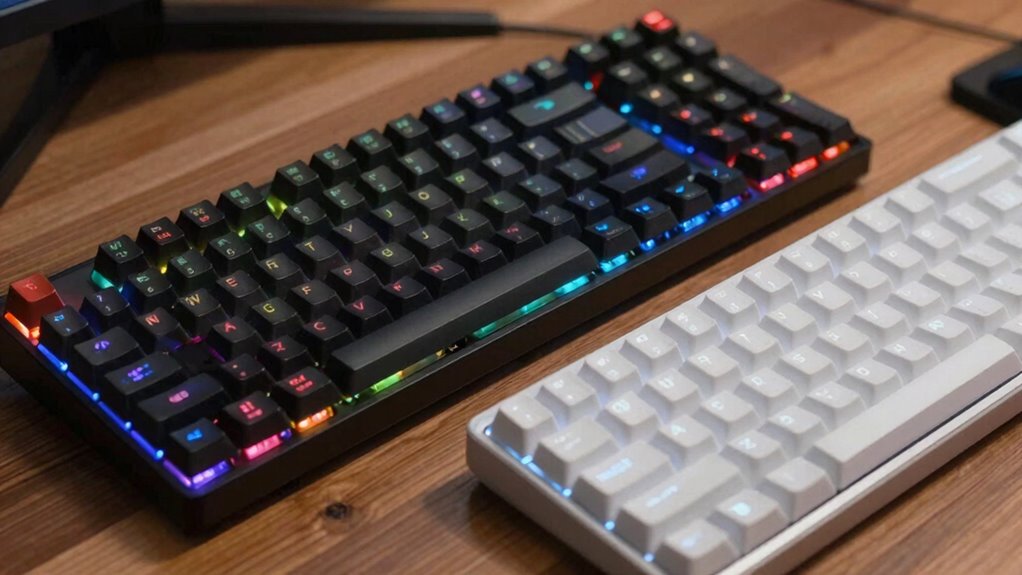

Mechanical keyboards provide you with more precise, tactile feedback, making typing more accurate and comfortable for daily use. They feature individual switches for each key, offering better responsiveness and durability, which means fewer replacements over time. Ergonomic design elements can reduce strain and fatigue during long hours at work. While they may cost more initially, their longer lifespan and customization options make them a valuable investment. Explore further to discover how these features can improve your workflow.

Get the latest gadgets delivered free with Prime
- Fast, free delivery on millions of items
- Prime Video, Amazon Music and more included
- Member-only deals all year
Key Takeaways
- Mechanical keyboards use individual switches for each key, offering better responsiveness and tactile feedback compared to regular membrane keyboards.
- They are more durable, with switches rated for millions of keystrokes, ensuring longer lifespan.
- Mechanical keyboards often feature ergonomic designs and adjustable components to enhance comfort during long work sessions.
- They are customizable and repairable, allowing users to modify key functions and replace switches easily.
- Regular keyboards typically have membrane keys, which are less precise, less durable, and generally more affordable but may cause fatigue over time.
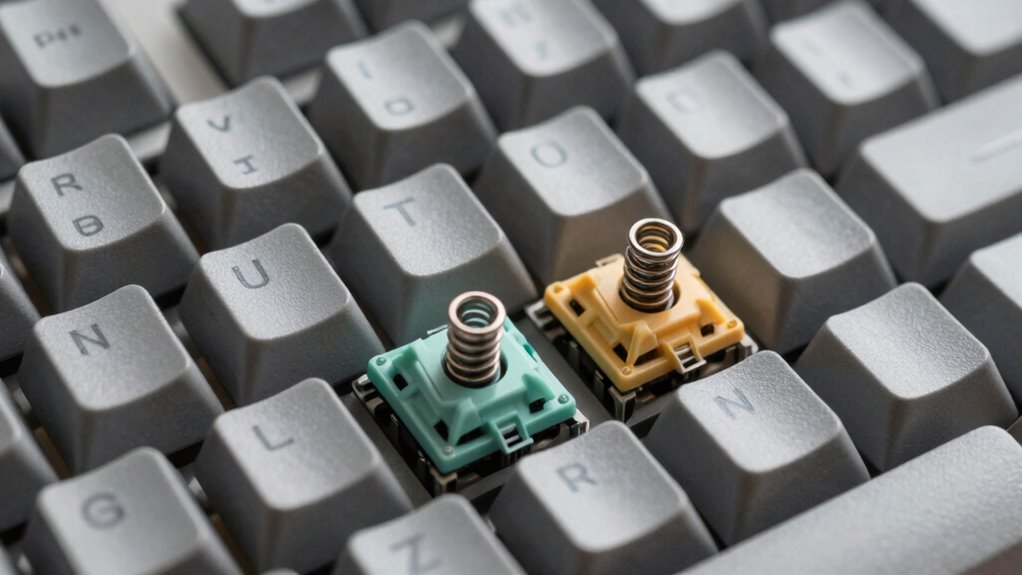
Have you ever wondered what sets mechanical keyboards apart from regular ones for everyday work? The answer lies mainly in their design and performance. Mechanical keyboards feature individual switches for each key, which provide a more responsive and precise typing experience. This design enhances typing accuracy because each keystroke is registered distinctly, reducing errors and improving your overall efficiency. Unlike membrane keyboards, where keys press down on a rubber dome, mechanical switches give you tactile feedback that allows you to feel exactly when a key has been activated. This tactile response helps you type more confidently and quickly, especially during long work sessions when fatigue can set in. Additionally, the design and construction of mechanical keyboards typically involve high-quality materials, contributing to their durability and longevity. Another critical advantage is their ergonomic design. Mechanical keyboards often come with features that promote better posture and reduce strain. Many models include adjustable height settings, wrist rests, and key layouts that accommodate natural hand positioning. These ergonomic considerations are essential if you spend hours typing daily because they help prevent discomfort or repetitive strain injuries. When your hands are positioned correctly, you’re less likely to experience aches, which means you can work longer without fatigue or pain. The sturdy construction of mechanical keyboards also contributes to a stable typing surface, ensuring consistent key presses and minimizing accidental misses, further boosting productivity. Moreover, because of their customizability and repairability, users can often modify or replace components, extending the lifespan and tailoring the keyboard to their specific needs. The use of high-quality components** in mechanical keyboards ensures they withstand extensive use and maintain performance over time. Due to their durable build and high-quality components, mechanical keyboards tend to last much longer than regular membrane ones. The switches are rated for millions of keystrokes, so you won’t need to replace your keyboard as often. This longevity makes them a smart investment for anyone who values reliable performance and comfort over time. Additionally, many mechanical keyboards allow you to customize key functions or even replace individual switches, giving you more control over your setup. This customization can optimize your workflow, making typing more comfortable and accurate over the long run. Many users also appreciate the expandability options** that come with mechanical keyboards, allowing further personalization as their needs evolve.
Frequently Asked Questions
Are Mechanical Keyboards More Durable Than Regular Keyboards?
Yes, mechanical keyboards are generally more durable than regular keyboards. You’ll notice they withstand heavy use better, thanks to their sturdy mechanical switches. This durability means you won’t have to replace them as often. Plus, switching comfort is often better with mechanical keyboards, enabling faster typing speeds and reducing fatigue during long work sessions. So, if longevity and efficient typing are priorities, mechanical keyboards are a smart choice for daily work.
Which Type of Keyboard Is More Energy-Efficient?
You’ll find that regular keyboards are generally more energy-efficient, thanks to their lower power consumption. Since they don’t have the complex mechanical switches that draw more power, their battery life tends to last longer on wireless setups. If you prioritize longer battery life and minimal power use, a regular keyboard is your best choice. Mechanical keyboards, while great for typing feel, usually consume more energy and reduce overall battery life.
Can I Customize Keys on Regular Keyboards?
Yes, you can customize keys on regular keyboards, but options vary. Many models support key remapping through software, allowing you to assign new functions to existing keys. Some also support macro programming, letting you automate complex commands. Check your keyboard’s software compatibility to see if it offers these features. Keep in mind, gaming or high-end keyboards typically provide more advanced customization options compared to basic models.
Do Mechanical Keyboards Produce More Noise Than Regular Ones?
Mechanical keyboards produce more noise than regular ones, creating a loud typing sound that can fill a room. While regular keyboards often whisper quietly, mechanical switches click and clack with each keystroke, amplifying noise levels. This difference makes mechanical keyboards satisfying for some but disruptive to others. If you prefer a quieter environment, a regular keyboard might suit you better, whereas mechanical keyboards add a tactile, auditory experience for enthusiasts.
Are Ergonomic Features Available in Both Types of Keyboards?
Yes, ergonomic features like ergonomic design and wrist support are available in both mechanical and regular keyboards. You can find keyboards with adjustable tilt, cushioned wrist rests, and split layouts to promote comfort and reduce strain. Whether you choose a mechanical or regular keyboard, prioritizing ergonomic design helps prevent discomfort during long hours of work, making your typing experience more comfortable and healthier overall.
Conclusion
Choosing between mechanical and regular keyboards is like selecting the right instrument for your music—each has its unique tone and feel. Mechanical keyboards, with their tactile feedback, are your reliable drumbeat, providing precision and durability. Regular keyboards are like a gentle strum, offering comfort and quietness. Ultimately, your choice shapes your daily work rhythm, making your typing experience either a harmonious symphony or a smooth melody—so pick the one that resonates best with your style.
Halloween Picks
halloween
As an affiliate, we earn on qualifying purchases.