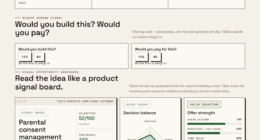

📊 Full opportunity report: Pentagon AI Goes Explicit: The Frontier Labs Move Inside the Classified Stack on ThorstenMeyerAI.com — validation score, market gap, and execution plan.

Get the latest gadgets delivered free — and shop member deals
- Fast, free delivery on millions of items
- Access to Prime Big Deal Days deals on October 6–7
- Prime Video, Amazon Music and more included
TL;DR
The Pentagon has formalized partnerships with leading AI companies to deploy large language models and AI tools within classified environments. This signals a move toward AI-driven decision-making and operational support at the highest security levels, raising strategic and ethical questions.
The Pentagon has officially moved its AI strategy into the core of its classified infrastructure by signing agreements with eight leading AI firms to deploy advanced models within top-secret networks, enabling faster decision-making and operational support. This development signifies a fundamental shift in military AI use, making AI a core component of national security operations.
On May 1, 2026, the U.S. Department of Defense announced agreements with companies including Google, Microsoft, Amazon Web Services, Nvidia, OpenAI, Reflection, SpaceX, and Oracle to integrate large language models (LLMs) and other AI tools into Impact Level 6 and 7 classified environments. The goal is to enhance data synthesis, situational awareness, and decision support for military operations, moving beyond experimental or narrow-targeting AI systems.
The Pentagon’s official platform, GenAI.mil, has reportedly been used by over 1.3 million personnel in five months, generating tens of millions of prompts and hundreds of thousands of AI agents. The move aims to accelerate logistics, threat analysis, surveillance, and operational planning, emphasizing ‘decision superiority’ through faster processing and analysis.
Industry sources indicate that vendor onboarding into secret data environments has been dramatically sped up, with some AI providers now able to enter top-secret projects in less than three months, down from over 18 months. This rapid integration underscores the military’s push to embed AI deeply into its operational fabric, including warfighting and intelligence functions.
Implications of AI Embedding in Secret Military Networks
This development marks a decisive shift toward making AI an integral part of the military’s decision-making processes at the highest security levels. It raises strategic advantages such as faster threat detection, enhanced operational efficiency, and potentially, escalation risks if speed outpaces human oversight. It also signals a new era where AI models are no longer confined to research labs but are actively shaping national security policies and actions.
As an affiliate, we earn on qualifying purchases.
Evolution of Military AI and Industry Shifts
Previous efforts like Google’s Project Maven in 2018 faced internal protests over ethical concerns related to autonomous weapons and surveillance, leading Google to withdraw from classified projects. Since then, the industry has shifted from cautious engagement to active collaboration, with companies like Google updating their AI principles in 2025 to permit lawful military use under strict contractual conditions. The Pentagon’s recent moves reflect this changing landscape, with larger contracts and more direct government demands.
Notably, Google and OpenAI have negotiated agreements that include specific restrictions—such as prohibitions on autonomous weapons and domestic surveillance—while allowing deployment in lawful government operations. However, the challenge remains whether these constraints will hold once AI systems are operating within classified and operational environments, where law and ethics may lag behind technological capabilities.
“We are integrating advanced AI models into our most sensitive networks to enhance decision-making and operational effectiveness.”
— Pentagon spokesperson
“Our agreements specify strict boundaries to ensure responsible use of AI in government applications.”
— Google spokesperson
enterprise AI data security software
As an affiliate, we earn on qualifying purchases.
As an affiliate, we earn on qualifying purchases.
Unresolved Questions About AI Oversight and Ethics
It remains unclear how effectively human oversight will be maintained once AI systems operate within classified environments. The extent to which constraints like ‘lawful use’ will be enforceable or tested in practice is still uncertain, especially as capabilities evolve faster than laws or norms can adapt. The potential for escalation or misuse in high-stakes scenarios also remains an open question.
classified environment data encryption tools
As an affiliate, we earn on qualifying purchases.
As an affiliate, we earn on qualifying purchases.
Next Steps in Military AI Deployment and Oversight
The Pentagon is expected to continue expanding AI integration, with ongoing efforts to refine contractual safeguards and operational protocols. Monitoring how these systems perform in live environments and how oversight is maintained will be critical. Public and Congressional scrutiny may increase as more details about deployment and safeguards emerge, alongside discussions on ethical frameworks and international norms.
high-security AI development workstation
As an affiliate, we earn on qualifying purchases.
As an affiliate, we earn on qualifying purchases.
Key Questions
What types of AI models are being deployed?
Large language models and other advanced AI tools designed for data synthesis, threat analysis, and operational decision support are being integrated into classified networks.
Are there restrictions on how these AI models can be used?
Yes, agreements specify lawful use, with restrictions on autonomous weapons and domestic surveillance, but the enforceability in classified environments remains uncertain.
How does this change the role of AI in military operations?
AI is shifting from experimental or narrow applications to core decision-making tools, enabling faster, more informed operational choices at the highest security levels.
What are the ethical concerns associated with this move?
Concerns include potential escalation, loss of human oversight, and the challenge of ensuring AI decisions align with international norms and laws.
Will this lead to international arms race or escalation?
While not confirmed, experts warn that embedding AI into decision-critical military systems could increase escalation risks if speed outpaces human judgment.
Source: ThorstenMeyerAI.com
Fall Picks
fall essentials
As an affiliate, we earn on qualifying purchases.