
Open-source hardware allows small-scale creators to innovate and produce useful devices despite manufacturing challenges that favor large industry players. By leveraging community support, local manufacturing, and affordable fabrication methods like 3D printing and small-batch PCB production, DIY boards can stand out. While they face hurdles like quality control and production scale, continuous technological advances help level the playing field. Stay with us to discover how enthusiasts are overcoming these obstacles and competing effectively.
Key Takeaways
- Open-source hardware accelerates innovation through community collaboration, enabling niche and specialized designs that large corporations may overlook.
- DIY boards can leverage local manufacturing, 3D printing, and small-batch PCB fabrication to reduce costs and improve accessibility.
- Community-driven support fosters rapid iteration, testing, and customization, allowing DIY projects to evolve competitively.
- Advances in desktop fabrication and affordable assembly services are lowering barriers for small-scale production.
- While large companies benefit from economies of scale, open-source projects can compete by prioritizing flexibility, rapid innovation, and tailored solutions.
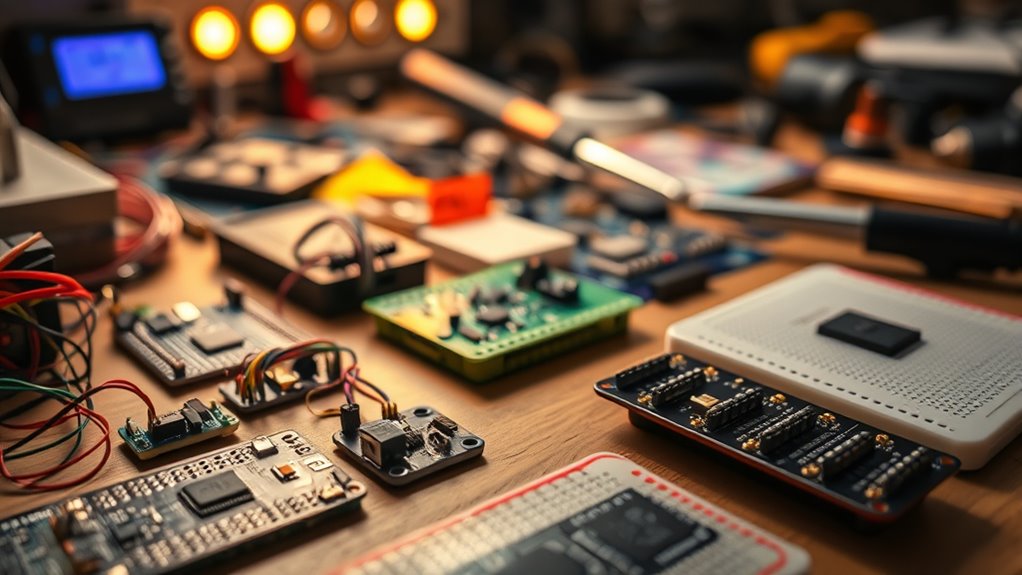
Have you ever wondered how sharing hardware designs openly can accelerate innovation? When you participate in open-source hardware projects, you tap into a vast network of community collaboration. This collective effort brings together engineers, hobbyists, and entrepreneurs who share their ideas, improvements, and solutions freely. Such collaboration fosters rapid development cycles, as everyone can contribute, test, and refine designs without waiting for corporate approval or significant funding. This openness not only speeds up innovation but also democratizes access to advanced technology, enabling individuals and small startups to develop sophisticated devices without the massive budgets typical of industry giants.
Open-source hardware accelerates innovation through community collaboration and shared ideas, empowering small players to develop advanced technology.
However, one of the biggest hurdles for DIY boards trying to compete with established players is manufacturing challenges. Unlike large corporations with dedicated manufacturing facilities and supply chains, open-source hardware creators often face difficulties in scaling production efficiently. Manufacturing your designs at a commercial level requires significant resources, quality control, and expertise that might be beyond the reach of small teams or individual makers. Limited production runs can lead to higher costs per unit, making it hard to achieve the same price competitiveness as mass-produced products from big companies. Additionally, ensuring consistent quality across batches becomes more complex without the extensive testing and quality assurance processes that large-scale manufacturers implement.
Despite these challenges, the open-source approach offers unique advantages that can sometimes compensate for manufacturing limitations. For example, community collaboration allows for rapid troubleshooting and iterative improvements, which can lead to more innovative and versatile designs over time. Furthermore, open-source hardware often benefits from a passionate user base that can help with testing, beta prototypes, and even small-scale manufacturing efforts. This grassroots support can help overcome some manufacturing hurdles, especially for niche or specialized applications where large corporations may not see immediate profit.
Additionally, open-source hardware design files enable local manufacturing, reducing dependency on global supply chains and potentially lowering costs. Makers can adapt designs to use locally available components or employ 3D printing and small-batch PCB fabrication to produce prototypes and small series. While this might not match the economies of scale of major manufacturers, it allows communities to experiment, customize, and innovate without high upfront investments. Over time, as the community grows and techniques evolve, these manufacturing challenges can be mitigated, making DIY boards increasingly competitive.
Finally, advancements in small-scale manufacturing technologies, such as desktop PCB fabrication and affordable assembly services, are continually lowering barriers for DIY hardware developers. While competing directly with industry giants remains tough, the innovative spirit and shared resources fostered by the open-source movement continue to push the boundaries of what small players can achieve.
Frequently Asked Questions
What Are the Main Challenges Faced by Open-Source Hardware Initiatives?
You face challenges like protecting your intellectual property while sharing designs openly, which can be risky. Securing funding strategies is also tough, as open-source projects often rely on community support rather than large investments. Balancing innovation with legal concerns, attracting contributors, and maintaining quality are ongoing hurdles. Ultimately, you need to navigate these issues carefully to grow your initiative and compete effectively against established industry giants.
How Do Open-Source Hardware Projects Ensure Product Quality and Reliability?
Think of it as building a house on a shaky foundation—you need solid checks. You guarantee product quality and reliability by conducting thorough component testing and listening to user feedback. Testing catches issues early, while feedback helps you refine your design. Together, they create a sturdy, dependable product that can stand tall, proving that dedication and attention to detail can match, or even surpass, industry giants.
What Legal Considerations Exist for Open-Source Hardware Developers?
When developing open-source hardware, you need to consider legal aspects like Intellectual Property rights and licensing strategies. You should choose licenses that protect your work while allowing others to build on it. Be aware of patent issues and ensure you don’t infringe on existing IP. Clear licensing strategies help prevent legal disputes, encourage collaboration, and ensure your project remains open and compliant with legal standards.
How Do Open-Source Hardware Communities Sustain Long-Term Development?
Like a sturdy bridge built on shared trust, open-source hardware communities thrive through community collaboration and innovative funding strategies. You actively engage members, fostering a sense of ownership and purpose. By diversifying funding sources—such as crowdfunding, grants, and donations—you guarantee sustained development. Your community’s collective passion fuels continuous improvements, making long-term growth possible. Embracing transparency and shared goals keeps everyone invested, turning individual efforts into a resilient, thriving ecosystem.
Can Open-Source Hardware Meet the Demands of Commercial Manufacturing?
You can meet commercial manufacturing demands with open-source hardware by focusing on component compatibility and manufacturing scalability. While open-source designs may need fine-tuning for mass production, you can adapt them to guarantee reliable component compatibility and streamline scalability. This approach enables smaller manufacturers to produce consistent, high-quality products at scale, making open-source hardware a viable option for commercial applications, as long as you address these critical factors effectively.
Conclusion
Think of open-source hardware like a small boat steering a vast ocean filled with giant ships. While the giants have massive resources, your DIY boards can be nimble and innovative, carving out new paths. Just last year, a tiny open-source project gained worldwide attention, proving that with passion and ingenuity, you can disrupt even the biggest players. Keep sailing forward—your creativity might just steer the future of hardware.