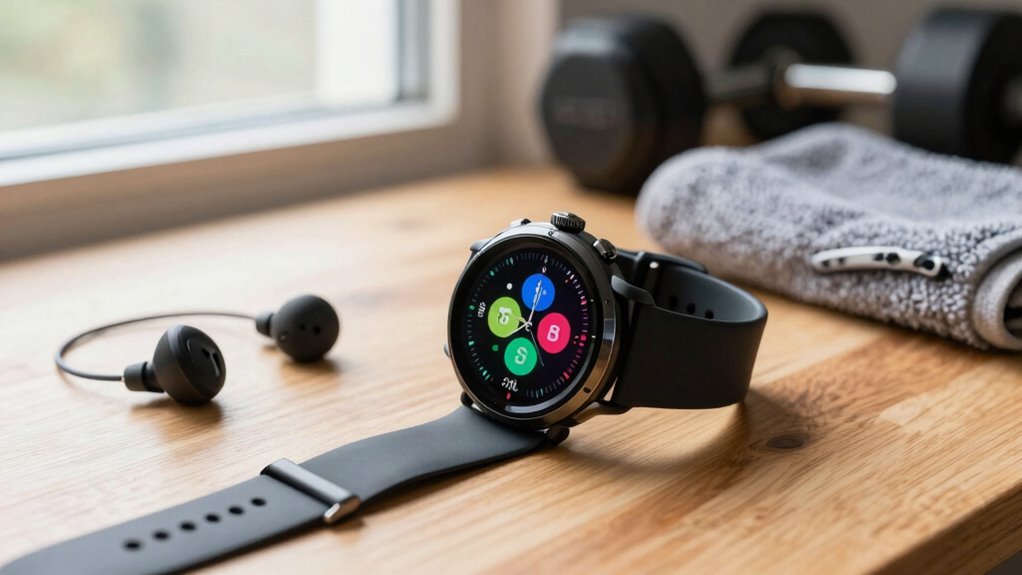

To pick a fitness watch that matches your routine, start by identifying whether you mainly need basic activity tracking or advanced health metrics like heart rate or sleep analysis. Check if it’s compatible with your smartphone, whether iOS or Android, and make sure it has key features like water resistance or GPS if you need them. Set a budget that fits your needs, then compare models to find one that truly supports your daily activities and fitness goals. Keep exploring to find the perfect fit.

Get the latest gadgets delivered free with Prime
- Fast, free delivery on millions of items
- Prime Video, Amazon Music and more included
- Member-only deals all year
Key Takeaways
- Identify your primary fitness goals and activities to prioritize relevant features like GPS, heart rate, or swim tracking.
- Ensure compatibility with your smartphone’s operating system for seamless syncing and app access.
- Consider battery life, water resistance, and customization options to match your daily routine and environment.
- Set a budget that balances essential features with affordability, avoiding overspending on unnecessary functions.
- Research and compare models to find a device that integrates well into your lifestyle and supports your health objectives.
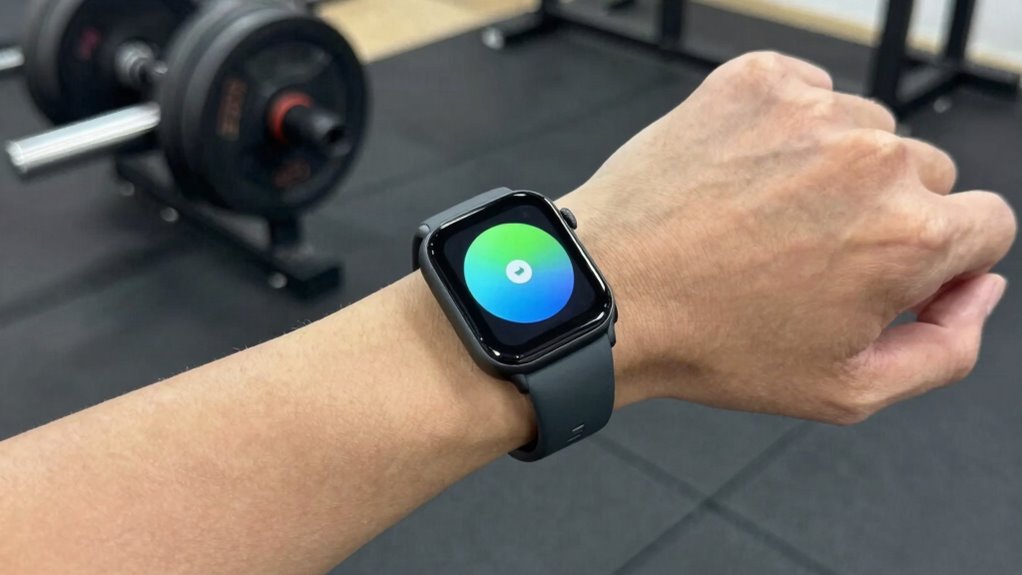
Choosing the right fitness watch can considerably boost your health journey, but with so many options available, it’s easy to feel overwhelmed. To find the best fit, you need to consider the smartwatch features that align with your routine and your budget considerations. Think about what activities you do regularly and what you want from a device. Are you mainly interested in tracking steps and calories, or do you want advanced features like heart rate monitoring, GPS, or sleep analysis? Knowing your priorities helps narrow down your options. Some watches excel at basic activity tracking, which is perfect if you’re just starting out or prefer simple data. Others offer high-tech features that appeal if you’re into more detailed health metrics or outdoor workouts.
Choosing the right fitness watch depends on your activity level, priorities, and budget for accurate, personalized health tracking.
When evaluating smartwatch features, think about compatibility with your smartphone. If you use an iPhone, look for an Apple Watch or a device that seamlessly syncs with iOS. Android users should consider options like Samsung Galaxy Watch or Fitbit, which work well with Android platforms. Battery life is another key feature—if you don’t want to charge your watch daily, seek models known for longer battery performance. Water resistance is crucial if you swim regularly or want to wear your watch during workouts in the rain. Additionally, features like customizable watch faces, notifications, music controls, and apps can enhance your experience, making your watch more than just a fitness tracker. Understanding smartwatch compatibility can help you avoid frustration and ensure smooth integration with your existing devices. Being aware of smartwatch compatibility can also influence your choice, especially if you plan to use third-party apps or services.
Budget considerations play an essential role in your decision. Set a clear price range before you start shopping to avoid overspending. Basic fitness trackers can be affordable, offering core features such as step counting, sleep tracking, and heart rate monitoring at a lower cost. Mid-range options often include more advanced features, better build quality, and longer battery life. High-end models provide the most comprehensive health insights, durability, and additional functionalities like LTE connectivity or extensive smartwatch capabilities. Remember, investing in a device that balances your needs with your budget ensures you get the most value. You don’t need the most expensive model to stay motivated or meet your goals, but skipping essential features can hinder your progress. Additionally, considering the smartwatch features that suit your routine can make a significant difference in how effectively the device supports your health goals.
Ultimately, choosing a fitness watch that matches your routine involves aligning its features with what’s most important to you, considering your budget, and assessing how well it integrates into your daily life. Take your time to research, read reviews, and compare options. When you find a device that fits your needs and budget, it becomes a powerful tool to support your health and fitness journey every day.
best fitness tracker with heart rate monitor
As an affiliate, we earn on qualifying purchases.
As an affiliate, we earn on qualifying purchases.
Frequently Asked Questions
Can I Use a Fitness Watch for Swimming?
Yes, you can use a fitness watch for swimming if it has water-resistant features. Check that it’s specifically designed for swimming, with swimming-specific modes that track your laps, strokes, and distance accurately. Make sure it’s rated for the depth and duration of your swimming sessions. Using a water-resistant watch with these features helps you monitor your swim performance effectively without worrying about water damage.
How Long Does the Battery Typically Last?
Think of your fitness watch’s battery life like a marathon runner’s stamina—some last longer than others. Typically, a good fitness watch offers 4 to 7 days of battery life, but heavy use or GPS can drain it faster. To extend your watch’s battery, use power management features wisely—turn off unnecessary notifications or GPS when not needed. This way, your watch stays reliable for your active lifestyle.
Are Fitness Watches Compatible With All Smartphones?
Fitness watches aren’t compatible with all smartphones, so compatibility issues can arise. You need to check if your device supports the watch’s app and features. Some watches work seamlessly with iPhones, while others are better suited for Android phones. Review your smartphone’s features and the watch’s specifications before buying, ensuring they sync properly. This way, you avoid frustration and get the most out of your fitness tracker.
Do Fitness Watches Provide Accurate Calorie Tracking?
You might wonder if fitness watches truly track calories accurately. The answer? They can be quite precise, especially when monitoring your heart rate and activity zones. As you push through different intensities, the watch adjusts, giving you a closer estimate of calories burned. But keep in mind, factors like device quality and how you wear it influence accuracy. Still, they’re valuable tools for tracking overall activity and progress.
Can I Wear a Fitness Watch During Sleep?
Yes, you can wear a fitness watch during sleep. Many models feature sleep tracking, which monitors your sleep patterns and quality. Just guarantee the watch is comfortable enough to wear overnight; comfort considerations are key to avoiding disruptions. Look for a lightweight, breathable design, and check if it has adjustable straps. Wearing it consistently helps gather accurate sleep data, so choose a watch that suits your comfort needs.
water-resistant GPS smartwatch for running
As an affiliate, we earn on qualifying purchases.
As an affiliate, we earn on qualifying purchases.
Conclusion
In the end, choosing a fitness watch is just like picking a partner—you want someone who keeps you honest, motivated, and maybe even a little obsessed. So go ahead, get the fanciest one, and let it remind you of every missed step and every extra donut. After all, what’s life without a little guilt wrapped around your wrist? Just don’t forget, true fitness comes from inside, not from a flashy gadget.
smartwatch compatible with iPhone
As an affiliate, we earn on qualifying purchases.
As an affiliate, we earn on qualifying purchases.
affordable activity tracker with sleep analysis
As an affiliate, we earn on qualifying purchases.
As an affiliate, we earn on qualifying purchases.
Fall Picks
fall essentials
As an affiliate, we earn on qualifying purchases.