Choosing smart home devices is also a choice about the system that will control them. Amazon Echo and Google Nest are two of the most common starting points: both can control lights, plugs, sensors, and other connected products by voice, but their strengths differ once you build a larger setup. Echo generally gives shoppers more compatible devices and automation options; Nest feels more at home for people who already use Google services and want voice answers tied to them.

Get the latest gadgets delivered free with Prime
- Fast, free delivery on millions of items
- Prime Video, Amazon Music and more included
- Member-only deals all year
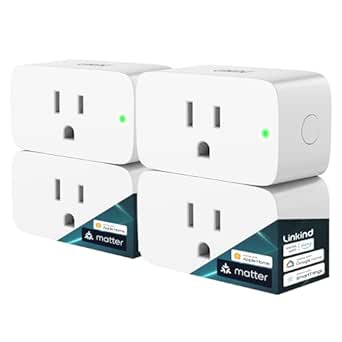
Linkind Matter Smart Plug – Works with Apple Home, Alexa, Siri, Google Home
- ✔ Connectivity: 2.4 GHz Wi-Fi
- ✔ Smart home platforms: Apple Home, Alexa, Google Home, Siri, SmartThings
- ✔ Matter: Supported; compatible controller required for integration

Kasa Smart Plug HS103P4 – Wi‑Fi Outlet with Touch Actuator, Works with Alexa & Google Home, 15 A, UL Certified, 4-Pack, White
- ✔ Connectivity: 2.4 GHz Wi-Fi
- ✔ Voice compatibility: Amazon Alexa, Google Assistant
- ✔ Rated current: 15 A
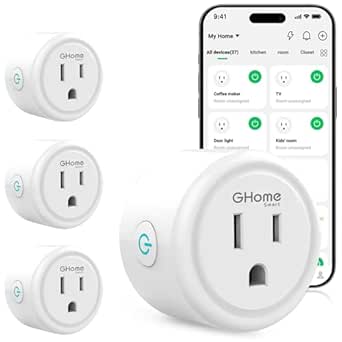
GHome Smart Plug – WiFi Smart Plugs Compatible with Alexa and Google Home
- ✔ Connectivity: 2.4 GHz Wi-Fi
- ✔ Voice compatibility: Alexa, Google Home
- ✔ Power capacity: 1200 W
The difference matters most if you expect to add devices over time, automate several steps, or rely on a particular phone and service ecosystem. Echo is the stronger default for a mixed-brand smart home and hands-on routine building. Nest makes more sense for Google-centric households that value search, familiar Google apps, and straightforward voice control. Neither system is automatically better for every home, so this comparison focuses on compatibility, control, routines, audio, privacy, setup, and value.
At a Glance
| Criteria | Amazon Echo | Google Nest | Winner |
|---|---|---|---|
| Device compatibility | Broad support across many third-party smart home brands and product types | Strong support for common devices; compatibility varies by product and platform support | A |
| Voice assistant and services | Alexa supports shopping, skills, and a wide range of connected services | Google Assistant integrates naturally with Google services and voice search | B |
| Routines and automation | Flexible routines and a large range of triggers and actions | Useful routines, with capabilities that vary across devices and services | A |
| App and setup | Alexa app offers many controls, though its breadth can feel busy | Google Home offers a familiar interface for Google users | Depends |
| Audio and smart displays | Wide range of Echo speakers and displays at different price points | Nest speakers and displays suit music, voice queries, and household control | Depends |
| Privacy and controls | Voice history and related controls are available in the Alexa app | Google account and voice activity controls are available in account settings | Tie |
| Value and product choice | Frequent discounts and many device formats make it easy to start small | Good value for Google households, though choice and deals vary by model | A |
Linkind Matter Smart Plug – Works with Apple Home, Alexa, Siri, Google Home
The Linkind is our top pick when a smart home spans platforms or may change over time. Its Matter compatibility is the key distinction: it is designed to work with Apple Home, Alexa, Google Home, Siri, and SmartThings, rather than locking the buyer into a single manufacturer ecosystem. It also supports offline LAN control, which can keep local commands and automations available if the internet connection is unavailable. That matters most in homes where connected control should remain dependable beyond cloud access.There is a setup condition behind that flexibility. Linkind requires a Matter-certified hub or controller for integration with the named platforms, so it is not automatically the easiest option for someone starting from scratch. Kasa is a more direct choice for Alexa or Google users who want a familiar app-based smart plug without the added controller requirement. Both list 1800 W capacity and scheduling, while Linkind’s local control and broader platform reach make it the more adaptable choice for a mixed setup. Like the other two, it is limited to 2.4 GHz Wi-Fi.We would choose Linkind for a home already equipped with a compatible Matter controller and likely to use more than one assistant or platform. Buyers with one assistant and no hub may find Kasa more convenient; those prioritizing a lower listed capacity and multiple app options may consider GHome, though it does not offer the same stated Matter support.
Pros:
- Matter support spans several major smart home platforms.
- Offline LAN control can preserve local operation without internet.
- Scheduling, timers, and voice control support everyday automation.
- Lists 15 A and up to 1800 W capacity.
Cons:
- A Matter-certified hub or controller is required for platform integration.
- Requires a 2.4 GHz Wi-Fi network.
- The AiDot app is another available control path to consider during setup.
Best for: Households with a Matter-certified controller that want Apple Home, Alexa, Google Home, Siri, or SmartThings compatibility and local control.
Not ideal for: Buyers without a compatible controller, or those who want the least involved setup for a single voice assistant.
Bottom line: Linkind is the most flexible choice here for a Matter-ready home, as long as its controller requirement fits your setup.
“Linkind is the most flexible choice here for a Matter-ready home, as long as its controller requirement fits your setup.”
Kasa Smart Plug HS103P4 – Wi‑Fi Outlet with Touch Actuator, Works with Alexa & Google Home, 15 A, UL Certified, 4-Pack, White
Kasa takes the practical route: connect a set of ordinary appliances to Wi-Fi, then manage them through the Kasa app or a voice assistant. It supports Alexa and Google Assistant, plus schedules, timers, and countdowns. For a household that already uses one of those assistants, this covers the smart home basics without requiring the Matter controller specified by Linkind. Its four-plug pack also makes it easier to automate several separate lamps or small appliances at once.Compared with Linkind, Kasa offers a more direct fit for a single-assistant home but gives up the listed Matter compatibility and offline LAN control. Compared with GHome, it has a higher stated power capacity of 1800 W versus 1200 W, and its product details specify UL certification. That does not eliminate the need to check the connected appliance’s requirements. Kasa’s central limitation is network support: it needs 2.4 GHz Wi-Fi, so a 5 GHz-only setup is out. It is also less appealing if your household wants Apple Home or SmartThings integration, which are explicitly listed for Linkind but not Kasa.This is our best overall pick for buyers who want a familiar, app-led way to automate everyday devices without building around Matter. If platform breadth or local control is the priority, Linkind is the stronger match. If you want basic scheduling and use GHome-compatible apps already, GHome may be enough, subject to its lower load limit.
Pros:
- Works with Alexa and Google Assistant.
- Kasa app offers scheduling, timer, and countdown functions.
- Four plugs support automation in several rooms or appliance locations.
- Lists 15 A, 1800 W capacity, and UL certification.
Cons:
- Requires a 2.4 GHz Wi-Fi network.
- The listed compatibility does not include Apple Home or SmartThings.
- No offline LAN control is specified.
Best for: Alexa or Google Assistant households looking to schedule multiple lamps, fans, or other suitable appliances with a simple four-pack.
Not ideal for: Homes centered on Apple Home or SmartThings, buyers who need Matter or offline LAN control, and users on 5 GHz-only Wi-Fi.
Bottom line: Kasa is the clearest all-around fit for Alexa and Google homes that want uncomplicated, multi-device scheduling.
“Kasa is the clearest all-around fit for Alexa and Google homes that want uncomplicated, multi-device scheduling.”
GHome Smart Plug – WiFi Smart Plugs Compatible with Alexa and Google Home
GHome suits buyers who want the essential smart plug routine: switch devices remotely, set schedules, group plugs, and use voice commands through Alexa or Google Assistant. Its distinguishing feature is app choice. Control can run through the GHome, Smart Life, or Tuya app, which may be convenient for someone already organizing connected devices in one of those apps. This is a useful basic option, but its flexibility is more about app control than broad smart home platform support.Against Kasa, GHome lists the same Alexa and Google compatibility and includes group controls, but it requires initial linking through the GHome app before voice assistant integration. It also lists 1200 W capacity, below Kasa’s and Linkind’s 1800 W figures, so buyers need to check the intended appliance carefully. Linkind is a stronger fit for a Matter-based home and supports offline LAN control; GHome does not list either capability. Its ETL and FCC certifications are specified, while Kasa lists UL certification, so buyers who need a particular certification should confirm that it meets their requirements.Choose GHome when app scheduling, timers, and grouping are enough and the connected loads stay within its stated capacity. Skip it for high-power appliances beyond that limit or if you want to avoid linking a separate app before voice control. Like the other picks, it needs 2.4 GHz Wi-Fi and will not work on a 5 GHz-only network.
Pros:
- Supports Alexa and Google Assistant voice control.
- Offers scheduling, timers, remote monitoring, and group controls.
- Can be managed through GHome, Smart Life, or Tuya apps.
- Lists ETL and FCC certifications.
Cons:
- Lists 1200 W maximum capacity, lower than Kasa and Linkind.
- Must be linked to the GHome app before Alexa or Google integration.
- Requires 2.4 GHz Wi-Fi.
Best for: Alexa or Google users who want app-based schedules, timers, and group control for appliances within the stated 1200 W capacity.
Not ideal for: Buyers who need higher listed capacity, Matter support, offline LAN control, or integration without first linking the GHome app.
Bottom line: GHome covers everyday scheduling and grouping, but its lower stated capacity makes appliance selection more restrictive than with the other two picks.
“GHome covers everyday scheduling and grouping, but its lower stated capacity makes appliance selection more restrictive than with the other two picks.”
As an Amazon Associate we earn from qualifying purchases.
Key Differences
The biggest practical gap is flexibility. Amazon’s Alexa ecosystem supports a broad range of third-party devices, and Echo models span speakers, displays, and other form factors. That gives buyers more room to mix brands or add a specific sensor, plug, or appliance later. Google Nest handles many common smart home needs well, but shoppers should check each product’s stated compatibility before buying, especially when building around less common devices.
The assistant experience points the other way. Nest is a natural choice when a household already uses Google services and wants spoken searches or controls tied to that account. Echo is appealing to people who want broad smart home support and more ways to build routines. Both can handle everyday commands; the difference becomes noticeable as people add more services, devices, and household preferences.
Price alone does not settle the choice. Echo devices are often available in several formats and at discounted prices, which can make it cheaper to put a speaker in multiple rooms. A Nest device can be better value for someone who will use Google services every day and does not need Alexa’s wider selection. The best purchase is the one that fits the devices and services already in the home, since switching ecosystems later can mean rebuilding routines and replacing or reconfiguring hardware.
Detailed Comparison
Device compatibility (Amazon Echo wins — moderate)
Echo wins; the gap is moderate. Alexa works with a broad selection of third-party smart home products, giving buyers more options when they want to mix brands or add a less common device. Nest supports many popular lights, plugs, cameras, and appliances, but individual compatibility can vary. In practice, Echo is a safer starting point for a home where the device list is still evolving. Check the product listing for Alexa or Google Home support before buying any connected device.
Voice assistant and services (moderate difference)
Nest wins for Google users; the gap is moderate. Google Nest fits naturally into a household that uses Google accounts and services, and its assistant is suited to spoken information requests. Alexa offers its own strengths, including a wide range of third-party integrations and Alexa skills. The better experience depends on the services people already use: pick Nest when Google is the center of the household’s digital life, and Echo when smart home breadth is the higher priority.
Routines and automation (Amazon Echo wins — moderate)
Echo wins; the gap is moderate. Alexa routines let users combine supported triggers and actions, such as turning lights on at a set time or responding to a voice command. Google Home also provides routines for common household tasks. Available triggers and actions depend on device and service support, but Echo’s wider ecosystem gives routine builders more places to connect devices. The practical difference matters if automations are a major reason for buying a smart speaker; for basic scheduled lights, either can work.
App and setup (minor difference)
This is a close call based on the household’s phones and habits. Google Home is familiar to people who already manage Google services, while the Alexa app brings many settings and device controls together in one place. Alexa’s breadth can take more time to learn, especially as devices and routines accumulate. Neither app eliminates compatibility checks or setup steps. Google users may find Nest simpler to get started with; people building a varied setup may value Alexa’s larger control surface.
Audio and smart displays (minor difference)
There is no universal winner; the gap is minor for basic use. Both brands sell speakers and displays for voice control, music, timers, and household information. The right choice depends on the specific model, placement, and services the family uses. Echo’s range offers more formats and price points, while Nest devices suit people who want Google services nearby. Compare the exact device’s sound, display, and features before treating the brand as the deciding factor.
Privacy and controls (minor difference)
Tie; the gap is minor for most buyers. Both systems process voice requests and provide controls for reviewing or managing account activity. The available settings and their location differ, so buyers should review the relevant Alexa or Google account controls and configure them to their comfort level. Neither ecosystem removes the need to think about microphone placement and account settings. For everyday use, privacy preferences are better judged by the controls each person is willing to use than by a blanket brand claim.
Value and product choice (Amazon Echo wins — moderate)
Echo usually wins on breadth and entry price; the gap is moderate. Echo devices are sold in many formats and commonly receive discounts, making it easier to start with one speaker and add more rooms later. Nest may be better value if its Google integration will be used daily and the home needs only a small number of compatible devices. Paying more for a premium speaker or display is worthwhile only if its sound, screen, or specific features matter to the household.
Amazon Echo: Pros and Cons
Pros:
- Broad selection of compatible smart home products
- Flexible routines and many third-party integrations
- Multiple Echo formats and frequent discounts
Cons:
- Alexa app can feel busy as settings and devices build up
- Google-centric households may prefer Nest’s service integration
- Features vary by Echo model and connected product
Google Nest: Pros and Cons
Pros:
- Natural fit for people already using Google services
- Google Home gives users a familiar place to manage devices
- Capable for common voice control and household routines
Cons:
- Device compatibility can require more checking for a mixed-brand setup
- Fewer reasons to choose it if the household does not use Google services
- Features vary by Nest model and connected product
Who Should Choose What
Choose Amazon Echo if:
- You want the broadest choice of third-party smart home devices.
- You expect to build routines across several brands or add devices over time.
- You want an affordable entry point with multiple speaker and display formats.
Choose Google Nest if:
- Your household already relies on Google services and accounts.
- You want voice control and searches that fit your existing Google habits.
- Your needs center on common compatible devices and a familiar Google Home app.
Skip both if: Skip both if you do not want voice-controlled devices or account-based smart home services; standalone smart plugs, switches, or a different hub may better match your preferences.
Value for Money
Echo is usually the stronger value for buyers who want to build out a mixed-brand home. Its range of device formats and frequent discounts can reduce the cost of adding voice control room by room, while Alexa’s broad compatibility leaves more choice when shopping for accessories. That value is most meaningful for people who plan to expand beyond a speaker and a few lights.
Paying for Nest makes sense when Google integration is a daily benefit, not just a brand preference. If a household already uses Google services and needs a few mainstream connected devices, a Nest speaker or display may deliver more practical value than a cheaper Echo that requires changing familiar habits. In either ecosystem, pay more for a particular model only when better sound, a screen, or another model-specific feature will see regular use.
Final Verdict
For most people starting a smart home without a strong platform preference, choose Amazon Echo. It offers more device options, flexible routines, and a broad range of entry points, which makes future expansion easier. Choose Google Nest if your household already uses Google services and values having that assistant integrated into everyday voice requests. The deciding factor is whether you care more about choice across smart home devices or a closer fit with Google.
Before buying either system, check that the specific lights, cameras, appliances, and hubs you own or plan to buy support it. That quick check matters more than small differences between individual speakers: a compatible system with routines you’ll use is better value than a discounted device that leaves your preferred products out.
Frequently Asked Questions
Is Amazon Echo or Google Nest better for a first smart home?
Echo is the stronger default if you are still choosing devices because its ecosystem supports a broad range of third-party products. Nest is a good first choice when your household already uses Google services and your planned devices are compatible. Check the support listed for each product before you buy.
Can Echo and Nest control the same smart home devices?
Many popular devices support both Alexa and Google Home, but support varies by product. Some devices may need their own app or a hub, and certain features can differ between platforms. Confirm support for the exact model and the features you need.
Is it worth paying more for an Echo or Nest display?
Pay more for a display if you will use its screen for video calls, recipes, camera views, or shared household information. If your main needs are voice commands, timers, and music, a basic speaker may be better value. Compare the features of the specific models before deciding.
Which smart home system is easier to expand?
Echo is generally easier to expand across a wider mix of brands, while Nest can be straightforward when the household already uses Google Home and chooses compatible products. Either system can become harder to manage if new purchases do not support the platform, so check compatibility as you add devices.