
TL;DR

Get the latest gadgets delivered free with Prime
- Fast, free delivery on millions of items
- Prime Video, Amazon Music and more included
- Member-only deals all year
An AI update in CORVUS ISR has achieved a 42% reduction in tracker identity switches in synthetic benchmarks. The new model improves tracking stability while maintaining real-time performance. Further testing and deployment details are forthcoming.
CORVUS ISR’s latest AI model has achieved a 42% reduction in identity switches during synthetic tracking benchmarks, according to the company. This development represents a significant step forward in multi-object tracking technology, with potential impacts on surveillance and defense applications.
The benchmark, conducted using a synthetic scene with perfect ground truth, compared the previous baseline model, the ‘greedy nearest-neighbour,’ with the new ‘confirmed-track auction’ model. Results showed that in a dense scenario with 150 moving objects at 2 frames per second, identity switches per minute dropped from 2,042 to 1,183. In a more crowded scenario with 400 objects, switches decreased from 14,032 to 8,040.
The new model incorporates advanced features such as track confirmation, three-tier auction association, velocity consistency gating, and confidence-decayed coasting. These enhancements have improved tracking stability across various stress tests, including lower frame rates, occlusion, and jitter conditions. Despite these improvements, both models still make thousands of identity errors per minute under stress, but the reduction signifies a meaningful step forward.
Performance remains real-time, with the new tracker averaging approximately 1.2 milliseconds per sensor tick, well within the 10-millisecond real-time threshold. The benchmark is publicly accessible, and users can reproduce results by running the ‘Run benchmark’ feature on the demo site.
Impact of AI-Driven Tracking Improvements
The 42% reduction in identity switches indicates a substantial enhancement in multi-object tracking accuracy, which is critical for applications in surveillance, defense, and autonomous systems. The ability to maintain object identities more reliably improves situational awareness and reduces false alarms or misidentifications. As the benchmark uses synthetic scenes with perfect ground truth, these results provide a clear measurement of the AI’s capabilities, setting a new standard for future tracker development.
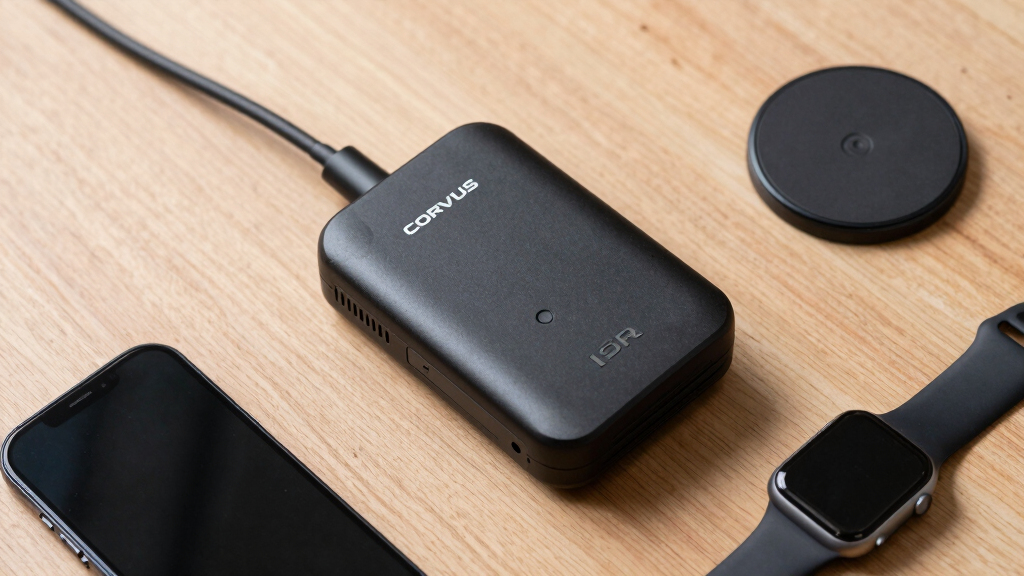
AI-based multi-object tracking system
As an affiliate, we earn on qualifying purchases.
As an affiliate, we earn on qualifying purchases.
Synthetic Benchmark and Tracker Evolution
CORVUS ISR’s benchmarking process involves synthetic scenes with reproducible parameters, allowing objective comparison of different tracking models. The initial baseline, ‘greedy nearest-neighbour,’ served as the published floor, while the current ‘confirmed-track auction’ model introduces multiple enhancements aimed at reducing identity errors. These benchmarks are designed to simulate challenging scenarios such as dense object populations, occlusion, and low frame rates, providing a rigorous test environment. The development aligns with ongoing efforts to improve multi-object tracking in synthetic and real-world scenarios, with results published openly for community validation.
“The new AI model demonstrates a significant reduction in identity switches, marking a meaningful step toward more reliable tracking systems.”
— an anonymous researcher
As an affiliate, we earn on qualifying purchases.
Unconfirmed Aspects of Real-World Deployment
It is not yet clear how these synthetic benchmark improvements will translate to real-world scenarios, where factors such as unpredictable movement, sensor noise, and environmental conditions can affect performance. Deployment in operational systems remains to be tested, and further validation is needed to confirm robustness outside the synthetic environment.
As an affiliate, we earn on qualifying purchases.
Next Steps for Tracker Validation and Adoption
Future developments will likely include testing the new AI model in real-world environments, integrating it into operational systems, and conducting field trials. The company plans to publish additional benchmark results, explore further enhancements, and encourage third-party validation. Users and developers are invited to access the public demo and reproduce the benchmark results to evaluate the technology’s capabilities firsthand.
As an affiliate, we earn on qualifying purchases.
Key Questions
What is the significance of the 42% reduction in identity switches?
The reduction indicates a substantial improvement in tracking accuracy, which can enhance surveillance, autonomous navigation, and defense systems by maintaining object identities more reliably.
Can these synthetic benchmark results predict real-world performance?
While promising, synthetic benchmarks do not fully replicate real-world conditions. Further testing in operational environments is necessary to confirm robustness and practical benefits.
Is the new AI model available for public testing?
Yes, the benchmark and demo are publicly accessible. Users can run the ‘Run benchmark’ feature to reproduce the results and evaluate the tracker’s performance.
What are the main technical improvements in the new model?
The new model incorporates track confirmation, multi-tier auction association, velocity gating, and confidence-based coasting, which collectively enhance tracking stability and reduce identity errors.
When will the new tracker be deployed in operational systems?
Deployment timelines are not yet confirmed. Further validation and integration steps are expected before real-world application.
Source: ThorstenMeyerAI.com
Halloween Picks
halloween
As an affiliate, we earn on qualifying purchases.