
📊 Full opportunity report: Smart Restaurant Food Safety: The Role Of Computer Vision Technology on IdeaNavigator AI — validation score, market gap, and execution plan.

Get the latest gadgets delivered free with Prime
- Fast, free delivery on millions of items
- Prime Video, Amazon Music and more included
- Member-only deals all year
TL;DR
A multi-unit restaurant group is piloting a computer vision system to verify food safety inspections through photos. This technology aims to improve accuracy and accountability in daily safety checks, with potential to transform restaurant operations.
A multi-unit restaurant group is trialing a computer vision system that automatically analyzes photos taken during daily food safety walk-throughs to identify violations. This development could improve the accuracy of safety inspections and replace manual checkbox checklists, which often lack verifiable data. The system is currently in a testing phase, with plans to compare its findings against traditional health inspections.
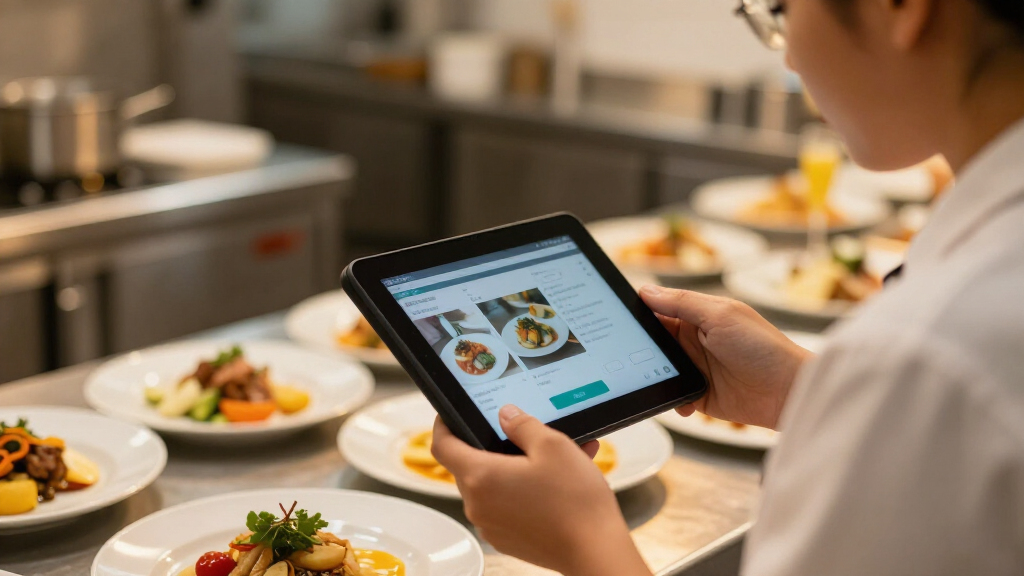
The proposed system involves managers taking photographs of key areas such as prep stations, storage units, and handwashing sinks during morning inspections. These images are then processed by a vision model designed to flag violations like uncovered food, propped cooler doors, or missing date labels, and to assign severity ratings. The technology aims to generate timestamped reports for each location, enabling trend analysis across multiple outlets. This approach is intended to turn subjective visual checks into objective, verifiable data.
According to an anonymous source, the system could be offered as a per-location monthly subscription, with a group dashboard providing oversight and compliance tracking. The restaurant group plans to validate the system’s effectiveness by running two weeks of inspection photos through the model and comparing flagged violations with findings from a hired health-inspection consultant. The goal is to improve food safety compliance and accountability without requiring additional hardware beyond existing smartphones.
Smart Restaurant Food Safety
A multi-unit restaurant group is piloting computer vision to verify daily food-safety walk-throughs through ordinary smartphone photos—turning subjective checks into timestamped, reviewable evidence.
Pilot stage · effectiveness not yet confirmedFrom camera roll to compliance record
Managers photograph high-risk areas during routine inspections. A vision model reviews what is visible, assigns severity, and creates a location-level report that can be audited over time.
Capture
Managers photograph prep stations, storage units, coolers and handwashing sinks.
Analyze
The vision model scans each image for recognizable food-safety violations.
Rate
Detected issues receive severity ratings for review and prioritization.
Report
Timestamped findings feed location reports, trend analysis and group oversight.
Uncovered food
Visible containers or ingredients left without appropriate covers may be flagged.
Propped cooler doors
Open or improperly secured cooler doors can be surfaced for immediate attention.
Missing date labels
Items without visible date markings may be identified, subject to image clarity.
Evidence changes the inspection
Computer vision is designed to supplement—not immediately replace—trained inspectors. Its near-term value is consistency, documentation and scalable oversight across locations.
| Inspection trait | Manual checklist | Photo + vision |
|---|---|---|
| Verifiable evidence | ✗ Limited | ✓ Image record |
| Timestamped activity | ~ Variable | ✓ Built in |
| Cross-location trends | ✗ Labor intensive | ✓ Dashboard-ready |
| Contextual judgment | ✓ Human strength | ~ Under evaluation |
| Ambiguous cases | ✓ Can investigate | ✗ Risk of error |
The proof still has to happen
The central test is whether AI findings align closely enough with expert inspection results across real restaurant conditions to improve accountability without creating excessive false alerts.
Compare like for like
- Collect two weeks of routine inspection photographs.
- Run the images through the computer vision model.
- Engage a health-inspection consultant for comparison.
- Review overlap, missed violations and false positives.
- Refine the system before any broader rollout.
What remains unconfirmed
- Accuracy across different layouts, cuisines and workflows.
- Performance under poor lighting or inconsistent image quality.
- Handling of partially visible or ambiguous safety conditions.
- Long-term false-positive and false-negative rates.
- Specific privacy, retention and security safeguards.
What operators need to know
Will this replace human health inspections?
Not immediately. The proposed system supplements human inspection with verifiable records and more consistent daily checks.
What can it detect?
The initial focus includes visible issues such as uncovered food, propped cooler doors, missing date labels and hygiene-related conditions.
When could it become widely available?
A broader rollout could follow a successful pilot, potentially within a year, but no confirmed deployment date has been published.
What is the proposed commercial model?
An anonymous source suggested a per-location monthly subscription with a group dashboard for compliance tracking.
What comes next?
Possible future additions include real-time alerts, expanded hygiene checks and temperature-related monitoring. These capabilities remain prospective and may require additional sensors or integrations.
Potential Impact on Food Safety Compliance
This technology could significantly improve the accuracy and reliability of daily food safety inspections in restaurants. By providing verifiable, timestamped data, it reduces the risk of oversight or misreporting that can occur with manual checklists. Enhanced inspection fidelity could lead to better compliance, fewer violations, and ultimately safer food handling practices. For restaurant chains, this also offers a scalable way to monitor multiple locations more effectively and with less manual effort.
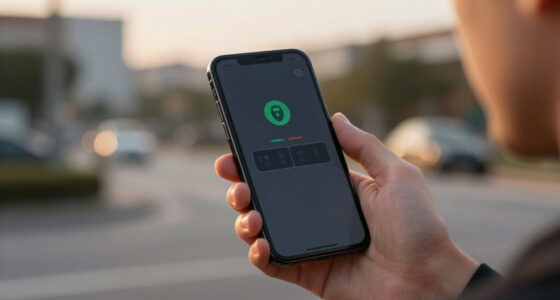
food safety inspection smartphone app
As an affiliate, we earn on qualifying purchases.
As an affiliate, we earn on qualifying purchases.
Recent Advances in Computer Vision for Food Safety
Recent developments in computer vision have enabled AI models to reliably analyze ordinary photos for safety violations, a capability previously limited to specialized hardware or trained inspectors. The idea of automating food safety checks has gained traction as restaurant operators seek more consistent and verifiable compliance methods. Pilot programs like this one reflect a broader industry trend toward digital transformation in restaurant operations, especially amid increasing regulatory scrutiny and consumer demand for safety transparency.
Historically, safety inspections rely on manual checklists, which are often subjective and difficult to verify. The integration of AI-based image analysis aims to address these issues by turning routine walk-throughs into data-driven, auditable records. This approach aligns with the ongoing shift toward automation and digital record-keeping in the hospitality sector.
“The system can flag violations with severity ratings and generate timestamped reports, transforming subjective inspections into objective data.”
— an anonymous source
computer vision food safety system
As an affiliate, we earn on qualifying purchases.
As an affiliate, we earn on qualifying purchases.
Unconfirmed Aspects of System Effectiveness
It is not yet clear how accurately the vision model will perform across diverse restaurant environments or how it will handle ambiguous cases. The validation process is still ongoing, and no final results have been published. Additionally, questions remain about the system’s ability to adapt to different restaurant layouts, lighting conditions, and image quality variations. The long-term reliability and potential for false positives or negatives are still being evaluated.
restaurant safety violation detection camera
As an affiliate, we earn on qualifying purchases.
As an affiliate, we earn on qualifying purchases.
Next Steps for Validation and Deployment
The restaurant group plans to complete the two-week validation phase by comparing the AI’s flagged violations with traditional health inspector reports. If successful, the system could be rolled out more broadly across all locations, with further refinements based on initial results. Future developments may include integrating real-time alerts and expanding the system’s scope to cover additional safety aspects, such as temperature monitoring or hygiene compliance.
automated food safety inspection software
As an affiliate, we earn on qualifying purchases.
As an affiliate, we earn on qualifying purchases.
Key Questions
How does the computer vision system work in practice?
Managers take photos during daily inspections, which are then analyzed by an AI model to detect violations like uncovered food or missing labels. The system generates reports and severity ratings for review.
Will this replace human health inspections?
Not immediately. The system is intended to supplement existing inspections by providing verifiable data, not replace trained inspectors. It aims to improve accuracy and accountability.
What types of violations can the system detect?
Initial focus includes violations like uncovered food, improperly propped cooler doors, missing date labels, and hygiene-related issues visible in photos. Its accuracy for other violations is still under evaluation.
When might this technology be widely available?
If validation is successful, a broader rollout could occur within a year, with ongoing improvements based on pilot results and user feedback.
Are there privacy or security concerns?
The system processes photos taken during routine inspections. Data security measures and privacy policies are expected to be in place, but specific details have not yet been publicly disclosed.
Source: IdeaNavigator AI
Fall Picks
fall essentials
As an affiliate, we earn on qualifying purchases.