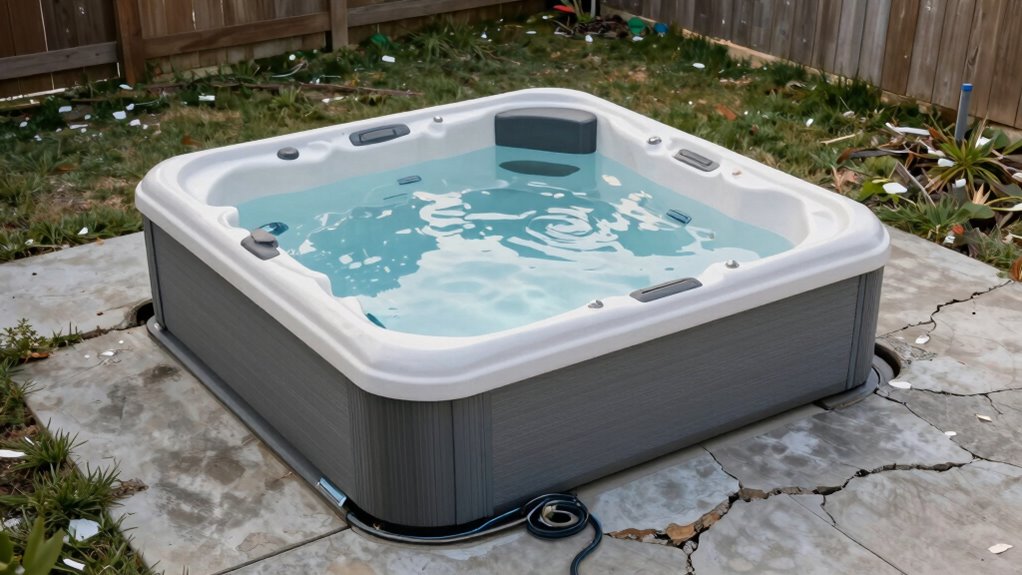

Placing your hot tub too close to property lines, structures, or on uneven ground can lead to costly problems like drainage issues, structural damage, and legal disputes. Poor site choices can cause water pooling, erosion, and make maintenance difficult, increasing long-term expenses. To avoid these pitfalls, make sure your hot tub is on a level, well-drained surface and complies with local regulations. Stay tuned to discover how proper placement can save you money and headaches later.

Get the latest gadgets delivered free with Prime
- Fast, free delivery on millions of items
- Prime Video, Amazon Music and more included
- Member-only deals all year
Key Takeaways
- Incorrect site selection can lead to drainage issues, water damage, and costly repairs over time.
- Poor leveling and unstable ground cause structural stress, leaks, and uneven wear on the hot tub.
- Placing the hot tub too close to property lines or utilities may violate regulations and result in fines.
- Failing to incorporate safety buffer zones hampers maintenance access and increases safety hazards.
- Lack of privacy features or poor aesthetic integration can reduce enjoyment and decrease overall property value.
As an affiliate, we earn on qualifying purchases.
Why Proper Hot Tub Placement Matters for Safety and Longevity

Proper hot tub placement is essential because it directly affects both safety and the lifespan of your investment. When you position your hot tub correctly, it helps maintain ideal temperature regulation, preventing overheating or freezing that can damage the equipment. Proper placement also ensures effective water filtration, reducing debris buildup and keeping the water clean and safe for use. Avoid placing your hot tub in direct sunlight or areas with poor drainage, as these can compromise temperature control and water quality. Additionally, a stable, level surface prevents unnecessary stress on the shell and jets, extending its longevity. By choosing the right spot, you protect your investment, enhance safety, and guarantee your hot tub remains a relaxing oasis for years to come. Correct hot tub installation and cabling solutions further contribute to maintaining optimal performance and safety standards. Understanding site selection is crucial for long-term durability and enjoyment, especially when considering environmental factors that can impact the hot tub’s performance over time. Proper site assessment helps identify potential hazards and suitable locations to maximize longevity and safety. Taking into account water source considerations can also prevent issues related to water quality and chemical balance.
As an affiliate, we earn on qualifying purchases.
Legal Rules and Property Line Considerations for Hot Tubs
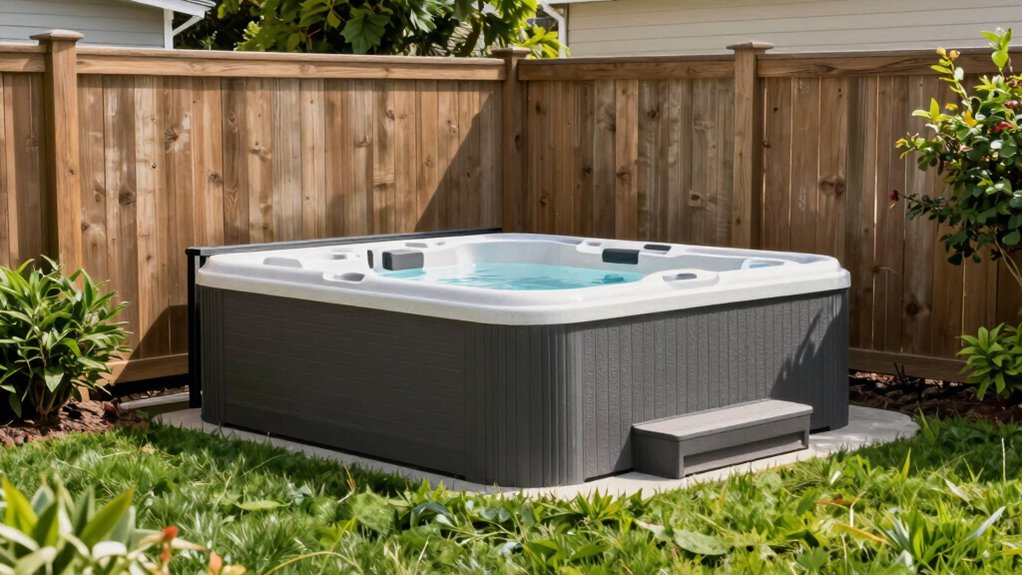
Before installing a hot tub, it is crucial to understand the legal rules and property line regulations that apply in your area. Local ordinances often specify how close your hot tub can be to property boundaries, utilities, or fences. Failing to follow these rules can lead to fines or costly modifications later. Check with your city or HOA for specific setbacks and permits. Keep in mind that your hot tub accessories, like privacy screens, must also adhere to these restrictions. Landscaping tips can help buffer your hot tub while respecting property lines. Consider planting shrubs or installing fences to enhance privacy without infringing on neighbors’ space. Always verify your property’s legal boundaries to avoid disputes, and ensure your setup complies with all local rules. Additionally, understanding property line regulations can help you plan your hot tub placement more effectively.
As an affiliate, we earn on qualifying purchases.
Common Placement Mistakes That Can Cost You Big
One common mistake is not properly leveling the ground, which can cause instability and damage over time. Another costly error is neglecting privacy, leaving you exposed or uncomfortable during use. Both issues can turn your hot tub experience into an ongoing hassle if overlooked. Additionally, considering the environmental impact of your hot tub placement helps ensure that your setup aligns with sustainable practices and minimizes disruption to the surrounding natural area. Being aware of site selection best practices can further prevent future issues and enhance your overall enjoyment. Proper planning and knowledge of hot tub placement can help you avoid these pitfalls from the start, especially by understanding how site conditions influence long-term durability. Incorporating AI-driven research into your planning can provide insights into optimal locations and setup methods, greatly reducing potential problems.
Improper Ground Leveling
Have you ever thought about what happens if your hot tub isn’t level? An uneven surface can cause structural damage, leaks, or discomfort. Proper ground leveling guarantees stability and safety, while also enhancing landscape aesthetics. When you skip this step, you risk poor weight distribution and future costly repairs. Additionally, uneven ground can make outdoor lighting installation tricky, creating shadows or uneven illumination that diminishes your space’s appeal. To avoid these issues, focus on:
- Using a level to check the surface before placement
- Clearing debris and roots for a smooth foundation
- Adding a concrete pad or gravel base for stability
- Ensuring the ground slopes slightly away from the hot tub for drainage
- Considering ground preparation options for outdoor entertainment to maximize your space’s potential. Doing thorough soil assessment can help identify the best foundation for your hot tub, preventing future problems and ensuring long-term durability. Proper soil stability is essential to maintain the integrity of the installation over time, especially when incorporating cultural artifacts like Indonesian decor masks to create an inviting atmosphere. Correct leveling makes your hot tub safer, more attractive, and easier to maintain.
Inadequate Privacy Measures
Even if your hot tub is perfectly level and stable, overlooking privacy can turn an inviting space into an uncomfortable one. Without proper privacy measures, you risk feeling exposed or overheard, ruining your relaxation. Installing privacy screens is a simple way to create a secluded oasis, blocking neighbors’ views and reducing noise. Landscaping barriers, like tall shrubs or fences, enhance privacy naturally and add aesthetic appeal. Be strategic about placement; position your hot tub where it’s shielded from prying eyes, and consider combining screens with landscaping for layered privacy. Neglecting these measures can lead to discomfort and less enjoyment, so prioritize privacy from the start. Additionally, understanding curiosity’s role in personal growth can help you maintain your outdoor space by ensuring your furniture and structures remain in good condition. Thoughtful planning today saves you from costly modifications or regrets later, especially when considering privacy-enhancing features that can be easily integrated into your landscape design. Incorporating privacy-conscious design from the beginning ensures long-term satisfaction and peace of mind. Recognizing the importance of privacy awareness can help you make informed decisions that support both relaxation and security.
As an affiliate, we earn on qualifying purchases.
How Close Is Too Close? Recommended Distance Guidelines
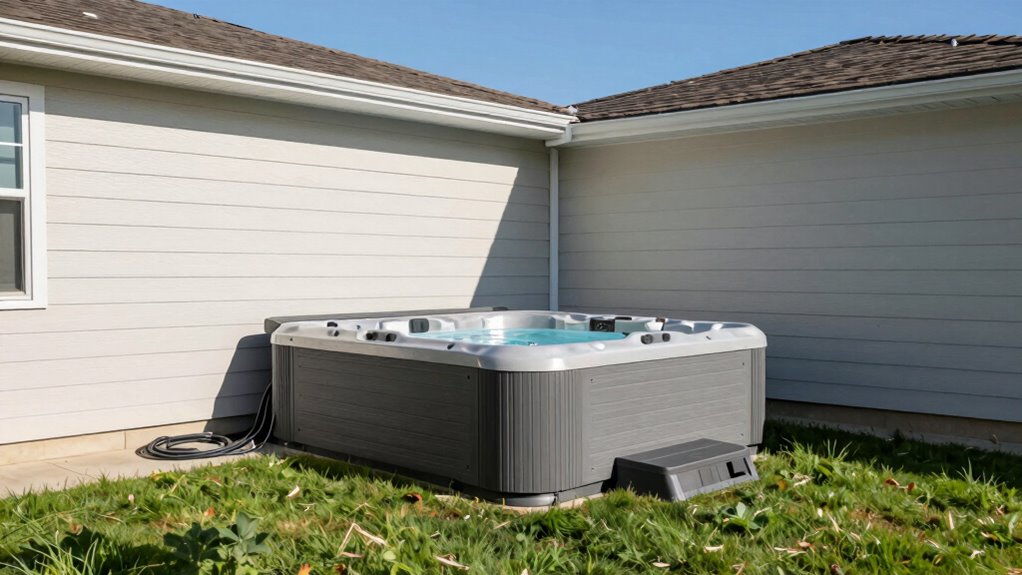
To guarantee safety and compliance, you need to take into account recommended distance guidelines for your hot tub’s placement, including safety buffers and local building codes. Make sure you leave enough space for maintenance and repairs, so you can access all sides easily. Ignoring these guidelines can lead to safety hazards or costly modifications later on. Additionally, considering smart home safety/automation features like leak detectors and indoor air monitoring can help detect potential issues early and ensure a safer environment around your hot tub. Understanding dream symbolism related to timing and placement can also inform better decisions about your outdoor setup. Proper planning and adherence to household safety tips can significantly reduce the risk of accidents and ensure long-term enjoyment of your hot tub. Paying attention to property layout considerations can further optimize your hot tub’s placement for both safety and aesthetics.
Safety Buffer Recommendations
Wondering how close is too close when placing your hot tub? To guarantee safety and proper function, a buffer zone is essential. Generally, you should keep your hot tub at least 3 to 5 feet away from structures, decks, and other equipment. This space allows for easy access, maintenance tips, and safe operation. It also helps prevent accidents or damage caused by water splashes or heat. When planning your setup, consider adding space for hot tub accessories, like steps or covers, without crowding. Remember, too little space can hinder maintenance and pose safety risks. A clear buffer zone promotes better airflow, easier cleaning, and peace of mind. Prioritize these guidelines to enjoy your hot tub safely and keep it in top condition.
Local Building Codes
Understanding local building codes is essential when determining how close you can place your hot tub to property lines, structures, or utility lines. These codes specify minimum distances to guarantee safety, proper ventilation, and access. For example, some jurisdictions require setbacks from property boundaries to prevent disputes or hazards. Keep in mind that regulations may also impact your hot tub’s insulation needs, as closer placement could influence temperature retention and energy efficiency. Proper water filtration system placement is equally important, ensuring easy access for maintenance without violating code. Failing to comply can lead to fines or costly modifications later. Always check with your local authorities before installing, and consider these guidelines to ensure your hot tub is both safe and compliant.
Space for Maintenance
Ensuring enough space around your hot tub for maintenance is essential to keep it functioning smoothly and safely. Proper spacing allows you to access controls, inspect components, and perform routine tasks like adjusting temperature regulation and chemical maintenance easily. Too little space can lead to difficulties in cleaning filters, checking jets, or draining the tub when needed.
Keep these guidelines in mind:
- Maintain at least 18-24 inches of clearance on all sides.
- Leave extra room for panels and access panels.
- Ensure unobstructed pathways for safety and ease of service.
- Consider space for tools and supplies needed for ongoing maintenance.
Adequate space ensures you can perform maintenance efficiently, preventing costly repairs and prolonging your hot tub’s lifespan.
How Poor Placement Risks Drainage and Structural Damage
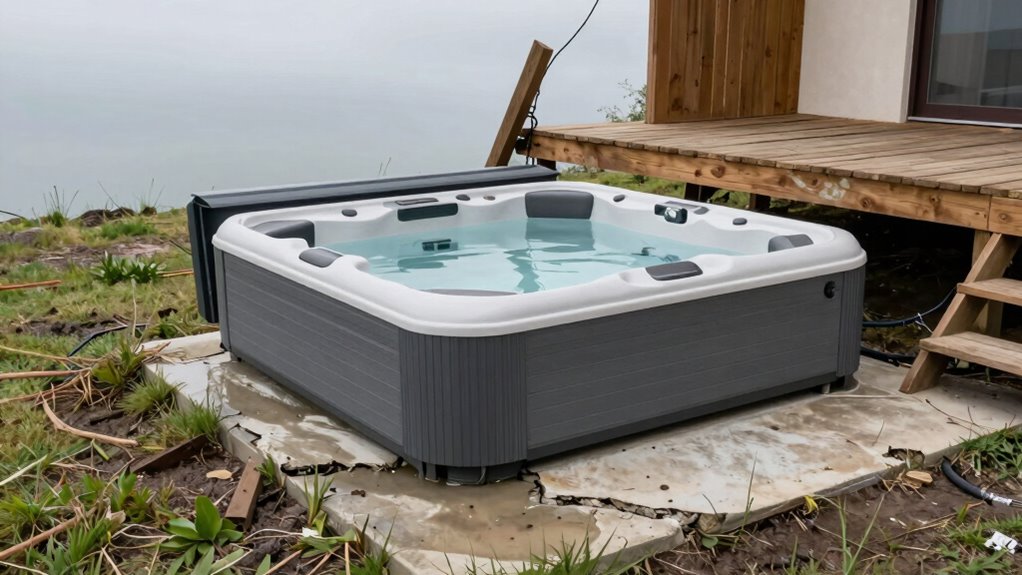
Placing your hot tub on unstable or poorly chosen ground can lead to serious drainage issues and structural problems over time. If the area isn’t properly graded, water may pool around the base, causing erosion or shifting the foundation. Poor garden landscaping can make drainage worse, leading to water runoff that weakens the ground beneath your hot tub. Additionally, neglecting proper placement near outdoor lighting can result in water exposure to electrical components, increasing the risk of damage. Over time, this can cause cracks, leaks, or even sinking of the hot tub. To avoid costly repairs, choose a stable, well-drained spot with level ground, and consider integrating drainage solutions into your outdoor design to protect both your hot tub and your yard.
Finding the Right Balance: Privacy and Aesthetics in Your Yard
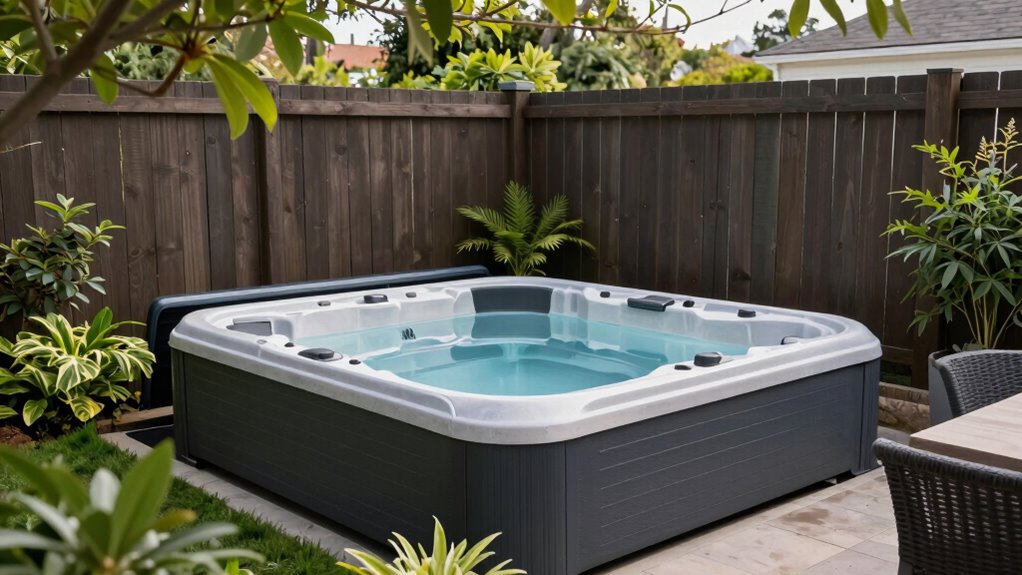
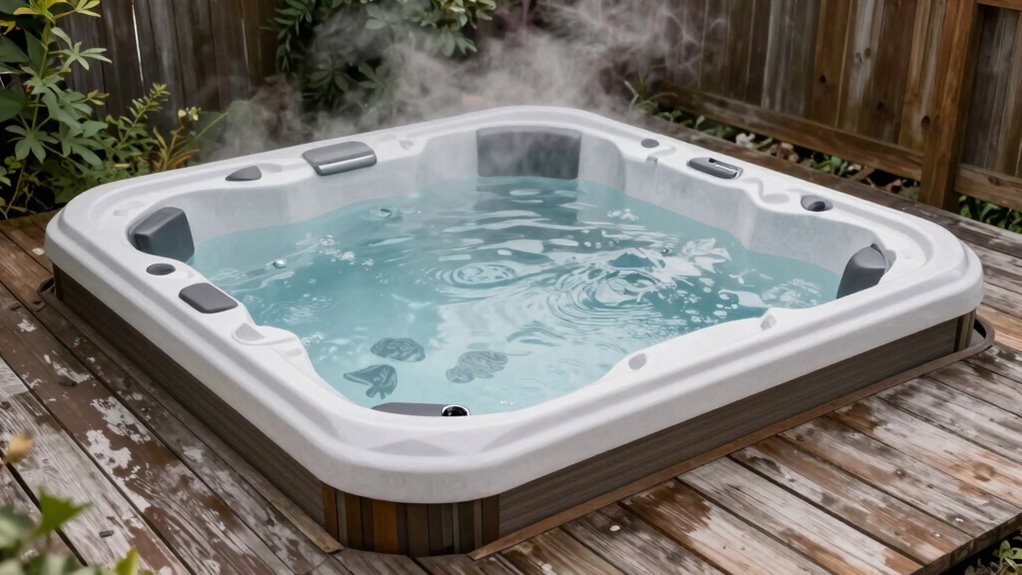
Balancing privacy and aesthetics is key to creating a hot tub area that feels both secluded and visually appealing. You want your space to invite relaxation without sacrificing your yard’s overall look. Use landscape design to subtly screen your hot tub with privacy screens, tall plants, or fencing. Incorporate garden lighting to highlight key features and add ambiance at night. Consider these elements:
- Strategic placement of shrubs or hedges
- Artistic fencing or lattice panels
- Soft, inviting garden lighting
- Harmonious landscape design that blends structure and greenery
These choices help maintain privacy while enhancing your yard’s beauty. Achieving this balance ensures your hot tub becomes a gorgeous, private retreat integrated seamlessly into your outdoor space.
Tips for Choosing the Best Spot for Your Hot Tub

Choosing the right spot for your hot tub is essential to maximizing comfort and ensuring safety. Look for a flat, stable surface that can support the weight and prevent shifting. Consider how accessible the area is for installation and maintenance; easy access makes routine maintenance tips simpler. Think about privacy and how your hot tub fits with existing hot tub accessories, like covers or privacy screens. Keep in mind nearby power sources and drainage options to avoid future issues. Avoid placing it under trees to prevent debris buildup. Proper placement reduces the risk of damage and makes maintenance easier. Remember, a well-chosen spot not only enhances your enjoyment but also extends your hot tub’s lifespan, saving you time and money down the line.
What to Do If Your Hot Tub Is Too Close to Your House or Property Line
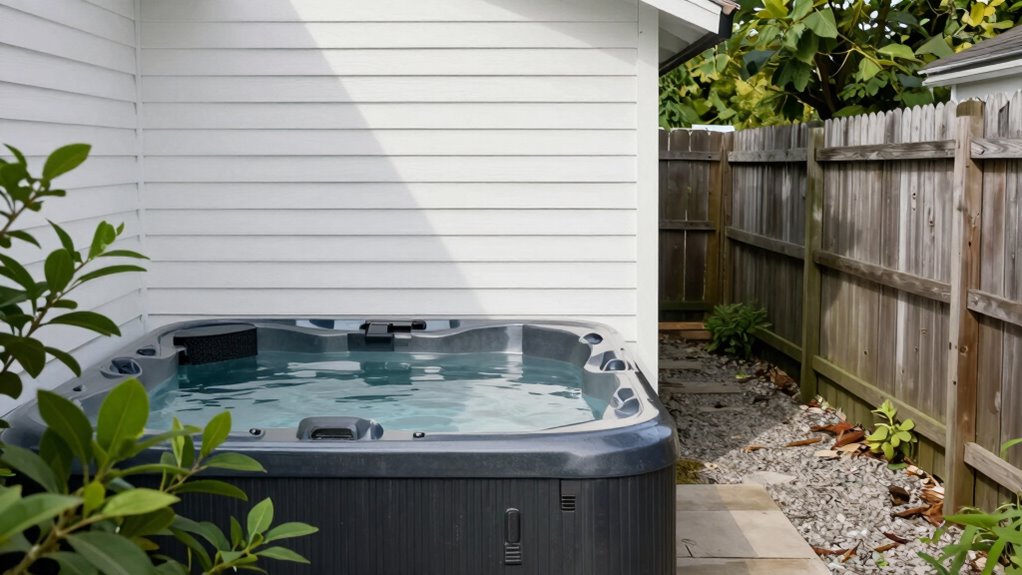
If your hot tub is positioned too close to your house or property line, it can lead to privacy issues, code violations, or even safety concerns. To address this, consider ways to optimize your setup. First, consult local building codes to guarantee compliance. You might need to request a variance or move the hot tub further back. Adding privacy screens or strategic landscaping with tall plants can also help. When repositioning, update your maintenance schedule to include regular checks on hot tub accessories, ensuring safety. Additionally, consider installing sound barriers if noise is an issue. Finally, communicate with neighbors about your plans to avoid disputes. Taking these steps helps protect your investment and guarantees a safe, private, and compliant hot tub experience.
Frequently Asked Questions
Can Improper Placement Affect Your Hot Tub’s Warranty Coverage?
Yes, improper placement can affect your hot tub’s warranty coverage. If you place it where it’s exposed to harsh weather or uneven surfaces, it can cause damage that voids the warranty. Plus, poor placement impacts hot tub aesthetics and makes maintenance more difficult. To protect your investment, choose a level, sheltered spot, and consider how ease of access will simplify ongoing maintenance.
What Are the Hidden Costs of Relocating a Hot Tub Later?
Relocating your hot tub later can surprise you with hidden costs like transportation, new foundation work, and potential damage. You might also need to update your color options or invest in fresh maintenance tips to keep it in top shape after the move. These unexpected expenses can quickly add up, so plan carefully to avoid costly surprises. Proper initial placement minimizes future hassles and costs, ensuring your hot tub stays enjoyable longer.
How Does Landscape Terrain Influence Hot Tub Placement Choices?
Landscape terrain greatly influences your hot tub placement choices because it affects garden aesthetics and slope stability. You should select a flat, stable area that complements your garden’s design, avoiding slopes that can cause shifting or damage. Proper placement ensures safety, maintains visual appeal, and prevents costly repairs or adjustments later. Taking terrain into account helps you enjoy your hot tub without risking instability or disrupting your landscape’s beauty.
Are There Specific Climate Considerations for Outdoor Hot Tub Placement?
Ironically, ignoring climate zones can turn your hot tub into a seasonal decoration. You need to take into account climate zones for proper insulation and weather resistance, especially in extreme cold or heat. Placement aesthetics matter too—choose a spot that shields from harsh winds or sun exposure. Neglecting these factors could lead to costly repairs or early wear. So, prioritize climate considerations for longevity and visual appeal, ensuring year-round enjoyment.
How Can You Enhance Privacy Without Compromising Safety or Access?
You can enhance privacy by installing privacy screens or fencing barriers around your hot tub. Opt for tall, sturdy panels that block sightlines without obstructing access or safety. Consider using natural elements like shrubs or trees alongside these barriers for added seclusion. Make sure the fencing is weather-resistant and securely installed to prevent accidents. This way, you maintain both privacy and safety while enjoying easy access to your hot tub.
Conclusion
Choosing the right spot for your hot tub isn’t just about comfort; it’s about safety, legality, and longevity. It’s about avoiding costly mistakes, respecting property lines, and ensuring proper drainage. It’s about balancing privacy with aesthetics, planning for maintenance, and preventing future headaches. By making thoughtful placement decisions today, you’ll enjoy relaxing, worry-free moments tomorrow. Because a well-placed hot tub isn’t just an addition to your yard — it’s an investment in your peace of mind.
Halloween Picks
halloween
As an affiliate, we earn on qualifying purchases.