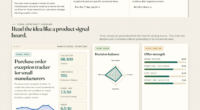
📊 Full opportunity report: The license. Why the AI content market pays the brand-name corpus and strands the long tail. on ThorstenMeyerAI.com — validation score, market gap, and execution plan.

Get the latest gadgets delivered free with Prime
- Fast, free delivery on millions of items
- Prime Video, Amazon Music and more included
- Member-only deals all year
TL;DR
Large publishers have secured licensing deals with AI companies, while small publishers are left without effective options. Collective licensing could offer a solution, but remains unproven.
Large publishers have secured exclusive licensing agreements with AI companies, paying hundreds of millions of dollars to license their archives, while small publishers remain largely excluded from these deals.
Recent disclosures reveal that major publishers like News Corp, the New York Times, and the Associated Press have signed multi-year licensing contracts with AI firms such as OpenAI and Meta, worth hundreds of millions of dollars. These deals give AI companies direct access to high-value, brand-name corpora, enabling them to train models with trusted, scarce content.
In contrast, small publishers and niche sites, which produce abundant but less leverageable content, have no comparable licensing options. Their content is often scraped or used without compensation, reinforcing a structural asymmetry where the value of the corpus flows to large, brand-name archives. This pattern mirrors the broader collapse of referral traffic, which has hit small sites hardest, losing up to 60% of search referrals, while large publishers retain significant traffic and negotiating power.
Experts argue that the current licensing market reproduces the same inequalities it was supposed to address, favoring the large publishers with scarce, high-trust content and leaving the long tail of smaller publishers without a viable path to compensation. This has led to calls for collective licensing or statutory regimes, similar to music royalties, which could democratize access and payment across the entire publishing landscape.
The license.
Why the AI content market
pays the brand-name corpus
and strands the long tail.
licensing deal below it
the large-publisher reality
largest licensing deal · a rounding error
tail’s most direct shot, via aggregation
↓
leverage
↓
a fee
The license that saved the Wall Street Journal does not reach the niche site, and the only thing that could is a market the small publisher cannot build alone. The escape route is real. For most of the publishers who needed it, it leads to a door they cannot open.Thorsten Meyer · The License · Post-Wire 04
Implications of Licensing Concentration for Small Publishers
This licensing pattern consolidates economic power among large publishers, enabling them to monetize their archives directly from AI firms. For small publishers, the lack of comparable deals means their content remains undervalued and undercompensated, exacerbating existing financial vulnerabilities. If the current trend continues, it risks further marginalizing the long tail of publishers, threatening diversity and the sustainability of independent journalism.
Moreover, the reliance on individual licensing deals creates a winner-take-all dynamic, where leverage and brand value dictate who gets paid. Without intervention, this could entrench a monopolized content ecosystem, with only a handful of large players benefiting financially from AI training data.
Popular right now

iRobot Roomba Max 715 Pet Robot Vacuum with AutoEmpty Dock

Samsung 42-Inch S90H OLED 4K Smart TV Bundle

KitchenAid Artisan 5-Quart Tilt-Head Stand Mixer, Almond Cream
As an affiliate, we earn on qualifying purchases.
Structural Inequalities in AI Licensing Negotiations
The initial promise of licensing as a market correction for AI training has been undermined by structural asymmetries. Large publishers possess unique, scarce content that offers negotiating leverage, enabling them to secure lucrative deals. Small publishers, with abundant but interchangeable content, lack bargaining power and are often left out of the licensing process.
This dynamic echoes the broader collapse of referral-based traffic, which has disproportionately affected small publishers, who now face declining visibility and revenue. The emerging licensing market thus reproduces the very inequalities it was meant to mitigate, reinforcing a winner-take-all environment that favors the few with high-value archives.
Efforts to establish collective licensing regimes, akin to music royalties or statutory licensing, are underway but remain unproven at scale. These could potentially democratize access and revenue, but face legal, political, and platform resistance.
“The licensing market reproduces the same asymmetry it was supposed to solve — value flows to brand-name corpora, while the long tail provides data for free.”
— Thorsten Meyer
Unresolved Challenges in Scaling Collective Licensing
While collective licensing offers a theoretical solution, its practical implementation faces significant hurdles, including legal resistance from platforms, political opposition, and uncertain legal rulings. It is unclear whether such regimes can be established at scale before small publishers are further marginalized or driven out of the market.
Next Steps for Policy and Industry Adoption
Efforts are ongoing to develop statutory and collective licensing regimes, with proposals from the UK, EU, and WIPO. The success of these initiatives depends on legal rulings, political support, and platform cooperation. Monitoring these developments will be critical to see if they can effectively address the current asymmetries and support small publishers.
Key Questions
Why are large publishers able to negotiate licensing deals with AI companies?
Large publishers hold scarce, high-value archives that offer strategic leverage, such as brand recognition and trusted content, enabling them to command high licensing fees.
Why are small publishers excluded from these licensing deals?
Their content is abundant and interchangeable, lacking the scarcity and leverage needed to negotiate favorable terms, making them effectively invisible in the licensing market.
What is collective licensing, and how could it help small publishers?
Collective licensing involves a trade association or government regime that automatically compensates publishers for content used, regardless of individual leverage, potentially democratizing revenue sharing.
Are there legal or political barriers to implementing collective licensing?
Yes, platforms and industry stakeholders often oppose such regimes, and legal or legislative changes are required, making widespread adoption uncertain at this stage.
What is the main challenge in fixing the licensing asymmetry?
The core issue is structural: the market naturally favors large publishers with scarce, high-value content, and without systemic change, the disparity will persist.
Source: ThorstenMeyerAI.com