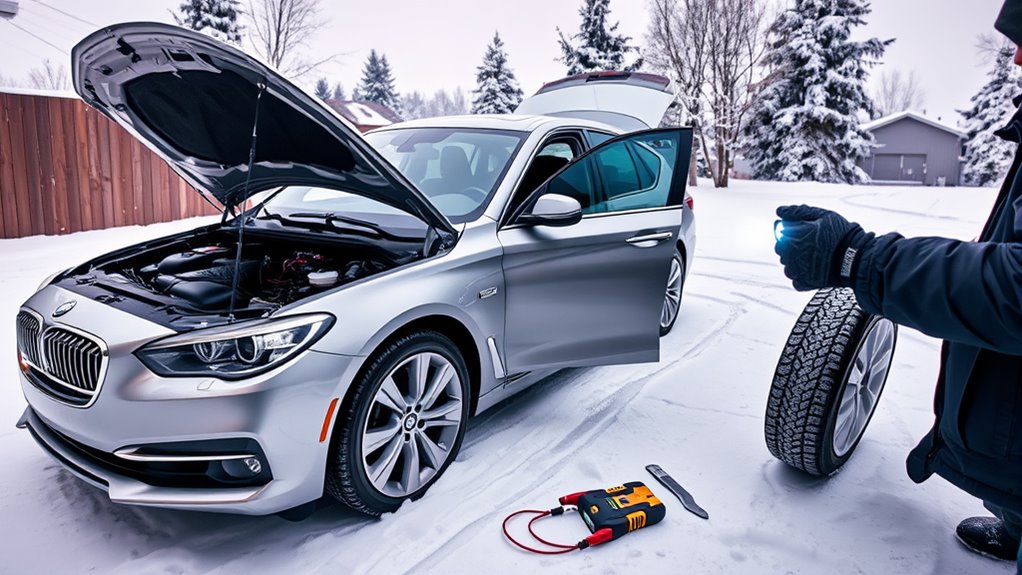

To prepare your vehicle for cold weather, start by checking your tire pressure regularly and switch to winter tires if possible for better traction. Test and clean your battery terminals, applying dielectric grease to prevent corrosion, and consider replacing an aging battery before it fails. Also, inspect antifreeze levels, top off wipers, and ensure your heating systems work well. Taking these steps now helps keep you safe—keep going to discover more essential winter car care tips.
Key Takeaways
- Check and maintain proper tire pressure; consider switching to winter tires for better traction.
- Test and inspect your vehicle’s battery, cleaning terminals and replacing if over three years old.
- Ensure antifreeze and coolant levels are adequate to prevent engine freezing.
- Inspect windshield wipers and replace worn blades for clear visibility in snow and ice.
- Keep emergency supplies like blankets, flashlight, and extra warm clothing in your vehicle.

Alongside tire care, battery maintenance becomes increasingly important in cold weather. As temperatures fall, your vehicle’s battery can struggle to perform, leading to difficulty starting your engine. Cold weather reduces a battery’s ability to produce the necessary charge, especially if it’s already weak or aging. To prevent unexpected breakdowns, have your battery tested at a trusted auto shop. Look for signs of corrosion around the terminals or a buildup of grime, which can interfere with electrical connections. Keep the battery terminals clean and tight, and consider applying a protective terminal spray or dielectric grease to prevent corrosion. If your battery is more than three years old or shows signs of weakness, replacing it before winter hits can save you from getting stranded in freezing conditions. Maintaining your battery isn’t just about replacing it when it fails; regular checks verify it remains in good condition when you need it most. Additionally, ensuring your vehicle’s cold-start system is functioning properly can improve reliability during the harshest winter days.
Frequently Asked Questions
How Often Should I Check My Tire Pressure During Winter?
You should check your tire pressure at least once a month during winter, especially as temperatures drop. Cold weather causes tire pressure to decrease, so maintaining proper pressure is crucial for safety. Regularly inspect your tire tread for wear and consider a seasonal tire change if needed. Keep an eye on these factors to guarantee ideal traction and avoid problems like uneven wear or reduced fuel efficiency.
Can I Use Regular Motor Oil in Winter Conditions?
You can use regular motor oil in winter, but it’s not ideal. Cold temperatures cause oil viscosity to increase, making it thicker and harder to flow. Using oils formulated for winter, like 5W-30 or 0W-20, helps maintain peak engine performance, ensuring smoother starts, better lubrication, and improved fuel efficiency. Choose the right oil viscosity to protect your engine and keep it running smoothly during cold weather.
What’s the Best Way to Remove Ice From My Windshield?
You should use an ice scraper to remove ice from your windshield, as it’s designed to chip away ice without damaging the glass. Start by scraping off the thickest ice, then use your windshield washer with de-icer fluid to clear away any remaining frost and loosened ice. This combination helps you efficiently and safely clear your windshield, giving you better visibility and reducing the risk of scratches or cracks.
How Do I Prevent Battery Failure in Cold Weather?
To prevent battery failure in cold weather, you should prioritize battery maintenance, especially since cold weather impacts your vehicle’s battery performance. Make certain your battery terminals are clean and tightly connected, and check the charge regularly. Consider replacing an old or weak battery before winter hits. Keep your engine properly tuned, and avoid leaving lights or electronics on when the car isn’t running. These steps help your battery withstand cold temperatures better.
Is It Necessary to Switch to Winter Windshield Wipers?
You should switch to winter wiper blades now because they’re designed for colder temperatures and better grip. While regular blades might seem fine, they can crack or smear in icy conditions, reducing windshield visibility. Winter wiper blades use durable rubber and a sturdier frame to clear snow and ice effectively. This simple switch guarantees you maintain clear visibility, keeping you safe during harsh winter storms and icy mornings.
Conclusion
As winter’s chill approaches, remember that your car isn’t just a machine—it’s a trusted companion through the cold. Preparing it now is like planting seeds for safe, smooth journeys ahead. Don’t wait until the frost bites; take action today. By caring for your vehicle, you’re not just avoiding breakdowns—you’re safeguarding your adventures and loved ones. After all, a well-prepared car is the key to turning winter’s obstacles into opportunities for resilience and discovery.