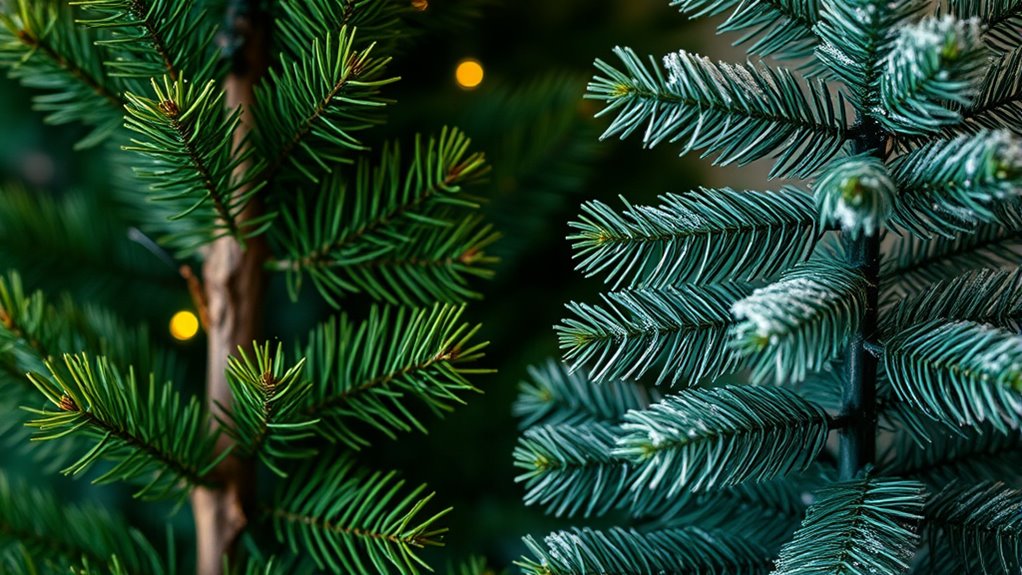

Choosing between real and artificial Christmas trees depends on what you value most. Real trees offer a fresh pine scent and a natural look but require regular watering and create waste once the holidays end. Artificial trees are low maintenance and reusable, yet they involve resource use, shed microplastics, and lack the authentic aroma. If you want to understand the full picture and weigh these factors, keep exploring the details below.
Key Takeaways
- Real trees offer authentic appearance and natural pine scent, enhancing holiday ambiance.
- Artificial trees require minimal maintenance and can be reused for years, reducing effort and waste.
- Real trees are biodegradable and support sustainable farming, while artificial trees involve manufacturing and disposal concerns.
- Artificial trees are allergy-friendly and stay pristine year-round, whereas real trees need regular watering and care.
- Environmental impact varies: real trees are renewable but require transportation, whereas artificial trees have longer lifespan but limited recycling options.
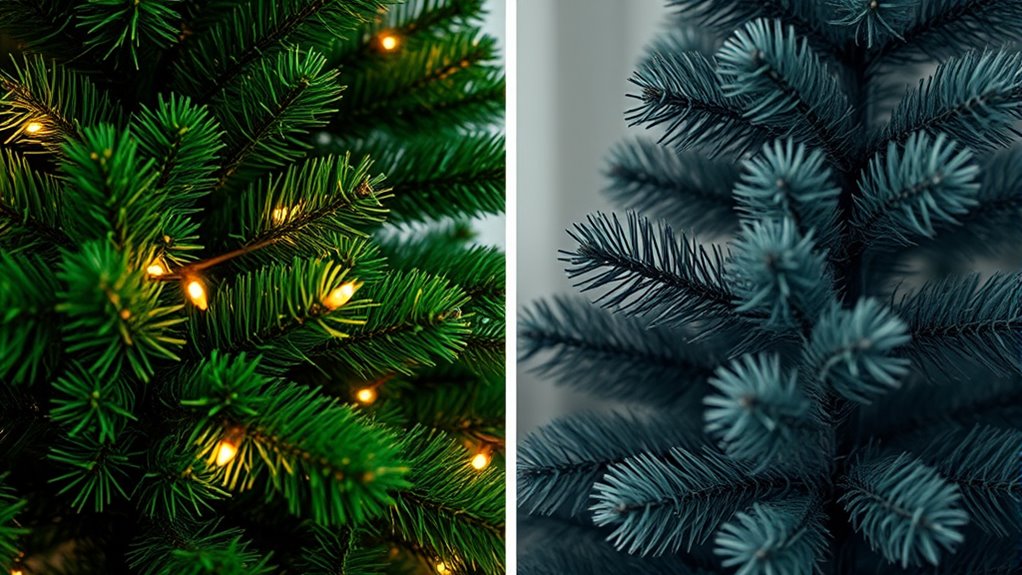
Are you torn between choosing a real or artificial Christmas tree for the holiday season? It’s a decision that involves more than just aesthetics; it’s about understanding the implications of each choice. When considering a real tree, think about tree maintenance. A real tree requires regular watering to keep it fresh and prevent it from drying out or becoming a fire hazard. You’ll need to check it daily, especially as it dries, which can be a bit of a hassle during busy holiday weeks. On the other hand, artificial trees demand virtually no upkeep once set up. They stay pristine year after year, saving you time and effort in the long run. However, artificial trees are made from plastics and other synthetic materials, which raises questions about their environmental impact. Manufacturing these trees involves resource extraction and energy consumption, and while they can be reused for many seasons, they contribute to plastic waste if discarded after a few years.
If you’re environmentally conscious, the environmental impact of your choice might weigh heavily on your decision. Real trees are biodegradable, and many are grown on farms with sustainable practices, meaning they can be composted or recycled after the holidays. Plus, when you buy a real tree from a local farm, you’re supporting local economies and promoting responsible forestry. Still, consider the carbon footprint associated with transporting these trees, especially if they’re shipped from distant locations. Artificial trees, however, often travel long distances before reaching your home, contributing to greenhouse gas emissions. Although you can reuse your artificial tree for years, eventually, it will end up in a landfill. Recycling programs for artificial trees are limited, making disposal an environmental concern.
In terms of tree maintenance, a real tree demands consistent care but offers the sensory joy of a fresh pine scent and the authentic look of nature. It can be a more natural choice, especially if sustainability is a priority for you. Artificial trees require minimal effort after setup but lack the natural aroma and the organic feel of a real tree. They’re convenient, especially for those with allergies or limited time, but the environmental trade-offs may influence your decision. Additionally, synthetic materials used in artificial trees can shed microplastics over time, impacting the environment. Ultimately, weighing the pros and cons of tree maintenance and environmental impact helps you make a choice that aligns with your values and lifestyle. Whether you prioritize convenience, sustainability, or tradition, understanding these factors makes your holiday decorating more meaningful.
Frequently Asked Questions
Are Real Trees More Environmentally Friendly Than Artificial Ones?
Real trees are generally more environmentally friendly than artificial ones because they offer a better sustainability comparison. They’re biodegradable and can be recycled or composted after the holidays. Plus, many eco-friendly options, like choosing locally grown trees, support sustainable practices. Artificial trees, made from non-biodegradable plastics, often have a higher carbon footprint due to manufacturing and shipping. So, if you want an eco-friendly option, real trees are usually the better choice.
How Long Do Real Christmas Trees Typically Last Indoors?
You might be surprised, but real Christmas trees typically last about 1 to 3 weeks indoors. Their lifespan depends on your maintenance requirements—watering regularly and keeping them away from heat helps extend their life. Ironically, the more effort you put into caring for your tree, the longer it stays vibrant. So, if you love the challenge, enjoy your festive centerpiece, knowing it’s only temporary!
Can Artificial Trees Be Recycled or Repurposed?
Yes, artificial trees can be recycled or repurposed. You can explore recycling options through local facilities that accept plastic and metal, or donate the tree to community projects. Tree reuse techniques include repurposing branches for wreaths or craft projects, or using the trunk as a garden ornament. By finding creative ways or proper recycling channels, you help reduce waste and give your artificial tree a second life.
What Are the Health Risks Associated With Real Christmas Trees?
You might worry about health risks from real Christmas trees, but evidence shows that pollen allergies can be triggered by the tree’s natural pollen and mold spores, especially during the holiday season. Additionally, some trees are treated with chemicals like pesticides or preservatives, leading to potential chemical exposure. To minimize risks, consider washing the tree before bringing it inside and choosing organic or untreated options.
How Do the Costs of Real and Artificial Trees Compare Over Time?
Over time, the cost comparison shows that artificial trees often require a higher initial investment but have lower maintenance costs, since you can reuse them yearly. Real trees are cheaper upfront but add up with yearly purchases and disposal costs. If you prefer convenience, an artificial tree might save you money long-term, whereas real trees can be more budget-friendly initially but cost more over the years.
Conclusion
Whether you choose a real or artificial tree, remember that each symbolizes more than just holiday decor. A real tree reflects nature’s fleeting beauty, reminding you to cherish transient moments. An artificial tree stands as a symbol of tradition and resilience, built to last through countless seasons. Your choice becomes a reflection of your values—embracing change or enduring stability. Ultimately, whichever tree you select becomes a beacon of your holiday spirit, illuminating your home with meaning beyond the ornaments.