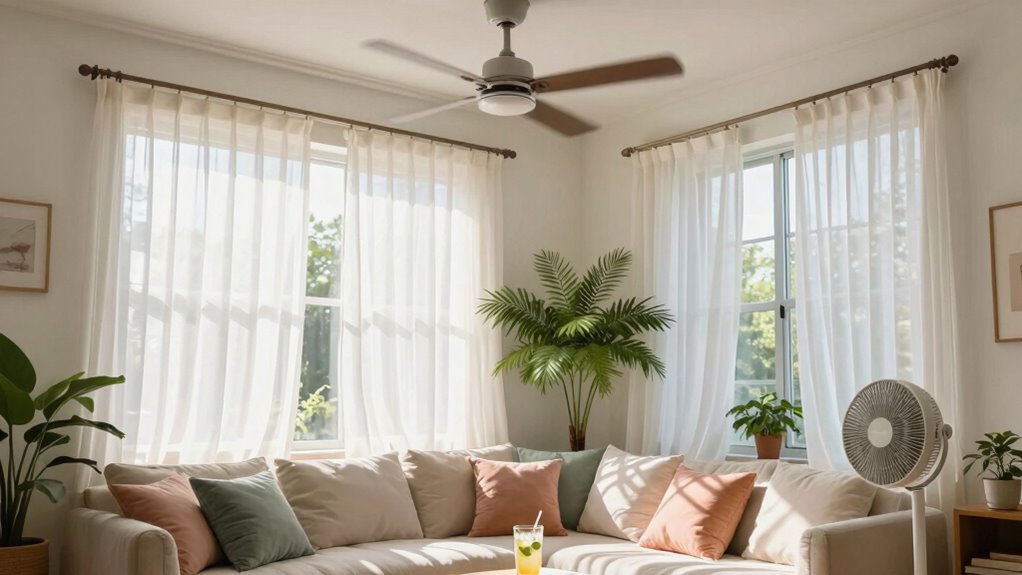

To make your home feel cooler in early summer, strategically place leafy plants near south- or west-facing windows to filter sunlight and provide shade. Use light-colored blinds or reflective window films to block heat entry. Maximize natural ventilation by opening windows during cooler mornings and evenings, creating cross-flow. Make certain your home is well-insulated to prevent heat transfer while managing airflow for a breezy feel. Keep exploring ways to stay comfortable and beat the heat with simple, effective tips.
Key Takeaways
- Use strategic indoor plants with broad leaves near windows to provide shade and promote cooling through transpiration.
- Install light-colored, reflective window treatments like blinds, shades, or window films to block heat entry.
- Maximize natural ventilation by opening windows during cooler times and creating cross-breezes.
- Ensure proper insulation and airflow management to prevent heat transfer and enhance cooling efficiency.
- Combine plant placement, window treatments, and ventilation for an energy-efficient, naturally cooler home environment.
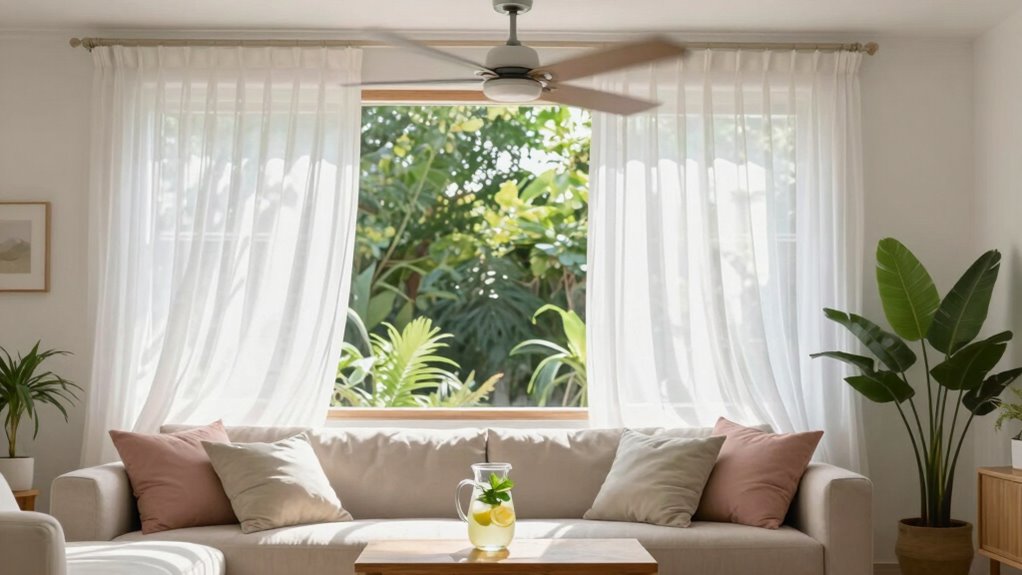
As early summer heats up, finding ways to keep your home cool and comfortable becomes essential. One of the simplest ways to do this is by paying attention to indoor plant placement. Strategic positioning of plants can help regulate indoor temperatures by providing shade and releasing moisture into the air. Place leafy indoor plants near south- or west-facing windows to act as natural filters against direct sunlight, which helps reduce indoor heat gain. Avoid cluttering the space with plants in every corner, as overcrowding can block airflow and make rooms feel stuffier. Instead, focus on a few well-placed greenery pieces that enhance air quality without trapping heat. Additionally, choosing plants with large, broad leaves, like monstera or philodendron, maximizes their cooling benefits. Their natural transpiration process releases moisture, which can lower ambient temperature slightly and create a fresher atmosphere indoors.
Alongside plant placement, window treatment options play an essential role in maintaining a cooler home. Installing blinds, shades, or curtains that reflect or block sunlight can considerably reduce heat entering your living spaces. Light-colored window treatments reflect more solar radiation, while darker fabrics absorb heat, making dark curtains less ideal for hot days. Consider using blackout or thermal curtains, which are designed to insulate and prevent heat transfer. You might also explore cellular or honeycomb shades, as their structure traps air and provides an extra layer of insulation. If you prefer a more versatile solution, window films or reflective window coatings can be applied directly to glass to block UV rays and minimize heat gain. These options allow you to enjoy natural light without the accompanying increase in temperature, keeping rooms more comfortable during peak sunlight hours.
Incorporating natural cooling methods like these can significantly reduce reliance on air conditioning, lowering energy bills and environmental impact. Combining strategic indoor plant placement with effective window treatments creates a natural, energy-efficient cooling system in your home. These adjustments require minimal effort but deliver noticeable results. Keep in mind that opening windows during cooler mornings and evenings can help ventilate your space without letting in the midday heat. Use cross-ventilation by opening windows on opposite sides of your home to promote airflow. Additionally, proper ventilation can help remove warm, stagnant air and bring in cooler outdoor air, further enhancing indoor comfort. Ensuring that your home’s insulation is adequate can also contribute to maintaining a cooler indoor environment by preventing unwanted heat transfer through walls and roofs. Properly managing airflow is essential for maximizing the cooling benefits of these measures and creating a more comfortable living space. Together, these measures create a cooler, more comfortable environment that lets you enjoy the early summer days without feeling overwhelmed by heat. Staying mindful of both plant positioning and window coverings empowers you to control indoor temperatures naturally, saving energy and enhancing your overall comfort.
indoor plants with large leaves for cooling
As an affiliate, we earn on qualifying purchases.
As an affiliate, we earn on qualifying purchases.
Frequently Asked Questions
What Are Natural Ways to Reduce Indoor Humidity?
You can reduce indoor humidity naturally by using moisture control techniques like opening windows and vents to promote airflow. Place moisture-absorbing materials like silica gel or activated charcoal around your home. Using a dehumidifier benefits you by efficiently removing excess moisture, making the environment more comfortable. Additionally, fixing leaks and ensuring proper insulation helps prevent moisture buildup, keeping your home cooler and drier during early summer.
How Can Plants Help Cool Down a Home?
Plants help cool down your home through plant shading and evaporative cooling. When you place leafy plants near windows, they block direct sunlight, reducing indoor heat. Additionally, as plants transpire, they release moisture into the air, creating a natural evaporative cooling effect that lowers temperatures. This combination not only cools your space but also improves air quality, making your home more comfortable during early summer.
What DIY Methods Can Improve Airflow?
You can improve airflow by installing a ceiling fan, which can reduce indoor temperatures by up to 4°F. Additionally, use cross ventilation techniques—opening windows on opposite sides of your home to create a natural breeze. This simple DIY approach boosts airflow naturally, helping you stay cooler without extra energy costs. Combining ceiling fan installation with strategic window placement maximizes cooling efficiency and keeps your home more comfortable during early summer.
Are There Specific Materials That Stay Cooler?
You should choose cooler building materials like concrete, brick, or tiles, which naturally stay cooler than wood or asphalt. Incorporate heat reflective fabrics on curtains, blinds, or outdoor furniture to bounce heat away. These materials help reduce indoor temperatures by reflecting sunlight and absorbing less heat, keeping your home more comfortable during early summer. Combining these options can make a noticeable difference in maintaining a cooler indoor environment.
How Does Window Placement Affect Indoor Temperature?
Your window orientation greatly impacts indoor temperature—south-facing windows catch more sunlight, warming your home, while north-facing ones stay cooler. To counteract this, use shading techniques like blinds, curtains, or exterior awnings to block heat gain during the hottest parts of the day. Adjusting window placement and adding shading helps keep your home cooler, reducing reliance on air conditioning and making early summer more comfortable.
reflective window film for heat reduction
As an affiliate, we earn on qualifying purchases.
As an affiliate, we earn on qualifying purchases.
Conclusion
As summer’s heat starts to rise, your home can become a sanctuary of cool comfort—if you know the right tricks. But what if there’s one secret move that could totally transform your space? Stay tuned, because the next step might just be the game-changer you’ve been waiting for. Don’t let the heat win—discover this simple yet powerful tip and keep your home invigoratingly cool all season long. The best part? It’s easier than you think.
thermal blackout curtains for summer
As an affiliate, we earn on qualifying purchases.
As an affiliate, we earn on qualifying purchases.
honeycomb cellular window shades
As an affiliate, we earn on qualifying purchases.
As an affiliate, we earn on qualifying purchases.