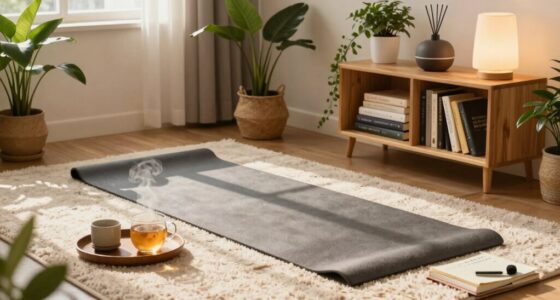

After busy, exhausting weeks, combining mindfulness meditation with gentle stretching can be your best recovery habit. This practice helps you release tension, lower stress hormones, and boost circulation simultaneously. It calms your mind, eases muscle tightness, and promotes physical and mental renewal. Even just 10 minutes makes a noticeable difference in how you feel. Keep going to discover more simple ways to enhance your recovery and build resilience for future stress.
Key Takeaways
- Incorporate daily mindfulness meditation to reduce stress and enhance mental clarity.
- Engage in gentle stretching to release muscle tension and improve circulation.
- Create a calming environment with natural elements or soothing lighting for optimal recovery.
- Practice deep breathing exercises to lower cortisol levels and promote relaxation.
- Dedicate at least 10 minutes to active recovery habits for sustained physical and mental renewal.
Have you ever wondered what the single most effective habit is for speeding up recovery? It’s a question many people ask after a hectic, exhausting week. The truth is, the key isn’t just about resting more or taking time off; it’s about actively engaging in practices that promote both physical and mental renewal. One of the best habits you can adopt is a combination of mindfulness meditation and gentle stretching. Together, these practices help your body release tension, reduce stress, and restore balance, making recovery more efficient and profound.
Mindfulness meditation is a powerful tool for calming your mind and easing your body’s stress response. After a busy week, your mind may be cluttered with worries, deadlines, and mental fatigue. By dedicating just a few minutes to mindfulness meditation, you bring your focus to the present moment. It encourages deep breathing, which lowers cortisol levels, reduces anxiety, and promotes a sense of calm. When your mental state improves, your physical recovery accelerates because stress hormones that hinder healing decrease. This practice also enhances your awareness of bodily sensations, allowing you to identify areas of tension or discomfort that need gentle attention.
Mindfulness meditation reduces stress, enhances bodily awareness, and accelerates recovery by calming the mind and easing physical tension.
Complementing mindfulness meditation, gentle stretching helps release muscle tightness accumulated from prolonged activity or stress. Rather than pushing your body to its limits, you focus on slow, deliberate movements that promote blood flow and flexibility. Stretching before bed or after a meditation session can prevent stiffness, improve circulation, and relax your nervous system. It’s especially beneficial for those who spend long hours sitting or engaging in physically demanding tasks. When you stretch gently, you signal your body that it’s safe to unwind, which encourages the parasympathetic nervous system to take over and facilitate recovery. Incorporating self-care practices into your routine also reinforces the importance of recovery and mental well-being. Additionally, incorporating LED light therapy devices into your routine can further enhance relaxation and healing, especially when used in conjunction with these gentle practices. Understanding the importance of biodiversity and natural healing environments can also inspire you to create a more restorative space for your recovery. Engaging with natural elements or creating a calming environment can further support your body’s ability to heal and rejuvenate.
Incorporating these habits into your routine doesn’t require much time or effort. Even just 10 minutes of mindfulness meditation followed by gentle stretching can make a noticeable difference. Consistency is key—making it a daily practice ensures your body and mind continually reset after stressful periods. Over time, you’ll notice reduced fatigue, better sleep, and a more resilient mindset. Additionally, sleep health plays a crucial role in recovery, and these practices support better sleep quality by promoting relaxation and reducing stress hormones. This combined approach is a simple, accessible way to turn recovery into an active process rather than a passive wait. By prioritizing mindfulness meditation and gentle stretching, you give yourself the best chance to bounce back faster and come out of busy, exhausting weeks feeling more balanced and refreshed.

Brocoliano Meditation Cushion – Ergonomic Zafu Pillow for Yoga and Mindfulness – Washable Cover, Natural Buckwheat Fill, Premium Fabric (Cotton Blend/Polyester Variant) (Steel Gray, Medium)
- Ergonomic wedge for back relief: Aligns hips and spine for comfortable sitting
- Adjustable buckwheat fill: Customize height and firmness easily
- Two washable cover options: Charcoal polyester or steel cotton-linen blend
As an affiliate, we earn on qualifying purchases.
As an affiliate, we earn on qualifying purchases.
Frequently Asked Questions
How Long Should I Practice the Recovery Habit Each Day?
You should practice your recovery habit for about 20 to 30 minutes daily. During this time, focus on improving sleep hygiene by establishing a relaxing bedtime routine and avoiding screens before sleep. Incorporate mindfulness techniques, like deep breathing or meditation, to help calm your mind. Consistency is key, so aim to practice every day, especially after stressful weeks, to optimize your recovery and overall well-being.
Can This Habit Help Improve Mental Clarity After Stressful Weeks?
Think of mindfulness meditation and sleep hygiene as your mental reset buttons. Practicing these habits after stressful weeks can considerably boost your mental clarity. Mindfulness meditation helps you clear mental clutter, while good sleep hygiene restores your brain’s energy. Together, they create a calming ripple effect, reducing stress and sharpening focus. Regularly integrating these habits into your routine helps you recover faster and face new challenges with a clearer, calmer mind.
Is This Recovery Habit Suitable for All Age Groups?
Yes, this recovery habit is suitable for all age groups, as long as it aligns with your lifestyle compatibility. Age appropriateness varies, but adapting the habit to fit different age-related needs makes it effective across generations. For younger individuals, it might involve physical activity, while older adults may prefer gentle relaxation techniques. The key is customizing the habit to suit your age and lifestyle for maximum recovery.
How Quickly Can I Expect to See Benefits?
Think of recovery like planting a seed; with consistent care, you’ll see growth. You might notice sleep improvements within a few nights, and nutritional strategies can boost energy levels in just days. While individual results vary, incorporating these habits accelerates your recovery process, helping you feel more refreshed sooner. Stay patient and persistent—improvements often become visible within a week, fueling your motivation to maintain these healthy routines.
Are There Any Risks or Contraindications Associated With This Habit?
There are minimal medical risks or contraindication concerns with this recovery habit if you follow basic guidelines. However, overdoing it might lead to muscle strain or fatigue, especially if you have underlying health issues. Always listen to your body, stay hydrated, and consult a healthcare professional if you experience discomfort or have pre-existing conditions. Being cautious guarantees safe, effective recovery without risking health complications.
As an affiliate, we earn on qualifying purchases.
Conclusion
Embrace this recovery habit like tendrils of a gentle breeze wrapping around you after a storm. By prioritizing quality sleep, you restore your body and mind, much like a garden soaking up nourishing rain. Remember, recovery isn’t a luxury—it’s the anchor that keeps you steady through life’s relentless waves. Make this habit a non-negotiable, and you’ll find yourself sailing smoothly, refreshed and ready to face whatever comes next.
LED light therapy device for relaxation
As an affiliate, we earn on qualifying purchases.
As an affiliate, we earn on qualifying purchases.
natural calming environment decor
As an affiliate, we earn on qualifying purchases.
As an affiliate, we earn on qualifying purchases.