
TL;DR

Get the latest gadgets delivered free — and shop member deals
- Fast, free delivery on millions of items
- Access to Prime Big Deal Days deals on October 6–7
- Prime Video, Amazon Music and more included
Researchers are developing a phone camera-based shade scoring system to help consumers objectively track teeth whitening progress at home. This innovation could reduce guesswork and improve product effectiveness. Validation against dental standards is underway.
Researchers are testing a phone-camera-based system to objectively measure teeth whitening progress at home, aiming to replace subjective visual assessments. This development could significantly impact the consumer oral-care market by providing users with a reliable, easy-to-use tool to track their whitening results, which currently rely on subjective judgment in bathroom mirrors.
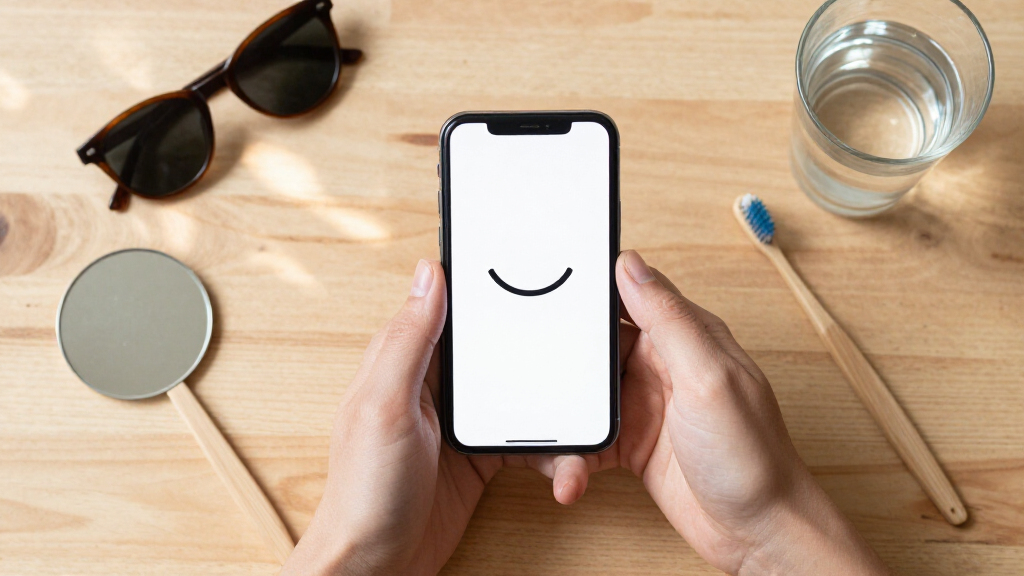
The concept involves a guided-lighting photo flow within an app that captures images of the teeth and scores their shade against a calibrated dental scale, such as the VITA shade guide. The system aims to plot changes over time, identify which products produce measurable whitening, and recommend effective options based on user-specific starting shades. This approach seeks to address a longstanding challenge in home whitening: the lack of objective measurement, leading consumers to cycle through products without knowing which actually work.
According to developers, initial validation will compare app-based shade scores with dentist-assessed VITA readings in a sample of fifty users. The goal is to establish a strong correlation, which would demonstrate the app’s reliability in measuring teeth shade objectively. If successful, this technology could support subscription models and affiliate revenue, offering users personalized product recommendations based on measurable progress.
Potential Impact on Home Whitening Effectiveness
This innovation could transform how consumers approach home teeth whitening by providing an objective, measurable way to track results. Currently, most users rely on visual assessment, which is subjective and prone to error. An accurate, easy-to-use measurement tool could reduce product cycling, improve user satisfaction, and encourage more effective whitening routines. Additionally, it could foster greater consumer trust by offering transparency and data-driven insights, ultimately boosting confidence in home whitening products and brands.
As an affiliate, we earn on qualifying purchases.
Advances in Smartphone Technology Enable Shade Measurement
Recent improvements in smartphone camera quality, combined with guided lighting techniques, have opened the possibility of approximating professional dental shade assessments. The idea of using phone cameras for shade matching has been explored in clinical settings, but applying this technology for consumer use at home is a new frontier. The growing market for consumer oral-care and beauty tech, valued in the billions, makes this a promising area for innovation. The concept aligns with broader trends toward personalized, data-driven health and beauty solutions, and addresses a key pain point: the lack of objective feedback in home whitening routines.
While the technology is still in development, early prototypes aim to benchmark app scores against dental standards, with initial testing expected to validate whether consumer-grade devices can reliably measure tooth shades comparable to professional tools. The success of this approach could pave the way for broader adoption of smartphone-based dental diagnostics in everyday consumer health and beauty routines.
“Using phone cameras with guided lighting can approximate calibrated shade readings, offering a new way for consumers to objectively track whitening results.”
— an anonymous researcher
As an affiliate, we earn on qualifying purchases.
Validation and Accuracy of Phone-Based Shade Scoring
It remains uncertain whether consumer-grade smartphone cameras, even with guided lighting, can achieve the accuracy needed to reliably measure tooth shades against professional standards like the VITA scale. The correlation results from initial testing are still pending, and it is not yet clear how well the technology will perform across different devices, lighting conditions, and user behaviors. Further validation is required before this approach can be widely recommended or integrated into commercial products.
smartphone teeth shade measurement device
As an affiliate, we earn on qualifying purchases.
As an affiliate, we earn on qualifying purchases.
Next Steps in Testing and Market Deployment
The next phase involves conducting validation studies with fifty users, comparing app scores against dentist assessments. If results show strong correlation, developers will refine the app’s algorithms and user interface. Subsequent steps include larger-scale testing, regulatory review, and potential partnerships with oral-care brands. Commercial launch could follow within the next year if validation proves successful, offering consumers a new tool to objectively monitor their whitening progress and make informed product choices.
As an affiliate, we earn on qualifying purchases.
Key Questions
How accurate can a phone camera be in measuring teeth shade?
Current research aims to determine whether smartphone cameras, combined with guided lighting, can produce measurements comparable to professional dental tools. Validation results are still pending.
Will this technology replace dentist assessments?
It is unlikely to fully replace professional evaluations but could serve as a reliable, convenient tool for consumers to track progress at home between dental visits.
How does the app determine which whitening products work?
The app will analyze changes in tooth shade over time, correlating improvements with specific products used, and recommend those that produce measurable whitening effects.
When could this technology be available to consumers?
If validation is successful, commercial deployment could occur within the next 12 to 18 months, pending regulatory approval and product development milestones.
Are there any privacy concerns with using phone cameras for dental measurements?
Developers are expected to implement data privacy measures, but users should review privacy policies before using such apps, as with any health-related data collection.
Source: IdeaNavigator AI
Halloween Picks
halloween
As an affiliate, we earn on qualifying purchases.