
📊 Full opportunity report: Independent Retailers’ Small-Order Route To Wholesale Sourcing on IdeaNavigator AI — validation score, market gap, and execution plan.

Get the latest gadgets delivered free with Prime
- Fast, free delivery on millions of items
- Prime Video, Amazon Music and more included
- Member-only deals all year
TL;DR
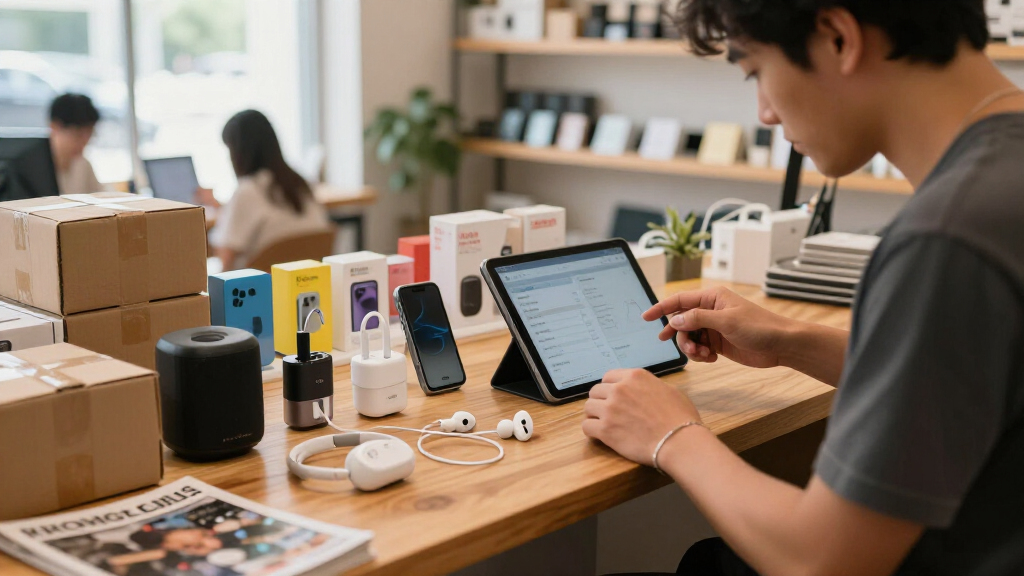
IdeaNavigator AI has outlined a proposed small-order wholesale sourcing model for independent retailers who cannot meet distributors’ minimums. In its proposal, the suggested first test would broker orders between 20 brands and 50 shops, then track whether trial purchases become standard reorders within a quarter.
IdeaNavigator AI has proposed testing a small-order wholesale sourcing service for independent retailers that struggle to meet distributor minimums. The proposal’s suggested pilot would broker trial orders between 20 brands and 50 shops, then measure how many purchases lead to standard reorders within a quarter; the source does not report an operating platform or results.
According to IdeaNavigator AI’s proposal, the service would target independent shop owners who want to try unfamiliar products without committing to the larger opening orders or case quantities that distributors may require. The proposal says those minimums can make experimentation costly for shops with limited budgets or shelf space, and may lead retailers to keep assortments conservative, with product discovery often tied to trade shows.
The envisioned first version, as described by IdeaNavigator AI, would create a marketplace lane for trial-size orders. Brands would set lower minimums, while orders from multiple retailers or brands would be consolidated to make shipping workable. Shops could test assortments of as few as five units, track sell-through, and move successful products into standard wholesale relationships.
IdeaNavigator AI’s proposed revenue model combines an order take rate with subscriptions for brand-facing analytics on trial performance. The source describes validation as manual rather than a full technology launch: arrange trial orders for 50 shops across 20 brands and monitor conversion to standard reorders over a quarter. It does not announce fee levels, shipping arrangements, participating businesses, or pilot outcomes.
Lower Minimums Could Expand Product Testing
If workable, smaller opening orders could give independent retailers more room to test products without tying up as much cash in inventory. That could help shops vary their shelves while limiting the risk of buying quantities that do not sell. IdeaNavigator AI’s proposal suggests trial data could also help brands assess demand among smaller accounts before investing in broader wholesale distribution.
The central commercial challenge is whether consolidated shipping can keep low-volume orders affordable. A five-unit test may reduce inventory exposure but still be unattractive if delivery charges, handling, or platform fees outweigh the benefit. The proposal identifies conversion to reorders as a pilot measure; that metric alone would not establish whether the model can operate profitably at scale.
Popular right now

Sony WH-1000XM4C Wireless Noise-Cancelling Headphones, Black

KitchenAid Artisan 5-Quart Tilt-Head Stand Mixer, KSM150PS, Almond Cream

KitchenAid Artisan 5-Qt Tilt-Head Stand Mixer, Cardamom
As an affiliate, we earn on qualifying purchases.
A Marketplace Model With Smaller Trials
IdeaNavigator AI’s proposal situates the concept within the broader wholesale marketplace model, which connects brands with retailers online. It describes the remaining opportunity as serving genuinely small trial orders, rather than simply listing products in a digital catalog. The proposal says Faire has demonstrated the marketplace approach but provides no comparative data or details about Faire’s minimums.
The proposal focuses on a specific sourcing problem: distributors may set case minimums and opening-order sizes that suit larger chains better than small shops. Its suggested response is not to replace conventional wholesale ordering, but to create a smaller first step. If a trial performs well, the retailer would then move to a standard wholesale order. IdeaNavigator AI presents this as a concept to test, not a service already available to buyers.
Pilot Economics Remain Unknown
IdeaNavigator AI has not identified participating brands or retailers, and its source provides no confirmed pilot schedule or evidence that the proposed orders have taken place. The suggested figures—20 brands, 50 shops, and a quarter-long measurement period—are a validation plan, not reported participation or results.
Several operating questions remain open in the proposal, including how orders would be combined, who would handle fulfillment, how shipping costs would be divided, and what minimum quantities brands would accept. The source also does not specify how sell-through would be measured, what would count as a successful conversion, or whether the take rate and analytics subscription could cover operating costs.
Measure Trials Against Reorders
The next step described in IdeaNavigator AI’s proposal is a manual brokerage test linking 20 brands with 50 independent shops. The proposed outcome to track is conversion from an initial trial purchase to a standard reorder within one quarter. The source specifies no start date, results release, or commitment to build a platform.
For the concept to move beyond validation, the test would also need to show that small quantities can be fulfilled reliably and shipped at costs retailers and brands will accept. Until those details and trial results are available, the model remains a proposed workflow rather than an established wholesale service.
Key Questions
What is the proposed small-order sourcing service?
IdeaNavigator AI proposes a marketplace lane where independent retailers could buy small trial quantities from brands before committing to standard wholesale orders.
Has the service launched?
No launch is confirmed. IdeaNavigator AI describes a concept and validation plan, with no operating service or launch date reported.
How would the proposed pilot work?
IdeaNavigator AI’s plan is to broker trial orders between 20 brands and 50 shops manually, then track conversion to standard reorders over a quarter.
How would the service make money?
The proposal suggests a fee on orders and subscriptions for brand analytics. Pricing and financial viability have not been established.
What is still uncertain?
Whether consolidated fulfillment can make small orders economical, which businesses would participate, and whether trial purchases lead to repeat wholesale business all remain unconfirmed, according to the proposal’s available details.
Source: IdeaNavigator AI