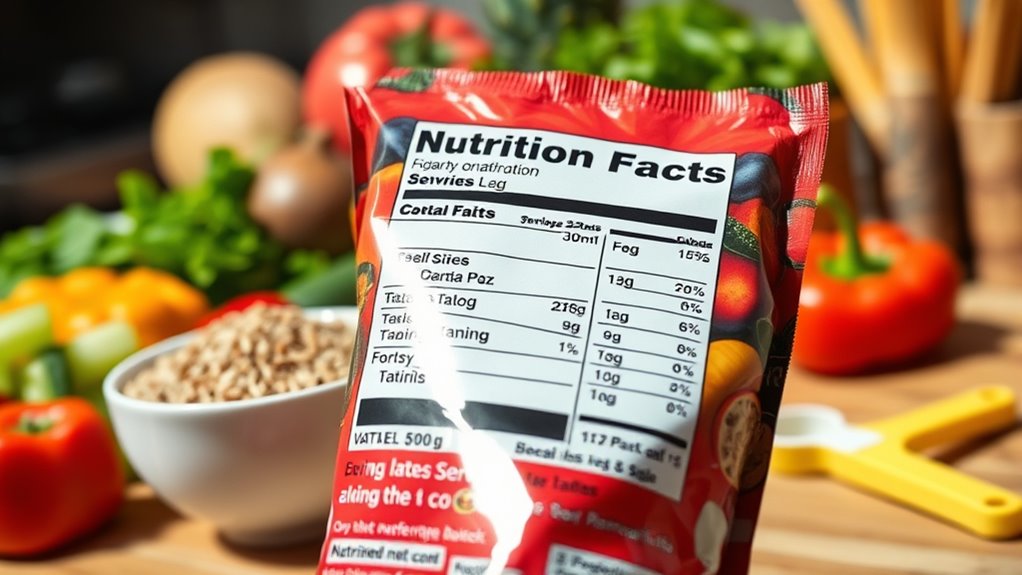

To read nutrition labels like a dietitian, start by checking the ingredient list from most to least and look for recognizable, whole foods. Pay attention to serving sizes and adjust nutrient amounts if you eat more than one serving. Focus on calories, fats, added sugars, and sodium percentages to evaluate healthiness. For a deeper understanding, continue exploring how these details influence your overall diet and wellness.

Get the latest gadgets delivered free — and shop member deals
- Fast, free delivery on millions of items
- Access to Prime Big Deal Days deals on October 6–7
- Prime Video, Amazon Music and more included
Key Takeaways
- Examine the ingredient list from most to least to identify whole foods versus processed ingredients.
- Check serving sizes carefully and adjust nutrient values accordingly for accurate intake assessment.
- Focus on key nutrients like saturated fat, trans fat, added sugars, and sodium to evaluate health impact.
- Use daily value percentages to determine how a nutrient contributes to your overall daily intake.
- Compare products by analyzing ingredient quality and nutrient content to make healthier, informed choices.

Have you ever looked at a nutrition label and felt unsure about what all those numbers and terms mean? You’re not alone. Nutrition labels can seem confusing at first glance, but once you understand how they’re organized, you’ll be able to make smarter choices about what you eat. The first step is to pay attention to the ingredient list and the serving sizes, which lay the foundation for understanding the rest of the label. The ingredient list tells you exactly what’s inside the product, listed from most to least by weight. This can help you identify added sugars, preservatives, or artificial ingredients you might want to avoid. When you’re checking the ingredients, look for recognizable foods and be wary of long lists filled with unfamiliar additives. Understanding the ingredients can guide you toward more whole-food options.
Next, focus on the serving sizes. These are essential because all the nutritional information on the label is based on a specific amount of the product—often smaller than what you might actually consume. For example, a package might list a serving size as half a cup, but you may be eating a whole cup or more. If you don’t adjust your perspective based on the actual amount you consume, you could misinterpret the nutritional value. Always compare the serving size to what you typically eat. If a product’s serving size is small, and you tend to eat more, multiply the listed nutrients accordingly to get an accurate picture. This helps prevent underestimating calories, fat, sugar, or sodium intake.
Once you understand the ingredient list and serving sizes, move on to the rest of the label. The calories tell you how much energy you’ll get from a serving. The macronutrients—fats, carbohydrates, and proteins—are listed with specific amounts, and paying attention to these can help you balance your meals. Look at the amount of saturated fat, trans fat, added sugars, and sodium, as these are often linked to health issues when consumed excessively. The daily value percentages show how much a serving contributes to your daily recommended intake, making it easier to see whether a food is high or low in certain nutrients. Remember, though, that these percentages are based on standard diet guidelines, so your personal needs might differ. Additionally, understanding the contrast ratio of a projector can help you evaluate how well it will perform in dark scenes, which is crucial for a true home cinema experience.
Frequently Asked Questions
How Often Should I Check Nutrition Labels When Shopping?
You should check nutrition labels every time you shop to develop strong reading habits and become more label familiar. Frequent checking helps you make healthier choices and understand product ingredients better. Don’t just glance; take time to compare labels across brands. Over time, this consistent practice makes reading labels second nature, empowering you to choose foods that align with your nutrition goals and maintain a balanced diet.
Are There Hidden Ingredients to Watch for on Labels?
When checking labels, watch for hidden ingredients like additive additives that might be unfamiliar, as well as the difference between natural and artificial ingredients. You should look beyond the front packaging and read the ingredient list carefully. Artificial ingredients can sometimes mask preservatives or flavor enhancers, so knowing what’s natural versus artificial helps you make healthier choices. Always stay vigilant for any ingredients you don’t recognize or that seem suspicious.
How Do Serving Sizes Affect Calorie Counts?
Ever notice how a small snack suddenly packs more calories than expected? Serving sizes can be tricky, and portion distortion often leads you to underestimate calorie counts. When reading labels, pay attention to the listed serving size because it directly impacts calorie calculation. If you eat more than the suggested portion, your calorie intake increases accordingly. Understanding this helps you make better choices and avoid surprises in your daily diet.
Can I Rely on “Low Fat” Claims?
You shouldn’t fully rely on “low fat” claims because they can be misleading. These labels typically indicate reduced fat content but don’t necessarily mean the product is healthy. Sometimes, manufacturers add sugar or other additives to compensate for flavor. Always check the nutrition label for fat content and other health claims to get a clear picture of the product’s overall nutritional value.
What Should I Look for in Allergen Information?
Imagine the label is a secret map guiding you safely through ingredient land. When checking allergen info, look for clear mentions of common culprits like gluten sensitivity and nut allergies. Highlighted or bolded words often signal allergens, so pay attention. This way, you avoid hidden risks and navigate your food choices confidently, ensuring your safety and peace of mind in every bite.
Conclusion
Now that you know how to read nutrition labels like a dietitian, you can make smarter choices at the grocery store. Remember, it’s like having a trusty compass guiding you through the sea of food options. Keep your wits about you and don’t let sneaky marketing tricks sway you. With these skills, you’re well on your way to healthier eating—no need for a time machine, just a little knowledge and confidence. Happy shopping!
Fall Picks
fall essentials
As an affiliate, we earn on qualifying purchases.