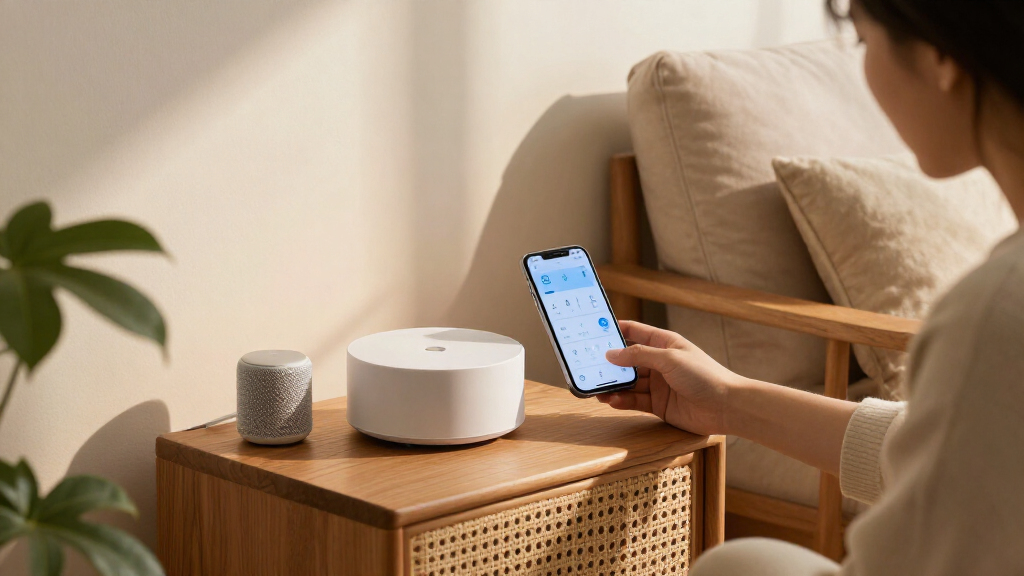

🔍 Read the full analysis: Making Sense Of AI-Powered Home Automation Devices on ThorstenMeyerAI.com

Get the latest gadgets delivered free with Prime
- Fast, free delivery on millions of items
- Prime Video, Amazon Music and more included
- Member-only deals all year
TL;DR
There is no single best approach to AI-powered home automation: Matter-compatible devices offer more cross-brand flexibility, while proprietary systems may provide deeper integrations and simpler setup within one ecosystem. Matter compatibility does not guarantee that every device feature works across platforms, and privacy, local control and costs vary by product.
Matter-compatible smart home devices offer a more flexible starting point for households mixing brands, while proprietary systems can deliver closer integration within one manufacturer’s ecosystem, according to the original comparison published by ThorstenMeyerAI.com. The practical choice affects which products and platforms households can combine, how easily they can switch later, and which advanced features remain available.
The comparison covers devices used for lighting, locks, climate controls and routines, and says either approach can work with voice assistants or machine-learning features. It identifies cross-brand compatibility and flexibility over time as Matter’s main advantages. Participating devices are designed to connect across supported brands and platforms, potentially giving buyers more choice about equipment and controllers, as explored in this guide to AI home automation devices.
That compatibility has limits. Support for Matter does not guarantee feature parity: basic controls may work across platforms even when a manufacturer’s special routines, sensor information or AI-assisted features do not. The source advises buyers to check support for both the device and the specific feature they plan to use.
Proprietary systems can provide more tightly coordinated features across one maker’s products, and may be easier to set up when devices share an app and account. In return, buyers may face a narrower product range or find that changing platforms means replacing devices or losing functions. The source says reliability, local control, privacy and cost depend on the individual product and platform; neither approach is uniformly better on those measures, considerations also relevant when choosing among advanced AI home automation devices.
How Platform Choice Shapes a Home
The choice can shape a household’s options long after the first devices are installed. A Matter-based setup may make it easier to mix brands or change controllers, but households still need to check which features their chosen platform supports. A proprietary setup can make daily use more cohesive when its integrated functions meet a real need, while increasing reliance on one manufacturer’s products, software and ongoing support.
Neither label settles questions about privacy, cloud dependence or local operation. Matter is a compatibility standard, not one shared privacy policy, and the source says device behavior depends on the manufacturer and controller. Buyers need to review the terms and capabilities of the specific products they are considering rather than treating either approach as an automatic guarantee.
Popular right now

Dyson V15 Detect Cordless Stick Vacuum

Shark IY143H Cordless Pet Stick Vacuum

Dyson Airwrap i.d. 6-in-1 Multi-Styler and Dryer
As an affiliate, we earn on qualifying purchases.
The Trade-Off Behind Smart Home Standards
The comparison frames the decision as a trade-off between interoperability and ecosystem depth. Matter is intended to help participating products work across supported platforms. A proprietary system instead centers a maker’s own devices and selected partners, which can allow closer coordination but may restrict product choice.
The source also notes that setup depends on the household’s starting point. Matter devices may require a compatible controller and checks on feature support; a single-brand setup can be simpler when all products are supported by the same system. The source provides no specific device test results, market-wide reliability measurements or dated product updates, so its conclusions are best read as a purchasing comparison rather than a benchmark.
“Matter is the stronger starting point for people mixing brands or planning for future changes; a proprietary system suits buyers who value a unified experience and are comfortable with its ecosystem.”
— ThorstenMeyerAI.com comparison
Feature Support Varies by Product
The source does not specify which devices, controllers or software versions were evaluated, or give a publication date. It also does not establish that one approach is more reliable or private overall. Actual feature support, local operation and cloud dependence vary by product and platform, and may change with software updates. No specific claims about individual manufacturers should be inferred from the general comparison.
Check Devices Before Committing
For buyers, the next step is to list the devices and routines they need, then confirm that each product works with the intended controller and platform. Those prioritizing cross-brand choice and future flexibility can start with Matter-compatible products while checking support for advanced features. Those considering a proprietary system should compare its specific integrations, account requirements, ongoing costs and options for moving devices later.
The comparison does not announce a new standard, product launch or policy change. The outcome for any household depends on its selected devices and the manufacturers’ continuing support; the source provides no announced follow-up milestone.
Key Questions
Is Matter always better than a proprietary smart home system?
No. Matter may suit households that value cross-brand choice, while a proprietary system may suit buyers who want specific integrations and a unified experience. The better fit depends on the devices and routines involved.
Does Matter support every feature on a compatible device?
No. Basic controls may work across platforms, while advanced routines, sensor data or manufacturer-specific AI features may remain limited to a particular app or ecosystem.
Does Matter guarantee better privacy or local control?
No. The comparison says Matter does not impose one privacy policy. Privacy and local operation depend on the product and platform, so buyers should check each manufacturer’s practices and device capabilities.
What should buyers check before choosing a system?
Confirm that the device, controller and desired features work together. Also compare setup requirements, account policies, costs, local functions and how difficult it may be to switch systems later.
Source: ThorstenMeyerAI.com