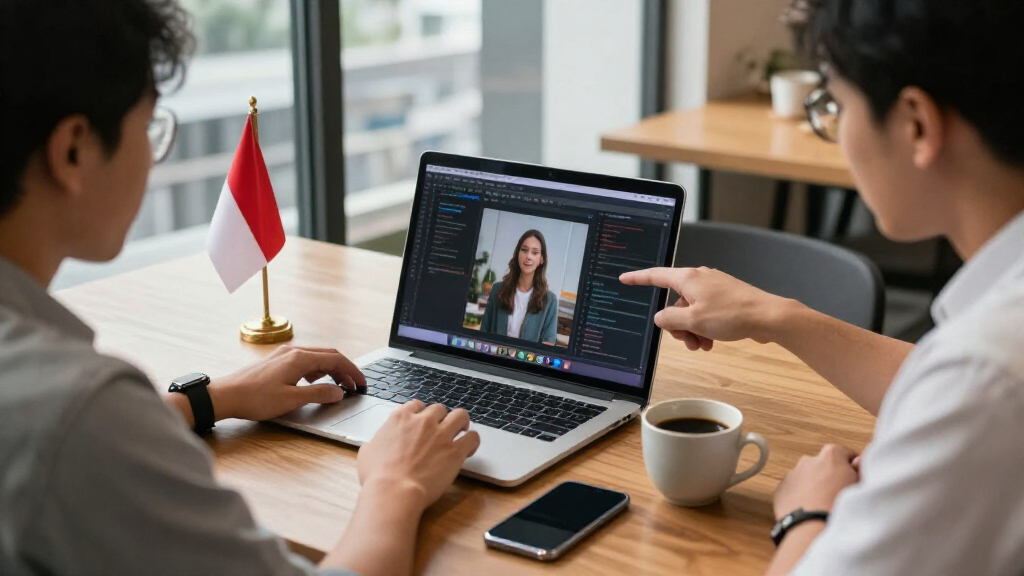
🔍 Read the full analysis: The Big Tech Response To Indonesia’s Proposed AI Copyright Rules on ThorstenMeyerAI.com

Get the latest gadgets delivered free with Prime
- Fast, free delivery on millions of items
- Prime Video, Amazon Music and more included
- Member-only deals all year
TL;DR
Google, Meta and TikTok challenged parts of Indonesia’s proposed copyright-law revision at a parliamentary hearing on Nov. 11. The draft would address payments for news displayed by platforms and rules for AI training and AI-assisted work, but its current text is not publicly available and it has not become law.
Meta and TikTok joined Google in challenging Indonesia’s proposed copyright-law revision at a parliamentary hearing in Jakarta on November 11, objecting to provisions that could require platforms to pay news publishers and license copyrighted material for AI training. The bill remains under deliberation, and the full text currently being considered was not available for review.
The hearing was held by the House of Representatives’ Legislation Body, known as Baleg, which is considering the revision with the government. According to Kompas, lawmakers heard from Google, Meta, TikTok, the Press Council and Satu Lisensi Indonesia. The measure revises Indonesia’s Copyright Law, Law No. 28 of 2014, and began as a parliamentary initiative approved in a plenary session on March 12, 2026.
The draft’s provisions have changed since a version reported by Reuters in July. That version proposed rules for AI-generated and AI-assisted work, including disclosure of AI use, limits on imitating a creator’s distinctive style, and protection for AI-assisted work only when it met an unspecified human-involvement standard. It also contemplated fair-use provisions or licensing for copyrighted works used to train AI models. Reuters reported that the July draft would exclude fully AI-generated works from copyright protection; the current text may differ.
The proposal also addresses news aggregation and link previews. At the November hearing, Google objected to what it described as payment requirements for indexing, aggregation and displaying news snippets, according to Suara. Google representative Agung Pamungkas said a levy on links would leave the company with “no choice” but to stop crawling, indexing and distributing Indonesian news, Reuters reported. The statement describes Google’s position, not a decision to withdraw its services.
The Big Tech Response to Indonesia’s AI Copyright Rules
Google, Meta and TikTok challenged parts of a proposed copyright-law revision at a November 11 hearing. The draft remains under discussion, and its current text has not been made public.
What the companies challenged
Their objections address different parts of the proposal; they are company positions, not lawmakers’ findings.
| Company | Concern raised |
|---|---|
| Possible payments for links and snippets, collective licensing, AI training rules and safe-harbor protections | |
| Meta | Link sharing is not the same as republishing; payment duties could reduce publisher traffic and revenue |
| TikTok | AI disclosure should not apply when AI only assists a creator; retain platform safe-harbor protections |
What the proposal could affect
The final wording will determine how any rules affect news access, publisher support and creative work.
Links and snippets
Payment rules could change how platforms surface reporting and how publishers are compensated.
Licensing and exceptions
The proposal could shape whether developers license copyrighted works or use them under an exception.
AI-assisted work
Disclosure and human-involvement rules could affect which works qualify for copyright protection.
What happens next
Baleg and the government are still deliberating the revision.
The text discussed at the hearing has not been publicly verified.
Further hearings or amendments may clarify the provisions.
No parliamentary vote date was reported; the proposal is not binding law.
How Link Fees Could Affect News Access
The debate could shape how Indonesian publishers are paid when platforms surface their reporting, while also determining whether and how AI developers can use copyrighted material for training. A collective licensing system, if included in the final law, could change who negotiates payments and how revenue reaches publishers and creators. The exact mechanism remains unsettled because the current draft was not available for verification.
The Press Council made the case that existing arrangements have not delivered enough support to journalism. Its deputy chair, Totok Suryanto, told lawmakers that platforms account for 80 percent of digital advertising and that referrals from platforms to news sites have fallen by up to 70 percent, according to coverage by Aktual and the source material. Those figures were presented by the council; the available reporting does not provide the underlying measurement period or methodology.
For readers, the immediate question is whether a payment rule would change the amount or presentation of Indonesian news available through search and social platforms. Google argues that charges on links could reduce access; publishers and the Press Council argue that platforms benefit from news content and that current support is inadequate. Neither outcome is settled. Any effect on traffic, publisher income or AI services will depend on the final law and its implementation.
Popular right now

Bose QuietComfort Wireless Noise-Cancelling Over-Ear Headphones, Twilight Blue

LG StanbyME 2 Max 32-Inch 4K Portable Smart Touchscreen TV

Ninja Luxe Café Mini Plus Espresso and Coffee Maker with AutoFroth, Bone & Champagne
As an affiliate, we earn on qualifying purchases.
A Proposal Still Under Revision
Indonesia already has a policy requiring digital platforms to support quality journalism. Presidential Regulation No. 32 of 2024 established that obligation. At the November hearing, Press Council deputy chair Totok Suryanto said compliance had been low and the regulation had not worked as intended, according to Aktual. The proposed copyright revision would address compensation through copyright rules, but the available information does not establish how it would interact with the 2024 regulation.
The AI provisions first drew attention in a draft reported by Reuters on July 17. Hermansyah Siregar, a law ministry official overseeing intellectual property, confirmed that version was authentic and described it as a proposed first explicit recognition of AI in Indonesia’s copyright law. He also said it was not final. Since then, the text has changed, and reports of the November discussion refer to provisions whose wording could not be checked against a publicly accessible current draft.
The company objections concern distinct parts of the proposal. Google favors voluntary, market-based licensing rather than a single mandatory collective licensing body, and argues for a text-and-data-mining exception with an opt-out such as robots.txt. Meta’s position, as described in the source material, is that sharing a link is not the same as republishing a news article and that payment duties could reduce publisher traffic and revenue. TikTok has argued that AI-disclosure requirements should not apply when AI is only assisting a creator, and it wants platform safe-harbor protections retained. These are company positions, not findings by lawmakers.
“The development of generative AI has disrupted the copyright framework.”
— Hermansyah Siregar, a law ministry official overseeing intellectual property, as reported by Reuters
Current Draft and Vote Remain Unclear
The latest draft text has not been verified. The version Reuters described in July has since changed, and the full version discussed at the November hearing was not available. Reports refer to different versions, so detailed provisions and article numbers attributed to the current text should be treated cautiously.
It is also unclear what the final law would count as sufficient human involvement for copyright protection, how any AI-training exception or licensing requirement would work, and whether AI assistance would trigger disclosure. The available material does not establish the final scope of a possible link-payment rule, the rate or method for calculating compensation, or how a collective licensing body would distribute payments.
No date for a parliamentary vote was announced in the source material. The companies’ warnings and the Press Council’s figures are attributed views; the hearing did not settle their competing claims about likely effects on access, traffic, publisher revenue or AI performance.
Lawmakers Continue Copyright Deliberations
Baleg and the government are continuing to deliberate the bill. The next developments to watch are publication of a current draft, further hearings or amendments, and any announcement of a timetable for a vote. Until lawmakers settle the text and parliament acts on it, the proposed requirements remain proposals rather than binding law.
If the bill advances, the provisions on news links, AI training, creator protections and platform liability will need to be assessed in their final wording. The hearing shows that platforms and press representatives have competing concerns, but it does not establish which proposals lawmakers will adopt or how any eventual rules would be enforced.
Key Questions
Has Indonesia passed the proposed AI copyright rules?
No. The revision is still under parliamentary deliberation. The November 11 hearing was part of that process, and no vote date was reported.
What did Google, Meta and TikTok object to?
Their concerns differ. Google challenged possible payments for links and snippets, a single collective licensing body, mandatory licensing for AI training and limits on intermediary safe-harbor protection. Meta argued that sharing links is not republishing and warned that payment obligations could affect publisher traffic and revenue. TikTok said disclosure should not be required when AI only assists a creator and called for safe-harbor protection.
Would the draft require payment for AI training data?
A July draft reported by Reuters contemplated fair-use provisions or licensing for copyrighted works used to train AI. The current text was not available, so it is not clear whether that proposal remains or how it might operate.
Could the proposed rules change access to Indonesian news?
That is disputed. Google warned that a charge on links could lead it to stop crawling, indexing and distributing Indonesian news. That is the company’s stated position; the bill is not final, and no resulting change to news access has been confirmed.
Source: ThorstenMeyerAI.com