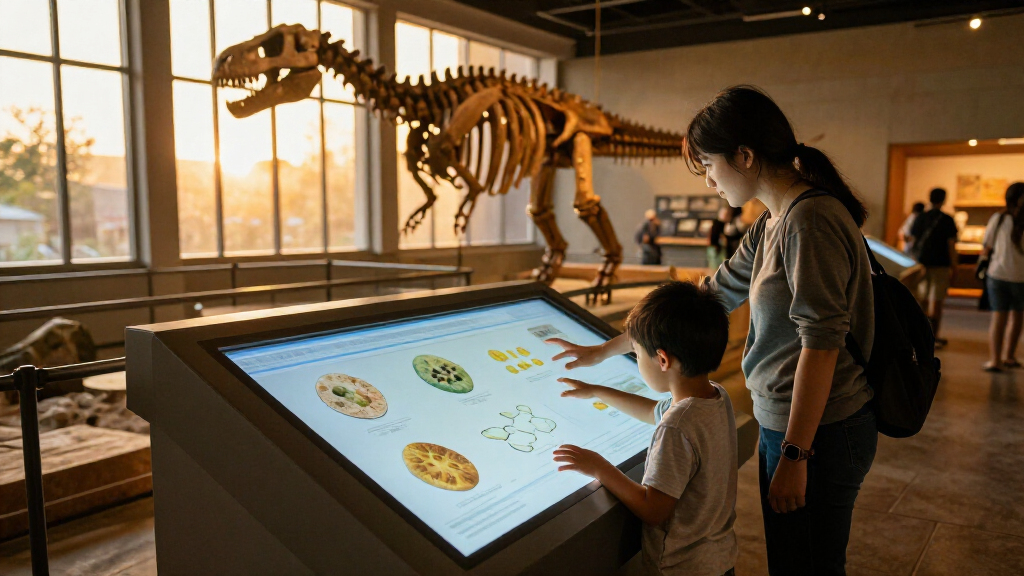

📊 Full opportunity report: How Exhibit-Based Games Connect Visitors With Museum Learning on IdeaNavigator AI — validation score, market gap, and execution plan.

Get the latest gadgets delivered free with Prime
- Fast, free delivery on millions of items
- Prime Video, Amazon Music and more included
- Member-only deals all year
TL;DR
A proposal from IdeaNavigator AI recommends that small museums test browser-based learning games built around their own collections. The suggested pilot would measure school bookings, family dwell time and repeat visits; no results from such a test are provided.
IdeaNavigator AI has proposed a pilot in which small museums offer visitors browser-based learning games built from their own collections. The plan targets museums with limited staff and budgets, but it is a project proposal, not a documented product launch or evaluation; whether games increase school bookings, family engagement or repeat visits remains untested.
In its proposal, IdeaNavigator AI identifies a prospective buyer: a director or sole educator at a small history, art or science museum, typically with an annual budget below $250,000 and a program for school groups and families. The proposal describes a staffing problem: employees and volunteers handle multiple roles, while worksheets may be reused for years. It also says families can move through exhibits quickly when visits lack structured activities. These are problem statements in the proposal, not independently measured findings.
IdeaNavigator AI’s suggested minimum viable package would use museum-provided photographs, labels and object records. The proposal says the museum would receive a browser-based quest within two weeks, without requiring an app download. It would include a standards-aligned school-group activity organized by grade band, a family quest and a 10-minute individual trail. The proposal also calls for educator review, a simple editor for replacing objects when displays change, a printable alternative and visit analytics that museums could use in grant reports.
For revenue, IdeaNavigator AI recommends a fixed-price initial build sized to fit a small grant, followed by a modest annual hosting and content-refresh fee. The proposal suggests regional museum associations as potential group purchasers. Its validation plan is to make quests for three museums at cost, compare school bookings, family dwell time and repeat visits with the same term a year earlier, and find out whether at least two museums would seek paid refreshes in future grant applications. IdeaNavigator AI reports no pilot data or customer commitments.
How Exhibit-Based Games Connect Visitors With Museum Learning
IdeaNavigator AI proposes browser-based quests built from small museums’ own collections. The pilot is untested, so its effect on visits and learning is unknown.
What the package proposes
Museums supply collection materials; visitors use activities suited to different groups.
Grade-aligned activity
A school-group quest organized by grade band.
Gallery quest
A structured activity for family visits.
Browser-based trail
No app download is proposed; a printable alternative is included.
How the pilot would work
The proposal links visitor activity to practical museum questions.
Create activities for three museums using their photos, labels and object records.
Measure school bookings, family dwell time and repeat visits over one term.
Compare with the same term a year earlier and ask whether museums would seek paid refreshes.
Engagement is not proof of learning
The proposed measures may show whether visitors engage, but they do not directly assess educational outcomes.
- School bookings
- Family dwell time
- Repeat visits
- Learning outcomes
- Whether the game caused changes
- Visitor analytics and data retention
Questions before a museum commits
The proposal leaves key costs and operating details open.
| Decision area | What is known | What remains open |
|---|---|---|
| Pricing | Fixed-price build and annual refresh proposed | Actual costs |
| Staff effort | Educator review proposed | Time to supply and review content |
| Funding | Designed to fit a small grant | Eligibility and confirmed awards |
| Analytics | Visit analytics proposed | Collection method and data retention |
Testing Games Against Museum Goals
In its proposal, IdeaNavigator AI presents digital interpretation as a bounded education project rather than a custom technology build. If a museum can use its own collection materials and a browser-based activity, the approach could reduce demands on staff compared with writing and maintaining a game from scratch. The proposal does not provide evidence of those savings; the value would depend on the time required from museum educators, the quality of the activities and the ongoing cost of keeping them current.
IdeaNavigator AI’s proposed measures connect visitor engagement to operational questions. School bookings and repeat visits can indicate whether an activity is useful beyond a single visit; family dwell time can offer a measure of how long groups spend in the galleries. Those indicators do not, by themselves, prove learning. A pilot would need to distinguish engagement from educational outcomes and account for other reasons attendance might change, such as school schedules, exhibits or marketing.
For museums considering limited grant funds, a fixed price could make costs easier to plan. But IdeaNavigator AI’s proposal does not give a price, explain how standards alignment would be checked across states, or set out data privacy practices for visitor analytics. Those details would matter before a museum could judge affordability and suitability.
Popular right now

Ninja Luxe Café Mini Plus Espresso and Coffee Maker with AutoFroth, Bone & Champagne

De'Longhi Magnifica Duo Fully Automatic Espresso Machine with Milk Frother, Silver

KitchenAid Artisan 5-Quart Tilt-Head Stand Mixer, Almond Cream
As an affiliate, we earn on qualifying purchases.
The Grant Window Behind the Proposal
IdeaNavigator AI frames its proposal around public funding uncertainty. The proposal says the Institute of Museum and Library Services announced FY2026 Inspire Grants for Small Museums on Sept. 9, 2026, funding 88 museums to develop educational programs and exhibits. It also says a court settlement in April 2026 left the agency intact, while the president’s FY2027 budget again proposed eliminating IMLS. These are funding-context claims made by IdeaNavigator AI; the proposal does not establish that a museum-game project would qualify for a particular grant.
IdeaNavigator AI identifies the FY2027 National Leadership Grants deadline as tentatively Nov. 13, 2026. Because the proposal describes that date as tentative, applicants would need to check current agency guidance. The suggested model is to fit a defined project into an available grant line, rather than depend on a large custom-agency contract. IdeaNavigator AI does not report that any museum has secured funding or commissioned the package.
Pilot Results and Costs Remain Unknown
IdeaNavigator AI reports no completed pilot, measured outcomes or named participating museums. Its proposal does not say how much the build and annual refresh would cost, how much staff time would be needed to supply and review collection content, or whether the proposed two-week delivery schedule is feasible across different collections.
The proposed comparison with the same term in the previous year could help set a baseline, but IdeaNavigator AI’s plan does not specify how it would account for differences in school bookings, seasonal attendance, exhibit changes or other influences. The proposal also does not define how learning would be assessed, how visitor analytics would be collected, or what data would be retained. Its funding announcements and deadline are presented as context; it gives no indication that grant applications or awards for this specific approach are underway.
A Three-Museum Test Is Proposed
IdeaNavigator AI proposes building quests for three small museums at cost and tracking school bookings, family dwell time and repeat visits over one term. The proposal says results would be compared with the same term in the prior year, and the museums would be asked whether they would include paid refreshes in upcoming grant applications.
IdeaNavigator AI does not report that this work has been completed. Until museums participate and results are published, the package remains a concept to validate rather than evidence that exhibit-based games increase attendance or learning. Any museum assessing the idea would also need confirmed pricing, a clear content-review process and details on analytics and grant eligibility.
Source: IdeaNavigator AI proposal
Key Questions
What is the proposed museum game?
IdeaNavigator AI proposes a browser-based quest built from a museum’s own collection materials, with activities for school groups, families and individual visitors. The proposal says it would not require an app download.
Has the approach been tested?
IdeaNavigator AI reports no test results. Its proposal recommends making games for three museums at cost and measuring visitor and booking indicators over one term.
What would museums measure?
IdeaNavigator AI’s proposal suggests measuring school-group bookings, family dwell time and repeat visits, compared with the same term in the previous year. It does not describe a method for directly measuring learning.
How would the package be funded?
IdeaNavigator AI proposes a fixed-price build intended to fit a small grant, plus an annual hosting and refresh fee. The proposal gives no price or confirmed grant award.
When is the proposed grant deadline?
IdeaNavigator AI’s proposal lists the FY2027 National Leadership Grants deadline as tentatively Nov. 13, 2026. Applicants should check current IMLS guidance because the proposal does not present the date as final.
Source: IdeaNavigator AI