
🔍 Read the full analysis: How A Boring Draft Shaped Our One-Night AI Horror-Comedy on ThorstenMeyerAI.com

Get the latest gadgets delivered free with Prime
- Fast, free delivery on millions of items
- Prime Video, Amazon Music and more included
- Member-only deals all year
TL;DR
Thorsten Meyer says Hollow House, a 97-second AI-generated horror-comedy, was made overnight on October 27–28, 2026, after three versions. The first cut looked polished but felt boring; the final version used faster cuts and generated three longer segments with one model using references for the full cast.
Thorsten Meyer has published Hollow House, a 97-second AI-generated horror-comedy made overnight on October 27–28, and says the project took three versions before its pacing worked. The account on ThorstenMeyerAI.com describes a production in which the first cut looked visually polished to its creator but was, in his assessment, boring and amateurish—a result that led the team to change its editing and generation approach.
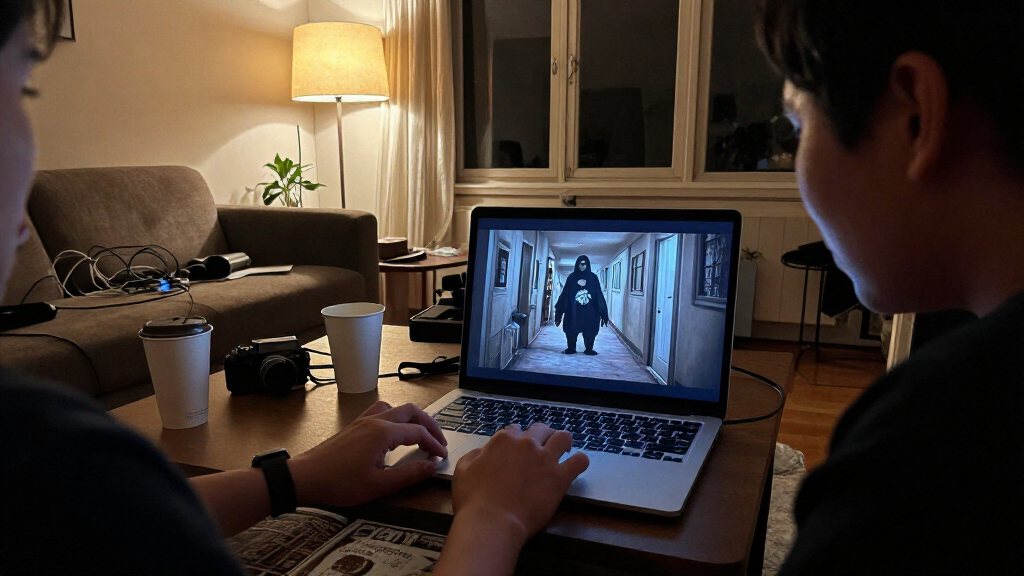
The short follows a ghost who joins the scare crew at an extreme haunted attraction. When a guest says the attraction’s safe word, the scaring does not stop; the staff then try to treat the supernatural visitor as a workplace problem. Meyer’s account says the characters, voices and set were AI-generated. The film is available as a YouTube short titled Hollow House | A Halloween Horror-Comedy Short.
The first version comprised 20 shots and ran 2 minutes, 15 seconds. Meyer says its scenes averaged 5.6 seconds per cut. The second version used 66 fast cuts and ran 2 minutes, 21 seconds. The final version, which he says worked, consisted of three roughly 30-second segments generated with one model given references for the whole cast; it runs 1 minute, 37 seconds. The account does not provide a full technical breakdown of that third version’s editing.
Meyer reports that the three attempts used 2,220 Higgsfield credits, valued at roughly $95 under his plan, plus about 2,100 ElevenLabs characters for music and sound effects. Those figures are the creator’s accounting, not an independently audited production budget. He says character reference images were made before video generation, using Nano Banana 2 through Higgsfield, to reduce visual changes between shots.
A One-Night Production Report · October 27–28, 2026
How a Boring Draft Shaped Our One-Night AI Horror-Comedy
Thorsten Meyer says Hollow House, a 97-second short about a ghost joining an extreme haunted attraction’s scare crew, took three versions to find its rhythm. The turning point was an editorial call: the polished first cut felt slow, so the team changed its pace and generation approach.
Three cuts, one overnight rethink
The figures below come from the creator’s account. The exact editing breakdown for the final cut is not provided.
Polished, but slow
20 shots · 2:15 runtime
Longer scenes, mostly static camera movement and no score. Meyer says the faces, costumes and haunted-house lighting held together, but the comedy did not.
Creator’s verdict: flatMore cuts, more pace
66 fast cuts · 2:21 runtime
The second pass increased the cutting pace. It ran longer than the first version, showing that “faster” described the edit’s rhythm, not a shorter runtime.
A new editing directionThree generated segments
About 3 × 30 sec · 1:37 runtime
The final short used one model with references for the full cast. Meyer says this version worked; the source does not name the model or detail the full edit.
Published as Hollow HouseConsistency cannot fix a joke’s timing
Meyer’s account points to an ordinary filmmaking decision at the heart of an AI-assisted process: judging what the cut needs.
A reported shot-length comparison
The first version averaged 5.6 seconds per shot. Meyer compares that with about 1.8 seconds in the short that inspired its structure.
Creator-reported counts. This comparison does not prove that faster cutting alone made the final short work.
References first, then shots and sound
The production account describes a sequence of preparation, generation and review—alongside problems that needed another pass.
Build the cast
Eight character reference images were made before video generation to help maintain hairstyles, costumes and faces.
Plan the first cut
For version one, the team planned 20 shots and generated a starting image for each scene.
Animate and listen
Google Veo 3.1 fast mode generated video with speech and sound, according to Meyer.
Check the dialogue
Whisper review caught “HEY!” rendered as letter names, plus garbled syllables that led to retakes.
Meyer says the premise and production were inspired by an AI horror-comedy short shared on X; the supplied account does not identify it. He describes the script, characters and jokes as his team’s own.
A creator’s accounting, not a benchmark
The figures offer a glimpse into one project. They do not establish typical costs, completion times or tool performance.
Generation credits
Meyer reports using 2,220 Higgsfield credits across three attempts, valued at roughly $95 under his plan. He says Nano Banana 2 through Higgsfield was used to make character references.
Music and sound
The account reports about 2,100 ElevenLabs characters for music and sound effects. Characters, voices and the haunted-house set were AI-generated, according to Meyer.
The reported creative chain
Useful details, with real limits
This is a creator’s behind-the-scenes report, not an independent review or controlled comparison.
Which model made the final segments?
The supplied account does not name the model used for the final three segments or provide its full prompts and settings.
What made the final cut work?
Meyer says the third version worked, but the available material does not isolate the effects of generation, editing, sound design or post-production.
Were the cost and schedule verified?
No. The timeline, credit use and estimate are Meyer’s accounting; the source provides no independent verification or audience testing.
What should viewers expect next?
The short and its production account are published. The supplied material announces no sequel, follow-up date or additional release plans.
Hollow House, at a glance
Watch the 1:37 cut, then compare it with the creator’s account of the earlier attempts.
What is Hollow House?
A 97-second horror-comedy about a ghost joining the crew of an extreme haunted attraction. Meyer says its characters, voices and set were AI-generated.
How many versions were made?
Three overnight versions: 20 shots at 2:15, 66 cuts at 2:21, and a final 1:37 short made from three roughly 30-second segments.
Why did the first version change?
Meyer says it looked good but felt slow and amateurish. He cites long shots, limited camera movement and no score as problems with that cut.
What did the AI use cost?
Meyer reports 2,220 Higgsfield credits, worth about $95 under his plan, plus around 2,100 ElevenLabs characters for music and sound effects.
Why the First Cut Fell Flat
The production account highlights a practical distinction in AI filmmaking: consistent images do not guarantee an effective film. Meyer says the first cut maintained the intended faces, costumes and haunted-house lighting, but its long shots, limited camera movement and lack of a score undermined the comedy’s rhythm. He describes the decisive correction as a human editorial judgment—recognising that the cut was boring—followed by a change in how the material was generated and assembled.
That matters to readers interested in generative video because the account frames the work as an iterative production process rather than a single prompt producing a finished short. The creator identifies specific failures, including speech transcription errors, blocked or altered action, and a head-turn effect that the model would not produce as requested. The reported cost and overnight schedule offer a glimpse of one creator’s workflow, but they do not establish typical costs, reliable completion times or general performance for other users.
The story also gives a concrete example of how editing choices can shape genre. A joke built around a safe word depends on the audience understanding the rule, seeing it fail, and then reacting to the staff’s response. Meyer’s account says the first version’s average shot length was 5.6 seconds, compared with about 1.8 seconds in the short that inspired its structure. That comparison is the creator’s count and does not by itself prove that faster cutting caused the final version to work.
Popular right now

Bose QuietComfort True Wireless Earbuds with Active Noise Cancellation, Bluetooth 5.3, USB-C Charging, IPX4, Black

Samsung 65-Inch 4K OLED Smart TV with Dolby Atmos, 120Hz Refresh Rate, and Amber Protection Bundle
Philips 5500 Series Fully Automatic Espresso Machine with LatteGo Milk System
As an affiliate, we earn on qualifying purchases.
From Character Sheets to Three Cuts
Before generating video, Meyer says the team made eight character reference images, one for each character. These included the Tall Man, ghost Mavis, ticket-booth worker Linda, zombie bride Priya, guest Tommy, the popcorn seller, a scare actor and shift lead Ray. In the account, these images served as visual references for later frames and clips, intended to keep details such as hairstyles and costumes consistent.
For version one, the team planned 20 shots, generated a start image for each, then animated those images with Google Veo 3.1 fast mode. Meyer says the model generated speech and sound along with the video. He also reports using OpenAI’s Whisper speech-recognition model to check generated dialogue against the script; that review caught a shouted “HEY!” being spoken as the letters “H-E-Y” and helped identify garbled syllables that prompted a retake.
The source account says the premise and production were inspired by an AI horror-comedy short shared on X, while Meyer says the script, characters and jokes were his team’s own. It does not identify that earlier short in the supplied material. The article is a creator’s behind-the-scenes report, not an independent review or controlled test of the tools.
““terribly boring and amateurish””
— Thorsten Meyer, describing the first version
What the Production Account Leaves Open
The account is based on Meyer’s description of his own project. The supplied material does not include independent verification of the production timeline, credit use or cost estimate, nor does it disclose the full prompts, settings or workflow for the final version. The exact model used to generate the three final segments is not named in the available text.
It is also unclear how much of the change in the final short came from generation, editing, sound design or other post-production. Meyer says the third approach worked, but the source does not provide audience testing or independent evaluations comparing the versions. The claim that the first cut’s pacing was the key problem is his account of the creative decision, not a measured finding about AI video production generally.
The available source ends during its description of the production process, so further details about the final cut and its post-production may not be included. The short’s publication is reported, but the source gives no view counts, audience response or release plans beyond the linked video.
The Published Short and Its Process
Hollow House is already published on YouTube, so the immediate next step for readers is to watch the 1:37 cut and compare it with Meyer’s account of the earlier attempts. The source does not announce a sequel, a new release date or a follow-up production.
Meyer’s write-up presents the character sheets, start frames, failed attempts and a contact sheet as supporting material for the production story. Any further account could clarify the final version’s exact tools and editing process, but no such update is promised in the supplied material. For now, the confirmed development is the release of the short and the publication of its creator’s explanation of how the project changed over one night.
Key Questions
What is Hollow House?
Hollow House is a 97-second horror-comedy short about a ghost joining the crew of an extreme haunted attraction. Meyer says its characters, voices and set were AI-generated.
How many versions were made?
Meyer reports making three versions overnight: a 20-shot cut running 2:15, a 66-cut version running 2:21, and the final 1:37 short made from three roughly 30-second segments.
Why did the first version change?
Meyer says the first version looked good but felt boring and amateurish. He points to its slower average cutting pace, mostly static camera and lack of a score; those are his assessment of the edit, not an independently tested conclusion.
How much did the AI production cost?
Meyer says the three versions used 2,220 Higgsfield credits, worth about $95 at his plan price, and about 2,100 ElevenLabs characters for music and sound effects. The figures are his estimate for this project.
Where can viewers watch it?
The short is linked on YouTube as Hollow House | A Halloween Horror-Comedy Short (1:37). The source does not report viewership figures or any follow-up release.
Source: ThorstenMeyerAI.com