
🔍 Read the full analysis: Noctilucent Cloud Watching With AI: The Twilight Dial Approach on ThorstenMeyerAI.com

Get the latest gadgets delivered free with Prime
- Fast, free delivery on millions of items
- Prime Video, Amazon Music and more included
- Member-only deals all year
TL;DR
ThorstenMeyerAI.com describes “Noctilucent — NLC Watch at 83 km,” an AI-built interactive exhibition about real high-altitude clouds, as a fictional field journal—not a real company or scientific service. Its defining feature is a solar-depression dial that changes the page’s lighting and cloud visuals to illustrate how noctilucent clouds can remain sunlit after the ground is dark.
ThorstenMeyerAI.com has presented “Noctilucent — NLC Watch at 83 km,” an AI-built interactive exhibition that uses a solar-depression dial to demonstrate how high-altitude clouds can catch sunlight after the ground is dark, as detailed in the original analysis. The site describes the observing project and its field journal as fictional, not a live scientific service; the clouds themselves are real.
The exhibit’s central control represents the Sun’s position 6 to 16 degrees below the horizon, with the design’s most expressive setting near 11 degrees. Adjusting it updates several parts of the experience together: sky brightness, shadow depth, cloud glow, ambient color, grain and horizon flare. The same setting also feeds diagram details and supporting text, according to the site’s account of the design.
The visual sky and cloud forms are generated in the browser using Canvas; inline SVG provides geometry diagrams and an altitude illustration, while CSS supplies effects and layout. The account describes different treatments for billow, whirl and band cloud forms. In a later interaction, visitors hold a control as ground-level haze recedes and a cloud band at 83 kilometres becomes clearer; releasing early lets the simulated sighting fade.
The page’s narrative moves from the illuminated horizon through cloud shapes, ice crystals and seasonal viewing, then shifts to a cream-colored field-log section. The write-up says animation pauses when the document is hidden, offscreen scenes are not continuously painted, and a still presentation is provided for reduced-motion settings. It also points readers to a construction guide describing the implementation and design process.
A Dial Connects Science and Design
The project’s significance is as an interactive science-communication design, not as a new observation or scientific result. Rather than leave the contrast between a dark observer and sunlit clouds as a static illustration, the exhibit makes one variable—the Sun’s apparent position—change the surrounding scene. That offers visitors a way to explore the visual logic behind noctilucent-cloud viewing.
The approach also gives the design a clear organizing principle. Sky color, cloud brightness and diagrams share one lighting state, while the hold-to-reveal interaction turns waiting into part of the experience. For readers interested in AI-assisted web design, the account provides an example of an AI-built concept using procedural browser graphics rather than a collection of image assets. It does not, however, establish that the site measures real atmospheric conditions or helps predict sightings.
night sky telescope for astrophotography
As an affiliate, we earn on qualifying purchases.
As an affiliate, we earn on qualifying purchases.
Real Clouds, Invented Watch
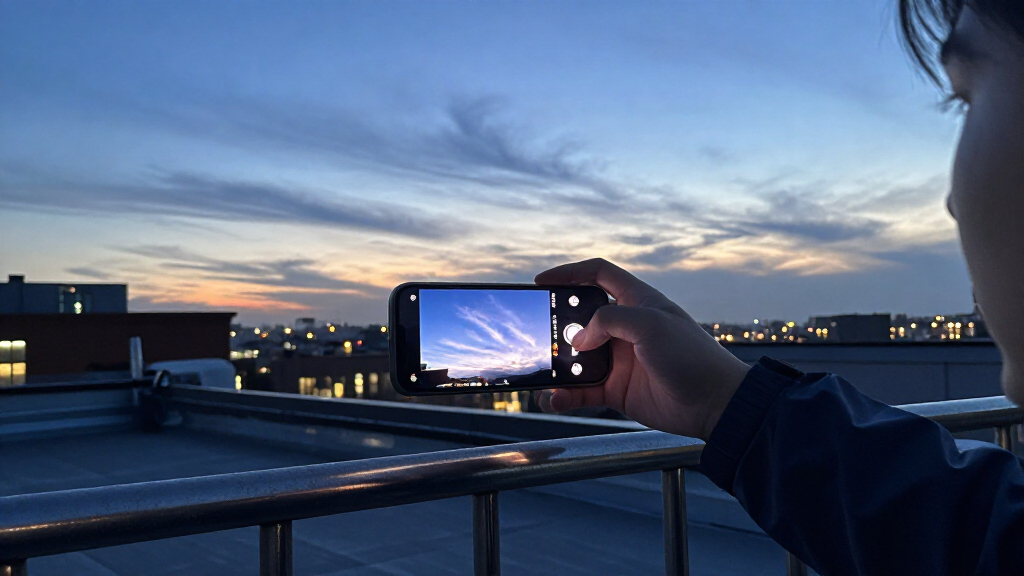
Noctilucent clouds are high-altitude ice clouds that can remain illuminated by the Sun when observers on the ground are in darkness. The exhibit places its cloud band at about 83 kilometres and uses twilight geometry to explain why the clouds and the observer can experience different lighting at the same time.
The source frames the work as room 162 of a 175-room series and calls it a fictional observing project built around real mesospheric science. Its design brief imagines a network of observers and invented station logs; those elements should not be mistaken for records from actual stations. The supplied material describes the concept and its implementation but provides no independent scientific evaluation, live readings or evidence of field observations.
““Noctilucent — NLC Watch at 83 km” is an AI-built exhibition piece: a fictional field journal for a fictional observing project, not a real company or live scientific service.”
— ThorstenMeyerAI.com, describing the exhibit
high-altitude cloud viewing binoculars
As an affiliate, we earn on qualifying purchases.
As an affiliate, we earn on qualifying purchases.
No Live Data or Validation
The supplied account does not give a publication date, identify an independent scientific reviewer or provide a link to measurements from real observing stations. It also does not report user testing, educational outcomes or performance benchmarks. The described solar range and 83-kilometre altitude are part of the experience’s design; the source does not say the dial is connected to live atmospheric data.
The project’s label, “AI-built,” is also not accompanied in the supplied material by a detailed account of which parts were generated by AI and which were authored or revised by people. The construction guide is mentioned, but its full contents are not included here. The exhibit should therefore be understood as a designed explanation, not as evidence of a new cloud-monitoring tool or a scientific discovery.
As an affiliate, we earn on qualifying purchases.
The Design Guide Offers More
ThorstenMeyerAI.com directs readers to the room’s construction guide, which it says covers the lighting model, procedural graphics and visibility-aware animation. The source also describes a three-pass process: build the page, critique it for clarity and interaction, then conduct an art-director review. The supplied material does not give a dated release schedule or name a next scientific or product milestone.
For readers following the project, the immediate next step is to inspect the live exhibit and its design notes, while keeping its fictional observing framework separate from real cloud reports. Any future claims about live data, field use or educational impact would need separate confirmation.
sky watching accessories for astronomy
As an affiliate, we earn on qualifying purchases.
As an affiliate, we earn on qualifying purchases.
Key Questions
Is NLC Watch a real cloud-observing service?
No. ThorstenMeyerAI.com describes it as a fictional field journal and exhibition, not a company or live scientific service.
Are noctilucent clouds real?
Yes. The source describes them as high-altitude ice clouds that can remain sunlit after the ground below has entered darkness.
What does the solar-depression dial change?
It represents the Sun 6 to 16 degrees below the horizon. In the exhibit, moving it changes the sky and cloud lighting as well as related visual details and explanatory copy.
Does the page show live atmospheric conditions?
The supplied description does not say that it uses live atmospheric data. It presents the dial and cloud reveal as parts of an interactive design experience.
How are the visuals made?
The site account says the sky and cloud forms use browser-based Canvas rendering, with inline SVG diagrams and CSS effects. It says no image assets are used.
Source: ThorstenMeyerAI.com
Halloween Picks
halloween
As an affiliate, we earn on qualifying purchases.