
TL;DR

Get the latest gadgets delivered free — and shop member deals
- Fast, free delivery on millions of items
- Access to Prime Big Deal Days deals on October 6–7
- Prime Video, Amazon Music and more included
A GitHub project translates PSP game code ahead of time into C++, compiles it to WebAssembly and runs it in a browser with a custom PSP software layer. Its developer reports that God of War: Chains of Olympus and Ghost of Sparta are playable, but users must supply their own game data and some features, including movie playback, are not working.
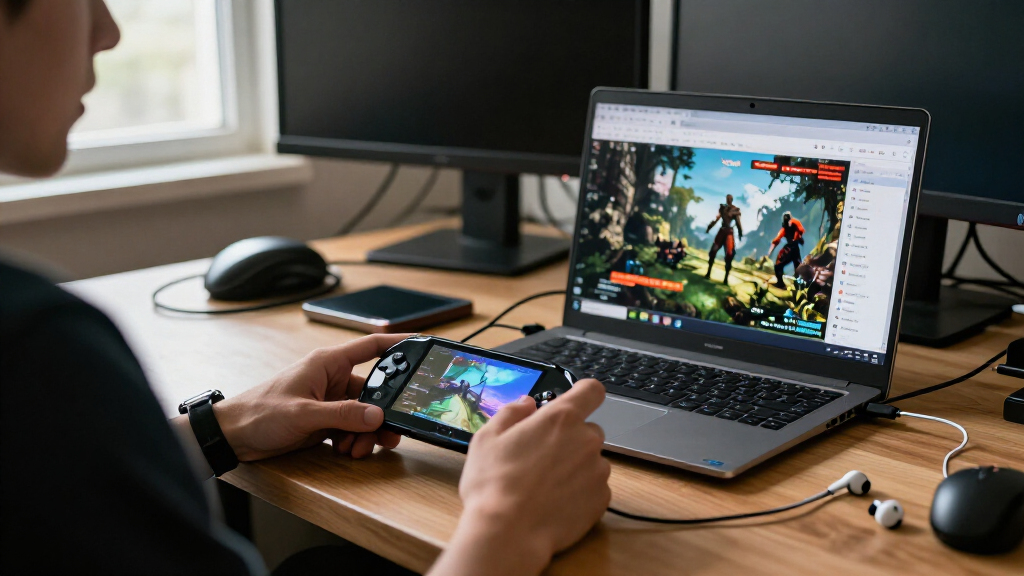
A GitHub project has brought God of War: Chains of Olympus and God of War: Ghost of Sparta to a browser by translating their PSP machine code into C++, then compiling that code to WebAssembly. The developer reports that both games run with a custom software implementation of PSP functions and WebGL2 graphics, rather than through a conventional emulator; players must provide their own game data.
The project’s report says Chains of Olympus runs from boot through menus, cutscenes and combat, with music, speech and sound effects working. In scenes measured by the developer, it reached 60 frames per second in Chrome and Firefox on a laptop, at up to four times the PSP’s native resolution. The report also describes phone support with on-screen touch controls. Movie playback is currently skipped.
Ghost of Sparta was brought up using the same scripts and recompiler, according to the project. The developer reports 55 to 60 frames per second at three times native resolution, without performance-specific work. Getting it to boot required support for a DRM-protected file, several PSP system calls and a graphics lighting fix. These performance figures are the developer’s measurements, not independent benchmark results.
Users do not receive game files from the repository. Instead, the project says they supply a disc image they own and run scripts that produce a web page locally. The system translates the game executable ahead of time and connects the resulting code to a small reimplementation of PSP operating-system services, graphics, audio and storage. Disc data is streamed using HTTP Range requests, so the report says only the executable is downloaded up front.
A Different Route to Browser Play
The work shows how ahead-of-time recompilation can make older console software run in a browser without interpreting every instruction through a conventional emulator at runtime. Its reported performance is notable because the target games were designed for the PSP, while the project renders through WebGL2 and supports resolutions above the handheld’s 480×272 display.
For players, the result is a browser-based way to run these titles on compatible computers and phones, subject to having their own game data and a supported browser. For preservation and software research, the project offers a technical demonstration of translating a specific platform’s code and recreating enough of its system services to run commercial games. It does not establish broad compatibility with the PSP library: the report details two God of War titles, not a general test across games.
The performance figures also need that scope. They come from the project author’s tests, and reported frame rates vary with browser, scene, resolution and device. The report explains that profiling and synchronization fixes mattered as much as graphics optimization, underscoring that browser performance depends on how each game uses the PSP hardware and how the browser handles WebGL.
PlayStation Portable PSP game controller
As an affiliate, we earn on qualifying purchases.
As an affiliate, we earn on qualifying purchases.
How the PSP Code Reaches WebAssembly
The project builds on PSPRecomp, which analyzes a decrypted game executable, identifies functions and emits C++ in units based on guest-code size. The web target then compiles the generated code to WebAssembly and runs it against a model of PSP registers and memory. A high-level software layer responds to requests for services such as threads, files, controllers, audio and save data.
Graphics take a separate path: the project decodes PSP display lists on the CPU and submits geometry and render state to WebGL2. It recreates effects including lighting, fog, texture handling and stencil behavior. The graphics work runs on a worker thread with an OffscreenCanvas, allowing the game code and graphics processing to overlap in a way that reflects the PSP’s CPU-and-graphics-chip workflow.
The developer says the first playable build ran at six frames per second. Subsequent changes included controlling excess frame swaps, reducing profiling overhead, adjusting buffer handling for browser differences and moving graphics processing to a separate thread. The report says that parallel work reduced a busy Firefox scene from roughly 17 milliseconds for game and graphics work combined to about 10 milliseconds, with the slower thread setting the frame cost.
““PSP games running in the browser without an emulator.””
— The project’s GitHub report
WebAssembly compatible browser gaming device
As an affiliate, we earn on qualifying purchases.
As an affiliate, we earn on qualifying purchases.
Compatibility and Limitations Still Open
The report does not give independent testing, a complete compatibility list, or measurements across a range of computer and phone hardware. Its frame-rate results describe scenes measured by the developer, so performance elsewhere may differ. It is also not clear how reliably the project handles other PSP games or whether every version and region of the two named titles works.
Movie playback is skipped in the current implementation, and the project’s report does not establish that every gameplay feature behaves identically to original PSP hardware. The report describes support for one DRM-protected file needed by Ghost of Sparta, but does not provide a broad account of legal or regional differences in game images. The repository supplies no game data; users are responsible for providing files, and the report does not settle what rights apply to any particular copy or use.
Portable gaming device for PSP games
As an affiliate, we earn on qualifying purchases.
As an affiliate, we earn on qualifying purchases.
Further Games and Browser Testing
The repository provides the scripts and web profile for users to try the supported games with their own files. The next practical test is whether other PSP titles can be brought up with the same recompilation path or require additional system-call, graphics or DRM work. The Ghost of Sparta port suggests some reuse is possible, but two games do not establish wider compatibility.
Readers can also watch for updates to movie support, browser and device testing, and documentation of compatibility and performance. The supplied report names no release schedule or formal test plan, so those developments remain contingent on future work by the project author.
Game data storage for PSP emulation
As an affiliate, we earn on qualifying purchases.
As an affiliate, we earn on qualifying purchases.
Key Questions
Which God of War games are reported to run in the browser?
The project reports browser support for God of War: Chains of Olympus and God of War: Ghost of Sparta, both originally released for PSP.
Does the project include the games?
No. The GitHub report says no game data is included. Users supply their own disc image and run the project’s scripts locally to generate a web page.
Is this a PSP emulator?
The project describes its approach as running the games without a conventional emulator. It translates PSP machine code ahead of time into C++, compiles it to WebAssembly and implements selected PSP system and graphics functions in software.
How well do the games run?
The developer reports up to 60 frames per second for measured Chains of Olympus scenes in Chrome and Firefox on a laptop, and 55 to 60 frames per second for Ghost of Sparta at three times native resolution. These are project-reported results, not independent benchmarks, and movie playback is skipped.
Will other PSP games work?
The report does not establish compatibility beyond the two God of War titles. Other games may need additional work to support their system calls, graphics behavior or protected files.
Source: hn
Halloween Picks
halloween
As an affiliate, we earn on qualifying purchases.