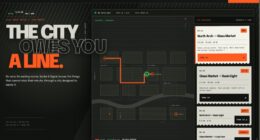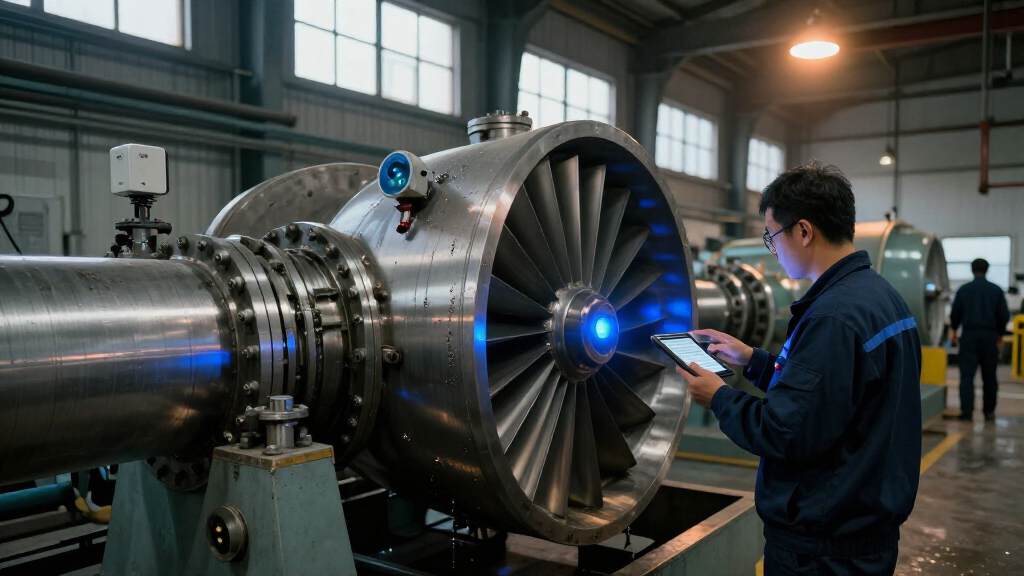

🔍 Read the full analysis: Explore The Motion And AI Themes Of “TURBINE — WERK 9” on ThorstenMeyerAI.com

Get the latest gadgets delivered free — and shop member deals
- Fast, free delivery on millions of items
- Access to Prime Big Deal Days deals on October 6–7
- Prime Video, Amazon Music and more included
TL;DR
TURBINE — WERK 9 is presented as an interactive field guide that uses scrolling to animate an SVG rotor and connect a webpage’s movement with an industrial setting. The project page points readers to a live experience and a design teardown, but does not provide technical specifications, authorship details, or evidence about AI features.
TURBINE — WERK 9 is presented as an interactive field guide where scrolling drives the motion of an SVG rotor, turning movement through the webpage into part of its industrial design. ThorstenMeyerAI.com points readers to a live version and a design teardown, while describing the experience as a way to explore a place through a browser rather than simply read a static brochure, as detailed in the original project analysis.
The project description says the rotor responds to a visitor’s scroll input. Its motion is built from vector paths, linking the page’s progress to an animated mechanical form. The site frames this interaction as a central part of the experience: scrolling is not only a way to reach more content but also a cue that makes the page feel connected to the mechanics of the depicted space.
The presentation calls the work an interactive field guide and invites readers to visit the live room. It also promotes a full design teardown that is said to cover how the team shaped the rotor’s motion, organized the visual system and represented a physical-feeling environment in a browser. Those details are described as subjects of the teardown; the showcase text itself does not provide the implementation breakdown.
The page also associates the project with interest in AI tools and automation, but the described interaction relies on browser behavior, vector artwork and scrolling. No AI model, automated system or AI-generated component is identified. The AI connection is therefore a framing for the intended audience, not evidence that artificial intelligence powers the experience.
Interactive field guide / motion study
Explore the Motion and AI Themes of “TURBINE — WERK 9”
TURBINE — WERK 9 turns scrolling into part of an industrial scene: move through the webpage and an SVG rotor responds. The showcase points to a live experience and a design teardown, while leaving technical and AI claims unverified.
How scrolling becomes a design element
A familiar browser action links navigation with visual motion.
Move through the page
The visitor scrolls through the experience. Page progress becomes an active part of the presentation.
The rotor responds
The project description says an SVG rotor, built from vector paths, changes in response to scroll input.
A machine-like place
Industrial visuals and a field-guide format invite exploration beyond watching a standalone animation.
From browser input to industrial impression
The described concept follows a short, readable chain.
Visual concept / not a technical diagram
One motion, two roles
Scrolling serves as both a way to reach more content and a cue for the rotor’s movement. This gives the page a stronger sense of place using a browser, vector artwork and visitor input.
The showcase presents this as a design idea to explore. It does not include user testing, accessibility results, performance data or comparative evidence to show how the interaction works across visitors and devices.
What the showcase confirms—and what remains open
The project is framed for readers interested in interactive web work, AI tools and automation. Its described experience relies on browser behavior, SVG artwork and scrolling; no AI model or AI-powered feature is identified.
The page promotes a live room and a full design teardown. That teardown is said to cover motion design and the visual system, but the showcase itself does not provide the implementation breakdown.
Project details still missing
The public description is a concept overview, not a full technical record.
Implementation
No detailed account of the rotor animation, responsive behavior or additional scripts is provided.
Authorship and setting
No author, team or project timeline is named. The meaning of “WERK 9” is not explained.
Access and outcomes
Accessibility guidance, user testing, device performance and measured visitor impact are not reported.
Key questions
What readers can take away from the available description.
What is TURBINE — WERK 9?
An interactive field guide where scrolling through a webpage drives the motion of an SVG rotor.
How does the rotor move?
The description says it responds to scrolling and uses vector paths. It does not publish a detailed animation explanation.
Does the project use AI?
No AI model or AI-powered feature is identified. AI and automation appear as audience framing, not evidence of AI functionality.
Where can readers learn more?
The project page points to a live room and a design teardown, with no release date stated for further details.
How Scroll Becomes a Design Element
The project offers a focused example of how a familiar browser action can carry visual meaning. When scrolling controls the rotor, page navigation and animation are linked: a visitor’s movement through the content also changes the machine-like image. That approach can give an online presentation a stronger sense of place without requiring readers to leave the browser or learn a separate control scheme.
For designers and people interested in interactive web work, the stated concept is relevant because it brings together SVG illustration and input-driven motion in a clear, limited interaction. The showcase does not report user testing, accessibility results, performance data or a comparison with other sites, so it cannot establish how well the approach works for different visitors or devices. Its significance is best understood as a design idea being presented for exploration, rather than as a proven technical breakthrough.
As an affiliate, we earn on qualifying purchases.
A Browser-Based Industrial Field Guide
The project is framed around a question: could a webpage behave less like a brochure and more like a machine a visitor can move around? TURBINE — WERK 9 answers through a field-guide format and a rotor that moves in response to scrolling. The industrial atmosphere gives the interaction a visual subject, while the field-guide framing gives visitors a reason to explore beyond watching an animation.
The available description emphasizes a restrained set of ingredients: a browser, carefully constructed SVG paths and scroll input. It says the full teardown will explain the visual system and motion design, but does not name the creators or provide a project timeline. The title includes “WERK 9,” yet the page does not explain whether that refers to a real site, a fictional setting or a particular installation. No further claims about the physical location can be confirmed from the description.
“What if a web page behaved less like a brochure and more like a machine you could walk around?”
— ThorstenMeyerAI.com
As an affiliate, we earn on qualifying purchases.
Technical and Project Details Still Missing
The public description does not specify the rotor’s technical implementation, how its animation responds across different screen sizes, or whether it uses additional scripts beyond the SVG and browser input described. It also does not say whether the live version includes controls for visitors who cannot or do not use scrolling in the expected way.
There is no named author or team, publication date, accessibility statement, performance information or user-testing data in the provided project description. The promised teardown may address some of these points, but its specific contents are not available here. The page’s references to AI and automation likewise do not establish that AI was used to build the work or is part of its function.
browser-based industrial design models
As an affiliate, we earn on qualifying purchases.
As an affiliate, we earn on qualifying purchases.
The Live Room and Design Teardown
Readers can follow the project page’s invitations to visit the live room and read the full design teardown. The teardown is presented as the next place to learn how the rotor’s movement was shaped and how the visual system was assembled. No release date or further development schedule is provided, so it is unclear when additional technical or project details will appear.
Until those details are available, the confirmed account remains limited to the concept: a scroll-driven SVG rotor within an industrial, field-guide-style webpage. Any conclusions about the project’s underlying technology, accessibility or measurable effect on visitors would require further information.
Source: ThorstenMeyerAI.com
digital mechanical animation tools
As an affiliate, we earn on qualifying purchases.
As an affiliate, we earn on qualifying purchases.
Key Questions
What is TURBINE — WERK 9?
It is presented as an interactive field guide in which scrolling through a webpage drives the motion of an SVG rotor.
How does the rotor move?
The project description says the rotor responds to scroll input and is made from vector paths. It does not publish a detailed technical explanation of the animation.
Does the project use AI?
The showcase associates the work with an audience interested in AI tools and automation, but identifies no AI model or AI-powered feature. The described interaction uses a browser, SVG artwork and scrolling.
Where can readers learn more?
The project page points to a live room and a design teardown. The teardown is described as covering the rotor’s motion and visual system, though no publication schedule is stated.
Source: ThorstenMeyerAI.com
Halloween Picks
halloween
As an affiliate, we earn on qualifying purchases.