📊 Full opportunity report: VR Training Platforms: The Future Of Manufacturing And EHS Safety on IdeaNavigator AI — validation score, market gap, and execution plan.
TL;DR
Manufacturers are testing VR training modules for high-risk procedures, aiming to improve onboarding speed and safety. This approach could reduce incidents and costs while addressing labor shortages.
VR training platforms are being tested as a targeted solution for manufacturing onboarding and safety procedures, with early pilots showing potential to reduce incident rates and accelerate worker readiness. This development addresses critical challenges faced by the sector, including labor shortages and safety risks, making immersive technology a strategic tool for industry modernization.
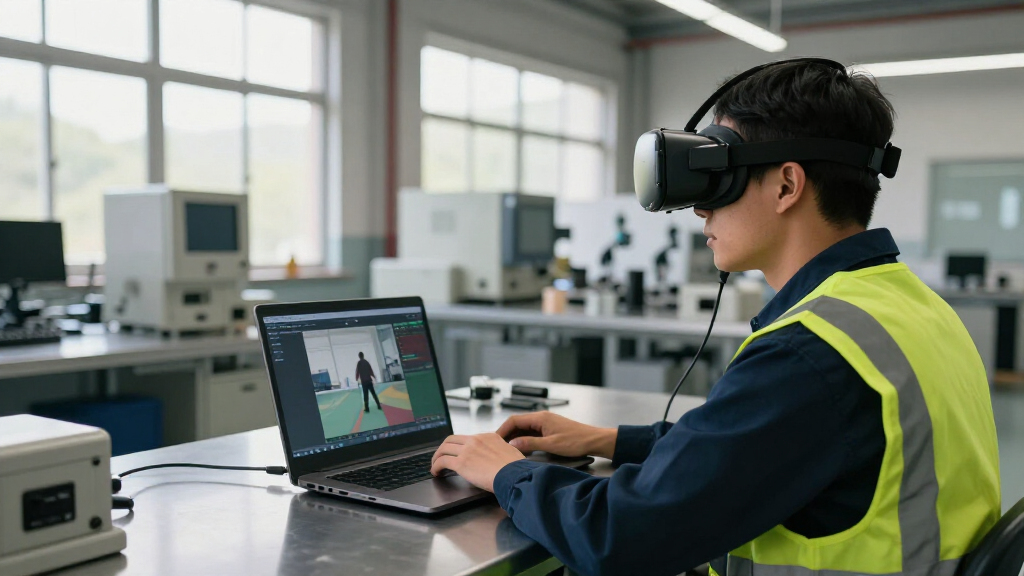
Manufacturing companies, particularly mid-to-large plants, are exploring the use of virtual reality (VR) modules to train workers on high-risk procedures such as lockout/tagout and machinery safety. These VR modules are delivered via standalone headsets like Meta Quest, eliminating the need for expensive hardware investments. The initial pilots involve deploying 5-10 headsets per plant, focusing on a core safety scenario, with a cloud dashboard tracking completion, scores, and hazard recognition accuracy.
According to industry sources, the primary goal is to measure time-to-competency and hazard recognition improvements compared to traditional classroom training. Early results indicate that VR training can significantly shorten onboarding times and improve hazard identification skills, potentially reducing workplace incidents. The approach is especially relevant given the current labor shortage, with the U.S. manufacturing sector facing nearly 409,000 unfilled positions as of August 2025, and projections estimating a need for 3.8 million new workers by 2033.
The market for immersive enterprise training, including manufacturing safety, is estimated to reach USD 14.55 billion in 2025, with VR training seen as a scalable, cost-effective solution. Companies plan to offer subscription-based SaaS platforms, custom scenario development, and hardware management services. Validation of these pilots will depend on measurable improvements in safety performance and onboarding efficiency, with success defined as improvements in safety performance and a commitment to expand deployments.
Implications for Manufacturing Safety and Workforce Development
The adoption of VR training platforms could revolutionize manufacturing safety protocols by providing standardized, repeatable, and engaging training experiences. Early pilots suggest that VR can reduce onboarding times, improve hazard recognition, and potentially lower incident rates, which is critical given the sector’s ongoing labor shortages and high costs associated with safety incidents. If validated at scale, this technology could become a core component of workforce development strategies, enabling faster, safer onboarding and ongoing safety compliance across multiple plants and procedures.
Meta Quest VR headset for enterprise training
As an affiliate, we earn on qualifying purchases.
As an affiliate, we earn on qualifying purchases.
Manufacturing Industry’s Push Toward Immersive Training
The manufacturing sector has faced persistent challenges with skills gaps and safety risks, compounded by a growing labor shortage. Traditional training methods—classroom instruction and on-the-floor demonstrations—are slow, inconsistent, and often fail to fully prepare workers for high-risk tasks. Recent advancements in cloud-native XR streaming and affordable standalone headsets have lowered barriers to deployment, prompting companies to pilot immersive training solutions. The broader enterprise VR market is expanding rapidly, with a compound annual growth rate of approximately 20%, reflecting increasing corporate interest in digital transformation and safety innovation.
Initial efforts focus on high-impact procedures like lockout/tagout, forklift operation, and machine guarding, where mistakes can lead to severe injuries or fatalities. These pilots are designed to test the effectiveness of VR modules in improving learning outcomes, reducing safety incidents, and enabling rapid scaling across multiple facilities. The emphasis on measurable results—such as hazard recognition scores and time-to-competency—is central to validating VR’s role as a strategic safety tool.
VR safety training modules for manufacturing
As an affiliate, we earn on qualifying purchases.
As an affiliate, we earn on qualifying purchases.
Uncertainties Around Long-Term Effectiveness and Adoption
While initial pilots are promising, it remains unclear how well VR training will perform at scale across diverse manufacturing environments. Questions persist about long-term retention of skills, integration with existing safety protocols, and the return on investment compared to traditional methods. Additionally, the willingness of companies to adopt VR broadly depends on demonstrated cost savings, safety improvements, and ease of deployment, which are still being evaluated in ongoing pilots.
standalone VR headsets for industrial use
As an affiliate, we earn on qualifying purchases.
As an affiliate, we earn on qualifying purchases.
Next Steps for Scaling VR Manufacturing Safety Training
Manufacturers involved in pilot programs will continue to collect data over the next 60-90 days, focusing on safety metrics, onboarding times, and hazard recognition accuracy. Success in these pilots could lead to broader deployment across multiple plants, with additional scenario development tailored to specific operations. Industry analysts expect that if early results validate VR’s effectiveness, the platform could become a standard component of manufacturing safety and onboarding programs within the next 1-2 years. Further, vendors are planning to expand content libraries and enhance platform features to support more procedures and integrate with existing safety management systems.
virtual reality training platform subscription
As an affiliate, we earn on qualifying purchases.
As an affiliate, we earn on qualifying purchases.
Key Questions
How does VR training compare to traditional safety training methods?
Early pilots suggest VR training can reduce onboarding times and improve hazard recognition, potentially leading to fewer safety incidents. It offers standardized, engaging experiences that can be repeated easily, unlike traditional classroom or on-the-floor training.
What procedures are currently being tested with VR modules?
Initial focus is on high-risk procedures such as lockout/tagout, forklift operation, and machine guarding, where mistakes can cause serious injuries.
What are the main barriers to broader adoption of VR training in manufacturing?
Key uncertainties include the long-term effectiveness, integration with existing safety systems, and cost-benefit validation at scale. Widespread adoption depends on demonstrated safety improvements and ROI.
How affordable are standalone VR headsets for manufacturing companies?
Devices like Meta Quest and Pico have significantly lowered hardware costs, making VR deployment feasible without large capital expenditure, especially when used for targeted pilot programs.
What is the timeline for broader industry adoption?
If ongoing pilots show positive results, industry experts expect VR safety training could become standard within the next 1-2 years, with expanded content and integration support.
Source: IdeaNavigator AI