
TL;DR

Get the latest gadgets delivered free with Prime
- Fast, free delivery on millions of items
- Prime Video, Amazon Music and more included
- Member-only deals all year
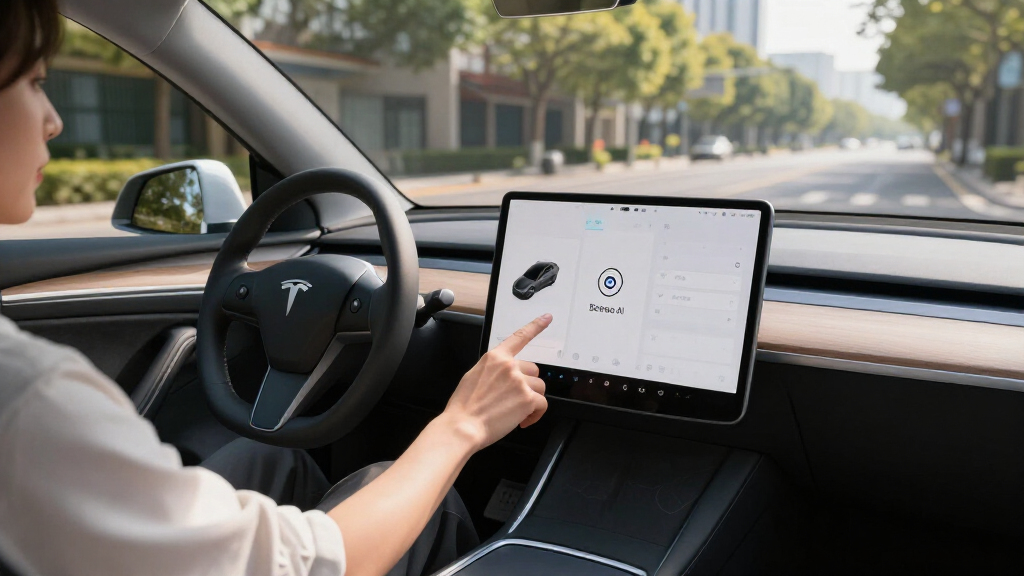
Tesla has integrated ByteDance’s Doubao AI into its vehicles in China, marking its first partnership with a third-party AI provider. Details about the deployment, features, and scope remain undisclosed, but the move signals a shift in Tesla’s software strategy in a key market.
Tesla has reportedly integrated ByteDance’s Doubao AI assistant into vehicles sold in China, marking what is described as the automaker’s first third-party AI agreement. The move could significantly influence Tesla’s in-car software offerings in one of its most important markets, though details about the deployment, features, and timing have not been publicly disclosed.
The report indicates that Doubao, ByteDance’s artificial intelligence assistant, has been added to Tesla vehicles in China. This integration is characterized as Tesla’s first deal with a third-party AI provider, representing a potential shift from its usual reliance on internally developed software and AI systems. However, specific information about which Tesla models are involved, how the AI is accessed, and what functions it supports remains unavailable.
There is no official announcement from Tesla or ByteDance confirming the partnership, nor details about the scope of the integration—such as whether Doubao will handle general voice queries, connect with vehicle functions like navigation or climate control, or be available via over-the-air updates. The technical implementation, data handling practices, and privacy considerations are also yet to be clarified.
Implications of Third-Party AI Integration in Tesla Vehicles
This development is significant because it signals a potential shift in Tesla’s approach to vehicle software, especially in China, where local-language performance and integration with domestic digital services are crucial for consumer appeal. Partnering with ByteDance could enable Tesla to offer AI features tailored to Chinese users without solely relying on its internal systems, which may enhance market competitiveness.
Furthermore, this move could set a precedent for region-specific software collaborations, allowing Tesla to adapt more quickly to local market demands and regulatory environments. It also raises questions about how Tesla’s overall software architecture might evolve to incorporate external AI services, balancing safety, privacy, and user experience.
As an affiliate, we earn on qualifying purchases.
Tesla’s Strategy and the Chinese EV Market Landscape
China remains a key market for Tesla, accounting for a significant portion of its global sales. The country’s competitive EV landscape is characterized by rapid technological innovation and consumer expectations for advanced, localized digital features. In-car assistants have become an important differentiator, with companies competing on responsiveness, language support, and integration with local apps and services.
Historically, Tesla has relied heavily on its own software and AI systems, with frequent over-the-air updates to improve functionality. The reported partnership with ByteDance’s Doubao suggests an openness to integrating external AI solutions, possibly reflecting a broader strategy to enhance local relevance and agility in the Chinese market.
“We continuously explore collaborations to enhance our vehicles’ capabilities, but no specific details about Doubao integration have been announced.”
— Tesla spokesperson (unconfirmed)
Chinese language voice control car
As an affiliate, we earn on qualifying purchases.
As an affiliate, we earn on qualifying purchases.
Unconfirmed Details About Doubao’s Deployment
It is not yet clear which Tesla models are equipped with Doubao, how the AI is accessed by drivers and passengers, or whether the feature is active across all eligible vehicles. The technical specifics—such as whether processing occurs locally or on remote servers—are also unknown. Additionally, the scope of Doubao’s capabilities within the vehicle, privacy practices, and user consent procedures have not been disclosed. The timing of the rollout and whether the integration is a limited trial or a permanent feature remain uncertain.
As an affiliate, we earn on qualifying purchases.
Expected Clarifications and Official Announcements
The next step will likely involve Tesla or ByteDance issuing official statements detailing Doubao’s functions, supported models, and deployment timeline. Observers will look for software update notes and user interface changes in Chinese Tesla vehicles. Further, regulatory disclosures and privacy policies will shed light on data handling practices. If the integration proves successful, it could lead to broader adoption across Tesla’s global markets or inspire similar regional partnerships.
As an affiliate, we earn on qualifying purchases.
Key Questions
What is ByteDance’s Doubao AI?
Doubao is ByteDance’s artificial intelligence assistant designed for Chinese-language users, offering conversational and service-oriented capabilities tailored to local preferences.
Which Tesla vehicles are affected by this integration?
It has not been disclosed which specific models or software versions support Doubao in China. Details about eligibility are still emerging.
It remains unconfirmed whether Doubao will handle vehicle controls or be limited to general voice queries. Technical specifics are not yet available.
Is this a trial or a permanent feature?
It is unclear whether the integration is a limited trial, a staged rollout, or a permanent part of Tesla’s software platform. Official statements are awaited.
How will data privacy be managed with Doubao?
Details about data processing, user consent, and privacy protections have not been disclosed. This remains an area of uncertainty.
Source: ThorstenMeyerAI.com
Fall Picks
fall essentials
As an affiliate, we earn on qualifying purchases.