
📊 Full opportunity report: The Strategy Of Slow But Sure AI Progress In China on ThorstenMeyerAI.com — validation score, market gap, and execution plan.

Get the latest gadgets delivered free with Prime
- Fast, free delivery on millions of items
- Prime Video, Amazon Music and more included
- Member-only deals all year
TL;DR
China has begun mass-producing domestic DUV lithography machines and demonstrated 7-nanometer chip capability, but faces ongoing challenges in yield, materials, and technology lag. Progress is real but incremental, emphasizing a phase transition rather than a race.
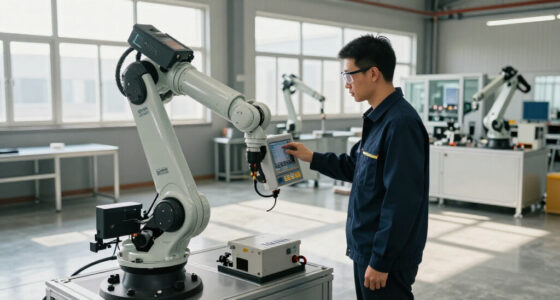
China has begun mass-producing domestic immersion deep ultraviolet (DUV) lithography machines capable of 28-nanometer and potentially 7-nanometer chip production, according to credible reports. This marks a significant step in China’s efforts to develop independent advanced chip manufacturing capabilities, which are critical for its technology sector and economic security.
Multiple credible sources confirm that China is now shipping early units of domestically made DUV lithography systems. These tools are tied to firms linked to Huawei and evaluated at Semiconductor Manufacturing International Corporation (SMIC). They target 28-nanometer nodes with capabilities that could extend to 7- and 5-nanometer processes through multi-patterning techniques.
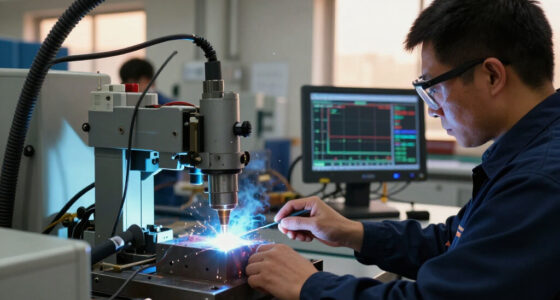
SMIC has demonstrated 7-nanometer production using older DUV tools, and reports indicate ongoing development toward 5-nanometer capability. Huawei aims to produce over a million AI-accelerator chips this year, highlighting the strategic importance of these advancements. However, significant gaps remain in yield, materials, and technology maturity, delaying full commercial deployment at advanced nodes.
Every few weeks a headline says China cracked the last hard problem in chipmaking — and triggers alarm in one camp, triumph in the other. Both overreact, because both mistake a learning-by-doing problem for a copying problem. It isn’t one.
▲ Forward-looking · figures are point-in-time estimates“A machine exists” and “a machine makes advanced chips at scale, profitably, for years” are separated by a chasm — made of things that only accumulate with time.
In a race, a burst of speed closes the gap. In a phase transition, you can’t move faster to cross over — you have to accumulate enough, slowly, until the system changes state.
When you see “China achieves X,” ask which of two very different claims is actually being made.
Even amid the loud headlines, the quiet data points all say the same thing.
No prototype, no shipped tool, no yield headline teleports past it.
Implications of China's Progress in Chip Manufacturing
This progress indicates that China is moving beyond mere prototypes toward practical manufacturing, which could reshape global semiconductor supply chains. However, persistent technical hurdles—such as low yields, reliance on imported materials, and lagging technology—limit immediate commercial impact. The developments reflect a deliberate, phased approach rather than a sudden breakthrough, emphasizing the importance of accumulated tacit knowledge in manufacturing.
As an affiliate, we earn on qualifying purchases.
Background of China’s Semiconductor Development Efforts
Over the past decade, China has heavily invested in developing its semiconductor industry amid export controls and technology restrictions, especially from Western countries. While it has made notable progress in domestic equipment for older process nodes, achieving advanced manufacturing at 7 nanometers or below remains a formidable challenge. Industry experts estimate China is roughly four generations behind leading firms like ASML, with commercial production at sub-10 nanometers unlikely before 2030. The current phase involves transitioning from prototypes to scalable, reliable manufacturing, which depends on overcoming yield, materials, and servicing dependencies.
"A machine exists and produces chips at scale, but the gap between prototype and reliable, profitable manufacturing is vast and built on years of tacit knowledge."
— Thorsten Meyer
As an affiliate, we earn on qualifying purchases.
Remaining Challenges in China’s Semiconductor Capabilities
It is still unclear when China will achieve high-yield, reliable production at sub-10 nanometers at scale. The current low yields (around 20%) versus industry standards (~90%) indicate that the process is still in a developmental phase. Material dependencies, especially on imported high-purity chemicals like photoresist, and the reliance on Western servicing for complex equipment further limit self-sufficiency. The timeline for fully overcoming these hurdles remains uncertain, with independent forecasts suggesting significant progress by 2030.
high-precision semiconductor lithography tools
As an affiliate, we earn on qualifying purchases.
As an affiliate, we earn on qualifying purchases.
Next Milestones in China’s Semiconductor Journey
Expect continued incremental improvements in yield, materials sourcing, and process stability over the next 1-2 years. China’s industry will likely focus on scaling production at the 7-nanometer node and refining materials independence. Monitoring developments in domestic equipment refinement and materials supply chains will be crucial, along with assessing whether China can reduce its dependency on Western servicing for high-end equipment. Achieving commercial-scale, high-yield manufacturing at sub-10 nanometers remains a longer-term goal.
advanced chip fabrication equipment
As an affiliate, we earn on qualifying purchases.
As an affiliate, we earn on qualifying purchases.
Key Questions
How advanced are China’s domestic chip manufacturing capabilities?
China has begun mass-producing DUV lithography machines capable of 28-nanometer and potentially 7-nanometer chips, but faces significant challenges in yield, materials, and technology maturity before full commercial deployment at advanced nodes.
What are the main hurdles China faces in advancing its chip manufacturing?
Key challenges include low yields (around 20%), dependence on imported high-purity materials like photoresist, lagging behind in equipment technology, and reliance on Western servicing for complex tools.
When might China achieve commercial production at sub-10 nanometers?
Industry forecasts suggest that China may reach sub-10 nanometer commercial production around 2030, but significant technical and material hurdles need to be overcome first.
Does this progress mean China is close to fully independent in chip manufacturing?
While progress is notable, substantial dependencies on imported materials and Western servicing remain, meaning full independence is still years away.
Source: ThorstenMeyerAI.com
Fall Picks
fall essentials
As an affiliate, we earn on qualifying purchases.