
TL;DR
The developer of misa77, a new compression codec, announced it can decode data at twice the speed of LZ4 with similar or better compression ratios. This could impact data processing efficiency in various applications.
The developer of misa77, a new compression codec, announced that it can decode data at twice the speed of LZ4 while maintaining comparable compression ratios. This development could significantly improve data processing efficiency for systems relying on fast decompression, such as real-time analytics and cloud storage.
The developer, who has spent several months working on this project, described misa77 as achieving state-of-the-art decompression throughput within its ratio class. According to the announcement, misa77 offers decent compression ratios similar to those of LZ4, a widely used compression algorithm known for its speed. While specific technical benchmarks are not provided, the creator claims that misa77 outperforms LZ4 in decoding speed by a factor of two, which could translate into faster data retrieval and reduced latency in practical applications.
The developer emphasized that misa77 is designed to be compatible with existing data pipelines and can be integrated with minimal changes. The project is currently in the early stages of adoption, with details on open-source availability or licensing still to be clarified.
Potential Impact on Data Compression and Processing
If the claims hold under broader testing, misa77 could offer a significant performance boost for systems that depend heavily on rapid data decompression, such as cloud storage, streaming platforms, and real-time analytics. Faster decoding speeds could reduce bottlenecks, lower latency, and improve overall system efficiency. Moreover, maintaining comparable or better compression ratios ensures that this speed gain does not come at the expense of increased storage costs, making it attractive for large-scale deployments.
However, the actual benefits will depend on how misa77 performs in diverse real-world scenarios and whether it can be adopted widely within existing infrastructure.
As an affiliate, we earn on qualifying purchases.
Background on Compression Algorithms and Performance Benchmarks
Current industry standards like LZ4 are valued for their speed, especially in real-time applications, but often involve trade-offs with compression ratios. Other algorithms like Zstandard (Zstd) and Snappy provide different balances of speed and compression efficiency. The development of misa77 comes amid ongoing efforts to improve decoding speeds without sacrificing compression quality. While LZ4 remains a popular choice, innovations claiming to surpass its performance are rare and often require extensive validation.
The announcement of misa77 follows a trend of research and development aimed at optimizing data compression for high-speed data centers, cloud services, and big data analytics. The developer has not yet released detailed technical documentation or benchmarks, so independent verification is pending.
“I’ve spent the last few months working on this codec. It has the following characteristics: state-of-the-art decompression throughput in its ratio class and decent ratios comparable to LZ4.”
— the developer of misa77
high-speed data decompression tools
As an affiliate, we earn on qualifying purchases.
As an affiliate, we earn on qualifying purchases.
Unverified Performance Claims and Adoption Uncertainty
Details about the technical benchmarks, independent testing results, and real-world performance are not yet available. It is unclear whether misa77 has undergone peer review or validation by third parties. The open-source status and compatibility with existing systems remain unspecified, raising questions about immediate adoption and integration challenges.
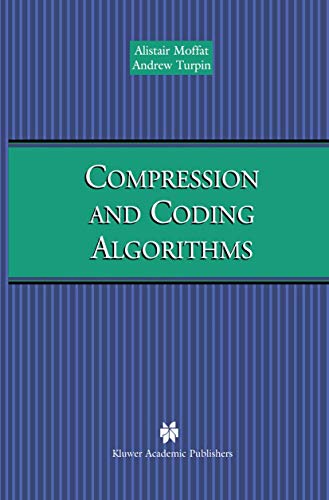
Compression and Coding Algorithms (The Springer International Series in Engineering and Computer Science, 669)
- Condition: Used Book in Good Condition
As an affiliate, we earn on qualifying purchases.
As an affiliate, we earn on qualifying purchases.
Next Steps: Validation, Testing, and Wider Adoption
Further independent testing and benchmarking are needed to confirm misa77’s performance claims. The developer may release technical documentation or open-source the codec for community review. Industry watchers will likely monitor its adoption in real-world scenarios, and broader integration will depend on validation results and practical usability. Updates on licensing and compatibility are expected in the coming weeks.

SEAC Apnea, Freediving Computer, Log and Real Time Data
- LCD Screen: Adjustable contrast and backlighting for clear display
- Session Data Display: Shows descent, ascent, temperature, dive time, surface time, and depth
- MSST Function: Calculates recommended surface recovery time and hydration alerts
As an affiliate, we earn on qualifying purchases.
As an affiliate, we earn on qualifying purchases.
Key Questions
Is misa77 available for public use now?
It has not yet been confirmed whether misa77 is available for public download or open-source release. Details are still emerging from the developer.
How does misa77 compare with other codecs like Zstandard?
Specific performance comparisons are not yet available. The developer claims faster decoding than LZ4 with similar ratios, but independent benchmarks are pending.
What applications could benefit most from misa77?
Systems requiring rapid data decompression, such as cloud storage, streaming, and real-time analytics, could benefit if the claims are verified and the codec is adopted widely.
Are there any known limitations or risks?
Since technical details and independent validation are not yet available, potential limitations or risks remain unknown.
Source: hn