
📊 Full opportunity report: When One Agent Isn’t Enough: Claude Now Builds Its Own Team of Agents on the Fly on ThorstenMeyerAI.com — validation score, market gap, and execution plan.

Get the latest gadgets delivered free with Prime
- Fast, free delivery on millions of items
- Prime Video, Amazon Music and more included
- Member-only deals all year
TL;DR
Anthropic’s Claude AI introduces a new feature allowing it to dynamically assemble and orchestrate its own team of sub-agents for complex tasks. This innovation aims to address limitations of single-agent workflows, improving accuracy and reliability in demanding scenarios.
Anthropic’s Claude AI has introduced a new capability: it can now build and manage its own team of specialized agents on the fly for complex, high-value tasks, according to the company’s recent announcement. This feature, called dynamic workflows, enables Claude to orchestrate multiple sub-agents, each with a focused role, to improve performance on demanding projects.
The new feature allows Claude to generate a custom orchestration harness using embedded JavaScript, which spawns and coordinates sub-agents tailored to specific subtasks. This process involves Claude writing a small program that manages the workflow, choosing different models for each sub-agent based on task complexity and isolating each agent within its own work environment to prevent interference.
Anthropic emphasizes that this approach is particularly suited for tasks exceeding the capabilities of a single agent, such as extensive research, verification, or multi-step problem solving. The company notes that the system can resume interrupted workflows and adapt dynamically to the task’s needs, making it more flexible than static, hand-crafted workflows.
When one agent isn’t enough: Claude now builds its own team on the fly
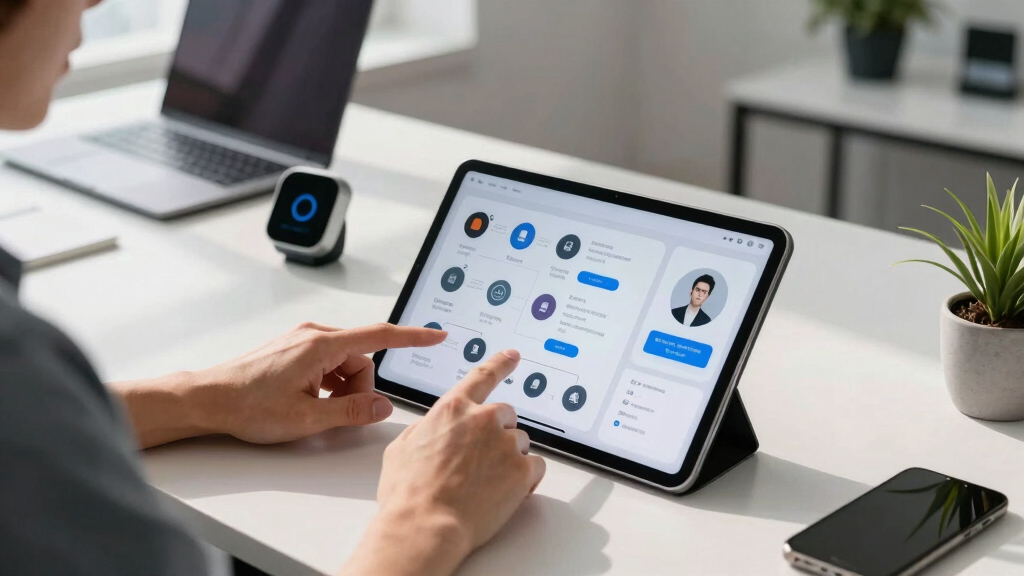
Skills package what you know; loops decide how far you delegate over time. Dynamic workflows are the third axis — within a single task, Claude writes its own harness and assembles a temporary team of subagents. Think of it as Claude drawing an org chart for one job.
The shift is from prompting a worker to commissioning a team — more output, more cost, and a manager’s judgment required. Reach for a workflow when a task is big, parallel, adversarial, or judgment-heavy — and when you can feel a single agent getting lazy, grading its own homework, or losing the plot. Bound it (token budgets, pilot first) — workflows can spawn hundreds of agents and burn far more tokens. For everything else, don’t hire five people to change a lightbulb.
Implications for AI Collaboration and Reliability
This development signifies a shift toward more autonomous, collaborative AI systems capable of managing complex workflows without human intervention. It addresses common failure modes in single-agent models, such as partial work, bias, and goal drift, by dividing tasks into specialized, independent components. This approach could lead to more accurate, reliable AI outputs in high-stakes applications like research, verification, and decision-making.
AI multi-agent orchestration software
As an affiliate, we earn on qualifying purchases.
As an affiliate, we earn on qualifying purchases.
Evolution of Multi-Agent AI Systems
Anthropic’s recent work with Claude has focused on enhancing AI capabilities through modular, skill-based architectures. Prior updates introduced skills packages and looping mechanisms for delegation. The current innovation builds upon these, enabling Claude to generate and execute its own orchestration code, effectively creating dynamic, task-specific agent teams. This aligns with broader trends in AI toward autonomous multi-agent collaboration for complex problem solving.
“Claude’s ability to autonomously assemble its own team of agents represents a significant step toward more flexible and reliable AI workflows.”
— Thorsten Meyer, AI researcher
As an affiliate, we earn on qualifying purchases.
Unanswered Questions About Performance and Limitations
It is not yet clear how well this system performs across a broad range of real-world tasks or how it handles unexpected failures within sub-agents. The scalability and safety implications of autonomous workflow management are still under evaluation, and detailed benchmarks are pending.
As an affiliate, we earn on qualifying purchases.
Next Steps for Deployment and Evaluation
Anthropic plans to further test and refine the dynamic workflow feature in various high-stakes scenarios, potentially rolling it out to select partners. Additional research will focus on assessing robustness, safety, and efficiency, with broader availability expected once these evaluations are complete.
As an affiliate, we earn on qualifying purchases.
Key Questions
How does Claude build its own agent team?
Claude writes a small JavaScript program that specifies how to spawn and coordinate sub-agents, choosing models and managing workflows dynamically based on the task.
What types of tasks benefit most from this feature?
Complex, multi-step tasks like research, verification, code refactoring, or large-scale analysis benefit most, as they require dividing work and independent validation.
Are there safety concerns with autonomous team-building?
While promising, the system’s safety and reliability are still under review, with ongoing assessments of how well it manages failures and avoids unintended behaviors.
Will this feature be available to all users?
Deployment plans are still in development; initial testing will likely be limited to select partners before broader rollout.
How does this compare to static workflows?
Unlike static, hand-crafted workflows, Claude’s dynamic approach generates tailored orchestration code on the fly, offering greater flexibility and adaptability for complex tasks.
Source: ThorstenMeyerAI.com
Halloween Picks
halloween
As an affiliate, we earn on qualifying purchases.