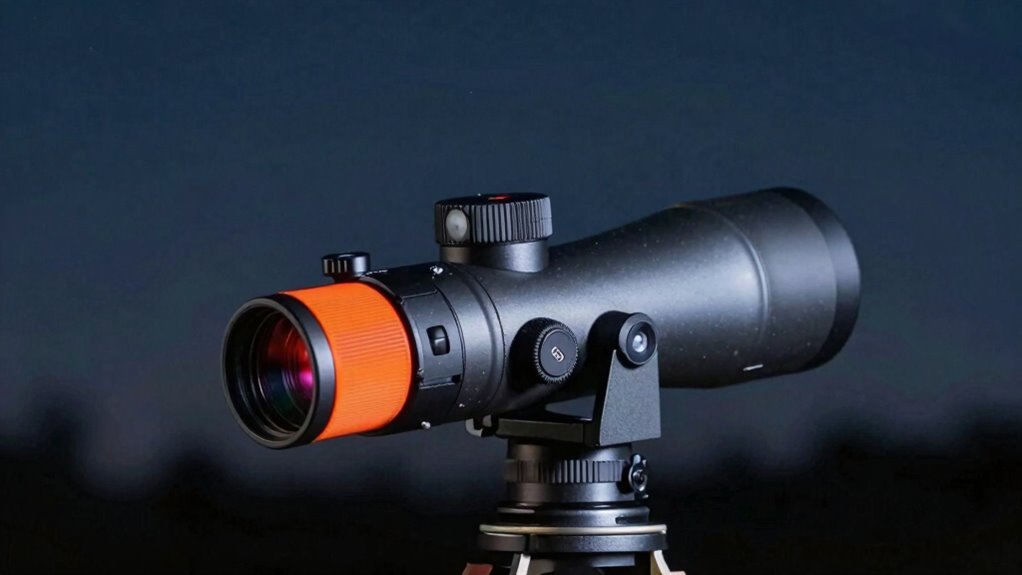
To make stargazing less frustrating, focus on mastering celestial navigation. Learn to identify key constellations and bright stars specific to your location using star charts or apps. This skill helps you quickly find planets and prominent objects, saving time and reducing confusion. Regular practice improves your confidence and tracking accuracy. Keep practicing these techniques, and you’ll discover even more tips that will take your stargazing experience to the next level.
Key Takeaways
- Start with bright, easy-to-find objects like the Moon and planets to build confidence.
- Properly align and calibrate your telescope before each session for clearer views.
- Keep your equipment clean and well-maintained to prevent image distortion.
- Use star charts or apps to quickly identify constellations and celestial objects.
- Practice regularly to improve skills and reduce frustration over time.
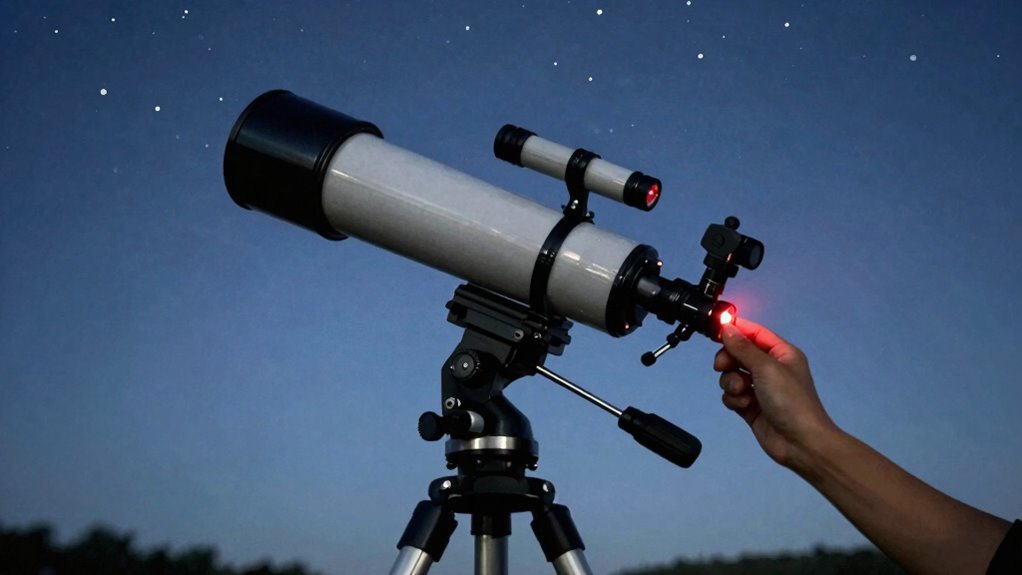
Getting started with a telescope can feel overwhelming, but with a few simple tips, you’ll quickly find your footing. One of the most effective ways to make stargazing less frustrating is to learn how to use celestial navigation to find your way around the night sky. Instead of aimlessly pointing your telescope and hoping for a good view, take a moment to understand the key constellations and bright stars visible from your location. Using a star chart or a stargazing app can help you identify these celestial markers. Once you recognize a few prominent constellations, you’ll gain confidence in locating other objects with your telescope. This approach saves you time, reduces the guesswork, and makes your observations more enjoyable.
Learn celestial navigation to find your way around the night sky more easily and enjoy stargazing with confidence.
A common frustration among beginners is dealing with equipment issues that could have been avoided through proper telescope maintenance. Regularly check your telescope for dust, dirt, or loose parts, and clean the lenses with appropriate materials when necessary. Keep the optical components covered when not in use to prevent scratches or dust buildup. Ensuring your mount and tripod are stable and well-maintained helps keep your telescope steady, making it easier to track celestial objects. Proper telescope maintenance not only extends the lifespan of your gear but also improves the clarity of your views, giving you sharper images and a more satisfying stargazing experience. Developing good telescope care habits can make a noticeable difference in your viewing quality. Additionally, understanding optical alignment can help you achieve clearer images and easier focusing during your sessions. Practicing proper mount alignment techniques can further enhance your ability to track objects smoothly across the sky.
Another key tip is to start with simple, bright objects like the Moon or planets. These objects are easier to locate and require less precise adjustments, which can be tricky for beginners. As you get more comfortable, you can gradually explore fainter deep-sky objects. Remember to take your time and use your celestial navigation skills to guide your telescope’s position. Practice aligning your telescope correctly before each session; most models have alignment routines that, once mastered, will streamline your setup process. Additionally, understanding celestial navigation can significantly enhance your confidence and efficiency when exploring the night sky. Learning about star patterns and how they shift throughout the year can further improve your navigation skills and help you plan your observing sessions more effectively.
Consistency is essential. The more you practice celestial navigation and telescope maintenance, the more intuitive your stargazing sessions become. Don’t rush the process—understanding how to navigate the sky and keep your equipment in top shape will reduce frustration and maximize your enjoyment. Before long, you’ll find yourself effortlessly locating objects in the night sky, appreciating the beauty of the cosmos with greater clarity and confidence. This simple approach will turn your beginner experiences into rewarding adventures under the stars.
As an affiliate, we earn on qualifying purchases.
Frequently Asked Questions
How Do I Choose the Right Telescope for Beginners?
To choose the right beginner telescope, consider your budget, space, and what you want to see. Opt for a model with easy setup and good magnification, like a refractor or Dobsonian. Remember, regular telescope maintenance keeps it in top shape, and as you progress, explore astrophotography tips to capture stunning images. Start simple, learn the basics, and enjoy exploring the night sky without frustration.
What Accessories Are Essential for Novice Stargazers?
Think of your accessories as your map and compass for the night sky. A sturdy star tracking mount keeps your telescope steady, helping you follow celestial movements effortlessly. An eyepiece selection expands your view, revealing hidden details of planets and stars. These essentials make stargazing more enjoyable, reduce frustration, and let you focus on the wonder of the universe. With these tools, every night becomes an adventure rather than a quest.
How Do Weather Conditions Affect Stargazing?
Weather conditions profoundly impact your stargazing experience. Cloud cover can block your view of stars and planets, making it frustrating to find celestial objects. High humidity levels cause atmospheric turbulence, which distorts images through your telescope. Clear, dry nights are ideal for stargazing, offering better visibility and sharper images. Always check the weather forecast before heading out, and aim for nights with minimal cloud cover and low humidity for the best experience.
What’s the Best Time of Year for Stargazing?
You’ll love stargazing during winter because the nights are longer, and the cold keeps the moon’s bright phases at bay—perfect for avoiding light pollution’s glare. Avoid summer, when the moon’s full, and the skies are drowned in its glow. The best time? When the moon is new, and the sky is darkest, giving you a stellar show without pesky moonlight ruining your view. Who knew timing made such a difference?
How Can I Improve My Telescope’s Image Clarity?
To improve your telescope’s image clarity, start with proper optical alignment to guarantee all components are correctly adjusted. Regularly clean the lenses with a soft, lint-free cloth to remove dust and smudges that can blur images. Avoid touching the glass directly, and use appropriate cleaning solutions. These steps help your telescope focus better, providing sharper, more detailed views of celestial objects during your stargazing sessions.
celestial navigation stargazing app
As an affiliate, we earn on qualifying purchases.
As an affiliate, we earn on qualifying purchases.
Conclusion
Remember, choosing the right telescope and mastering a few simple tips can turn stargazing from frustrating to fantastic. Think of it like learning to ride a bike—you might wobble at first, but with patience, you’ll glide smoothly through the night sky. Keep your expectations realistic, stay curious, and enjoy each moment of discovery. Before long, you’ll feel as confident as an astronaut exploring new worlds, all from your own backyard. Happy stargazing!
easy-to-use telescope for beginners
As an affiliate, we earn on qualifying purchases.
As an affiliate, we earn on qualifying purchases.
As an affiliate, we earn on qualifying purchases.