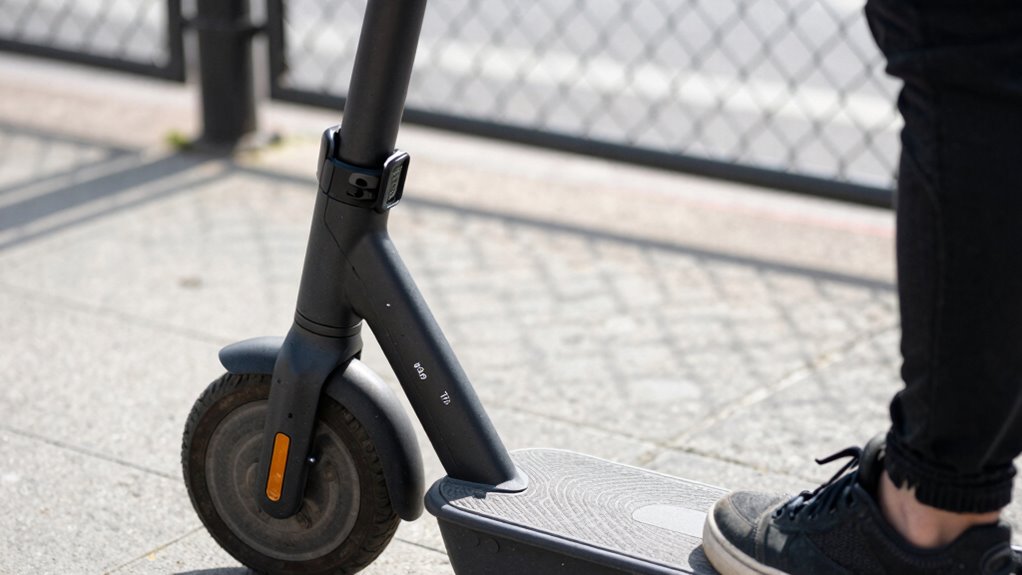
The range number on an electric scooter can be misleading because it’s usually based on ideal conditions that don’t match everyday riding. Factors like battery age, temperature, riding style, terrain, and speeds all influence how far you can really go. City traffic, hills, and carrying extra weight also cut into the listed distance. To get a clearer idea of true performance, you’ll want to take into account these variables, and there’s more to explore if you want to ride smarter.
Key Takeaways
- Advertised range is based on ideal conditions, not real-world riding scenarios.
- Battery age, temperature, and maintenance significantly reduce actual usable distance.
- Riding habits, terrain, and environmental factors can cause substantial variation in range.
- Higher speeds and sudden accelerations drain the battery faster, lowering real-world range.
- Proper care and realistic expectations are essential for accurately assessing an electric scooter’s true distance.
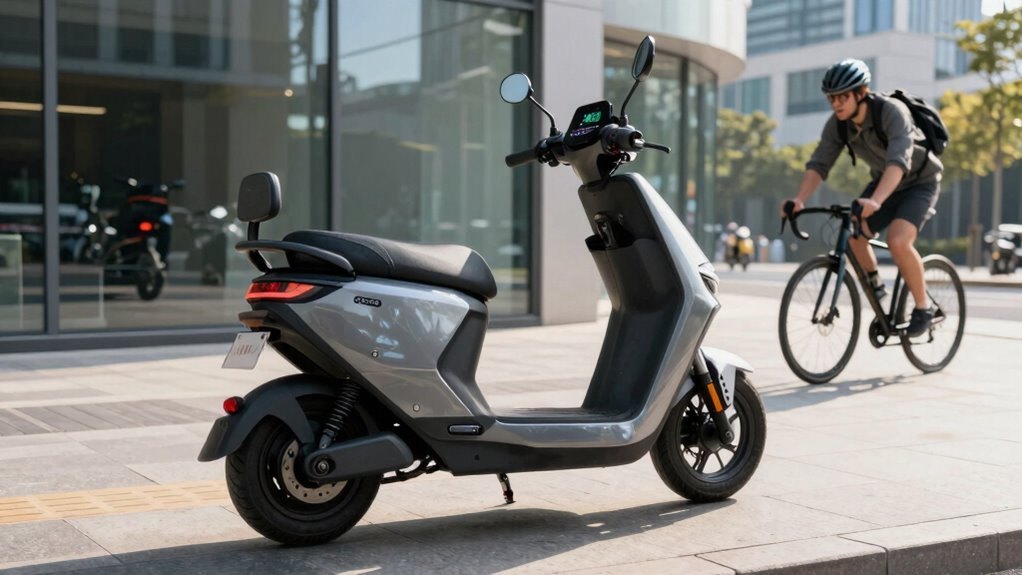
Ever wondered how far an electric scooter can go on a single charge? The answer isn’t as straightforward as the range number you see on a product listing. While manufacturers often advertise impressive distances, those figures are based on ideal conditions that rarely match real-world usage. Your actual range depends on a host of factors, especially battery technology and how you use your scooter for urban commuting. Understanding these elements can help you better gauge what to expect and make smarter choices.
Battery technology plays a vital role in determining an electric scooter’s range. Most scooters use lithium-ion batteries, which have improved significantly over the years. Modern batteries are lighter, more efficient, and capable of storing more power than ever before. However, their performance still hinges on factors like age, temperature, and how they’re maintained. A brand-new battery will typically give you closer to the advertised range, but as it ages, capacity drops, meaning you’ll get fewer miles per charge. Also, extreme cold or heat can diminish battery efficiency, reducing your scooter’s range unexpectedly. So, even if a scooter boasts a high range, it’s essential to contemplate the quality and condition of its battery. Battery health significantly impacts overall performance and longevity. Additionally, proper charging practices and avoiding deep discharges can help maintain optimal battery performance over time.
Battery condition, age, and temperature significantly impact an electric scooter’s actual range.
When it comes to urban commuting, your riding habits greatly influence the actual distance you can cover. Frequent stops, quick accelerations, and riding uphill drain power faster, cutting into your range. Conversely, smooth, steady riding on flat surfaces conserves energy and extends your mileage. The weight you carry, including yourself and any cargo, also impacts battery consumption. If you’re steering through crowded city streets with lots of traffic lights, your scooter might not reach its maximum potential range. Additionally, the speed at which you ride matters. Higher speeds demand more power, which can considerably reduce the distance you get from a single charge. It’s also helpful to consider how riding environment can alter your scooter’s efficiency, as urban settings often involve obstacles and varying terrain.
Environmental conditions and terrain are other factors that tint the range picture. Wind resistance, road surface quality, and inclines all affect how efficiently your scooter uses energy. A flat, smooth road allows for ideal battery use, while hilly or uneven terrain forces the motor to work harder, draining power more quickly. Ultimately, the advertised range is just a starting point. If you rely on your scooter for daily urban commuting, you need to account for these variables. It’s wise to plan for a buffer—riding within a comfortable distance from your maximum range—to prevent unexpected stops or battery drain mid-commute. So, while the range number provides a useful guideline, real-world experience requires understanding the nuanced factors that influence how far your electric scooter can truly go. Being aware of battery technology and environmental impacts can help you optimize your riding habits and extend your scooter’s usability.
electric scooter battery health monitor
As an affiliate, we earn on qualifying purchases.
As an affiliate, we earn on qualifying purchases.
Frequently Asked Questions
How Accurate Are Range Estimates in Real-World Conditions?
Range estimates in real-world conditions can vary widely. Your scooter’s battery capacity plays a big role, but factors like terrain, rider weight, and speed influence actual mileage. Charging speed also matters—faster chargers may help you recharge quicker, but don’t necessarily extend your range. Expect real-world range to be less than the estimate, especially if you ride aggressively or encounter hilly routes. Always consider these variables for a more accurate idea.
Does Rider Weight Significantly Impact Scooter Range?
Rider weight does considerably impact scooter range because heavier riders put more strain on the motor and drain the battery faster. Your scooter’s battery capacity determines how far you can go, but added weight reduces efficiency. If you’re heavier, expect a shorter range than the estimate, especially on hills or rough terrain. To maximize your ride, keep rider weight in mind and choose a scooter with sufficient battery capacity for your needs.
How Does Terrain Affect the Scooter’s Actual Range?
Terrain challenges are like obstacles on a race track, slowing you down and reducing range. You’ll see that surface types matter—paved roads let you go farther, while hills, rough terrains, or gravel considerably cut your distance. Uphill climbs demand more power, draining your battery faster, whereas flat, smooth surfaces help preserve it. So, when planning your ride, consider terrain because it directly affects how far your scooter will get you.
Can Battery Aging Reduce the Scooter’s Range Over Time?
Yes, battery aging can reduce your scooter’s range over time. As the battery experiences degradation, its ability to hold charge diminishes, leading to decreased power efficiency. This means you might notice shorter rides than when your scooter was new. Regular use, environmental factors, and charging habits accelerate battery degradation, so keeping an eye on your battery’s health helps maintain the best range and performance for as long as possible.
Do Weather Conditions Influence the Range of Electric Scooters?
Weather effects on your scooter are like shifting tides, influencing how far you can go. Cold temperatures slow down the battery’s chemistry, reducing range, while hot weather can cause battery degradation faster. Wind resistance adds extra effort, limiting your distance. So, yes, weather conditions definitely influence your scooter’s range. To maximize your ride, plan routes considering weather, and protect your battery from extreme temperatures.
best lithium-ion scooter batteries
As an affiliate, we earn on qualifying purchases.
As an affiliate, we earn on qualifying purchases.
Conclusion
Remember, the range number on your electric scooter isn’t the full story—it’s just a snapshot. Imagine riding 20 miles, but strong headwinds cut that distance in half. That’s like powering through two entire parks or nearly five city blocks in a single ride. So, next time you check the specs, keep in mind that real-world factors can turn that impressive number into a different story altogether. Stay mindful and ride smart!
electric scooter accessories for range extension
As an affiliate, we earn on qualifying purchases.
As an affiliate, we earn on qualifying purchases.
urban commuting electric scooter
As an affiliate, we earn on qualifying purchases.
As an affiliate, we earn on qualifying purchases.