

Before purchasing a recovery tool, guarantee it supports your data encryption standards and can access encrypted files securely without risks. Check if it’s compatible with your hardware and operating system, especially external drives or RAID setups. Opt for user-friendly options with clear instructions and thorough recovery features. Be mindful of costs and limitations, balancing price with security and support. Want to know more tips for choosing the best recovery tool? Keep exploring to make an informed decision.
Key Takeaways
- Ensure the recovery tool supports your device’s hardware and operating system for compatibility.
- Confirm it can handle encrypted data securely without risking data breaches.
- Look for user-friendly interfaces with clear instructions and customer support options.
- Understand the tool’s limitations, such as recovery scope and feature restrictions, before purchasing.
- Balance cost with essential features like encryption support, hardware compatibility, and recovery effectiveness.
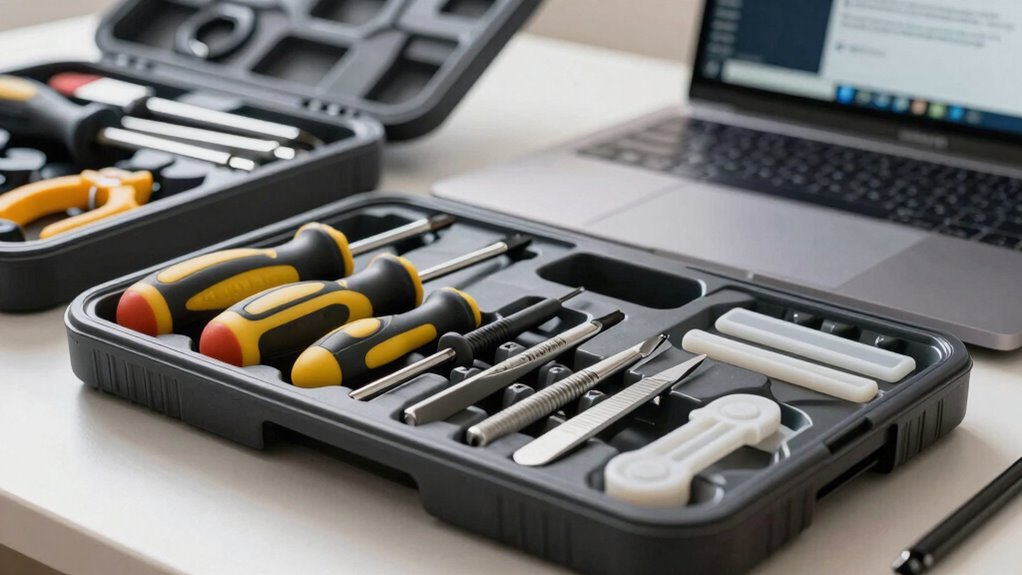
When it comes to choosing recovery tools, making an informed decision is essential to effectively restore your data and devices. Before you buy any recovery software or hardware, you need to consider a few critical factors to ensure you get the right fit for your needs. One of the first things to evaluate is how well the tool handles data encryption. If your data is encrypted, you’ll want a recovery solution that can decrypt and access it without risking security breaches. Some tools might require additional steps or special features to work with encrypted files, so check whether the recovery software explicitly supports data encryption standards used on your device. Ignoring this could leave your encrypted files inaccessible or might compromise your data security.
Ensure your recovery tool supports data encryption to access files securely without risking security breaches.
Hardware compatibility is another vital aspect to consider. Not all recovery tools work seamlessly across different systems or hardware configurations. Whether you’re using a Windows PC, a Mac, or a Linux machine, ensure the recovery tool is compatible with your operating system. Additionally, if you’re trying to recover data from specific hardware like external drives, SSDs, or RAID arrays, verify that the tool supports those devices. Mismatched hardware compatibility can lead to failed recoveries or even further data loss, so it’s worth investing time to research which tools are proven to work with your hardware. Some recovery solutions are designed for specific brands or models, which could limit their effectiveness if your hardware isn’t listed. It’s also helpful to review hardware compatibility information to prevent potential issues.
Another point to keep in mind is the ease of use. You don’t want to spend hours learning how to operate a complicated recovery tool. Look for options that offer user-friendly interfaces and clear instructions. Many reputable recovery tools come with step-by-step guides or customer support to help you through the process. You should also assess the scope of recovery functions they offer—whether they can recover deleted files, formatted drives, or partition data—and whether they support previewing files before recovery, saving you time and effort.
Pricing is also a factor. Some recovery tools are free, while others charge a one-time fee or subscription. Free options might have limitations, such as reduced features or recovery caps. Consider how critical the recovery is and whether investing in a premium tool offers better security, compatibility, and support. Remember, the cheapest option isn’t always the best if it doesn’t support your data encryption needs or hardware setup. Additionally, understanding the limitations of recovery tools can help set realistic expectations about what can be recovered and how. Being aware of these limitations will help you choose a tool that aligns with your recovery goals.
In the end, choosing the right recovery tool means paying close attention to data encryption support, hardware compatibility, usability, and pricing. Doing your homework now can save you frustration later and increase the chances of a successful data recovery.
data recovery software for encrypted files
As an affiliate, we earn on qualifying purchases.
As an affiliate, we earn on qualifying purchases.
Frequently Asked Questions
Are Free Recovery Tools as Effective as Paid Versions?
Free recovery tools can be effective, but they often lack advanced features like robust data encryption and a user-friendly interface found in paid versions. While free options may work for simple recovery tasks, paid tools usually offer better support, faster performance, and more extensive recovery options. Consider your needs carefully, as investing in a paid tool can save you time and ensure your data’s safety with stronger encryption and an intuitive user interface.
How Often Should I Update My Recovery Tools?
You should update your recovery tools regularly, ideally whenever a new version is released. This guarantees they stay compatible with your operating system and incorporate the latest data encryption features for enhanced security. Also, updates often improve the user interface, making recovery processes easier and faster. Staying current helps protect your data and ensures you can recover files efficiently, especially when facing unexpected data loss or system failures.
Can Recovery Tools Recover Data From Physically Damaged Drives?
Can recovery tools recover data from physically damaged drives? Unfortunately, they often hit a wall where hardware limitations prevent effective recovery. Think of it like trying to fix a shattered mirror; software alone can’t mend broken hardware. Data encryption complicates things further, making recovery even more challenging. In such cases, professional data recovery services are your best bet, as they have specialized tools and expertise to navigate physical damage and encryption hurdles.
Do Recovery Tools Guarantee 100% Data Recovery?
Recovery tools can’t guarantee 100% data recovery because factors like data encryption and cloud backups influence results. If your data is encrypted, recovery might be more complex, reducing success chances. Similarly, cloud backups mean data might be retrievable from a remote source, but local recovery tools may not access this data fully. Always understand these limitations before relying solely on recovery tools, as they don’t promise complete recovery in every scenario.
Are Recovery Tools Compatible With All Operating Systems?
Don’t put all your eggs in one basket—recovery tools aren’t compatible with every operating system. Before buying, check their hardware compatibility and user interface to verify smooth operation. Some tools work well on Windows but falter on Mac or Linux. Knowing this helps you avoid frustration and guarantees you pick a recovery tool that suits your system perfectly, making your data rescue efforts much more efficient.
hardware compatible data recovery tool
As an affiliate, we earn on qualifying purchases.
As an affiliate, we earn on qualifying purchases.
Conclusion
Remember, choosing the right recovery tools is like finding the key to your own treasure chest—protecting your digital life and valuable data. Don’t rush into a purchase without understanding what each tool offers. Be cautious, do your research, and select wisely. After all, as the wise say, “A stitch in time saves nine,” ensuring you’re prepared before any mishap occurs. Your digital safety depends on making informed decisions today.
user-friendly data recovery software
As an affiliate, we earn on qualifying purchases.
As an affiliate, we earn on qualifying purchases.
As an affiliate, we earn on qualifying purchases.