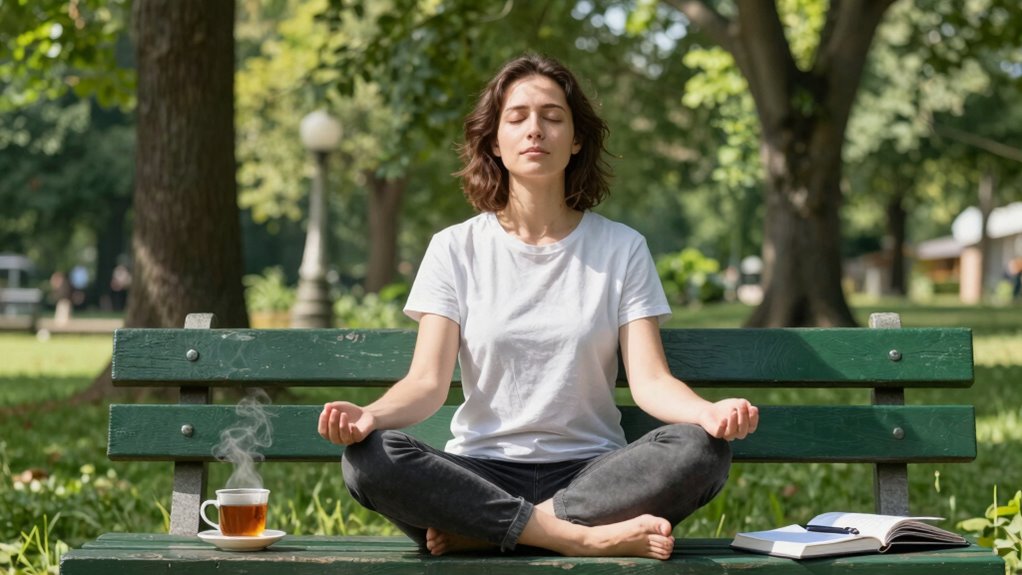

To make mindfulness practical, start incorporating simple actions into your daily routine, like breathing exercises before meals or during breaks. Use familiar moments, such as brushing your teeth or waiting in line, to pause and check in with your senses. Link mindfulness to habits you already do to make it feel seamless and natural. Focus on small, intentional awareness that can be maintained anytime. Keep exploring how these small shifts can transform your practice into a valuable part of everyday life.

Get the latest gadgets delivered free with Prime
- Fast, free delivery on millions of items
- Prime Video, Amazon Music and more included
- Member-only deals all year
Key Takeaways
- Integrate breathing exercises into daily routines, like waking up or before meals, to create natural, accessible mindfulness moments.
- Use familiar activities, such as brushing teeth or making coffee, as cues for brief mindful pauses.
- Focus on simple sensory awareness—textures, sounds, or sensations—during regular activities to ground your attention.
- Assign specific times or triggers for mindfulness to build consistency without adding extra tasks.
- Recognize the practical benefits of mindfulness, like reducing stress and enhancing connection, to motivate regular practice.

Have you ever wondered how to turn mindfulness from a vague concept into a practical part of your daily routine? It all begins with simple, intentional actions you can easily incorporate into your day. One effective way is through breathing exercises, which serve as a quick, accessible method to anchor your focus. Instead of viewing mindfulness as something separate or complicated, see it as a series of small habits—like taking a few deep breaths when you wake up or before meals. These breathing exercises help you slow down, bring awareness to the present moment, and reduce stress. Over time, they become natural components of your daily routines.
To make mindfulness feel tangible, start by assigning specific moments during your day to pause and practice. For example, when you’re brushing your teeth, take a few deep, measured breaths. When you’re waiting in line or commuting, bring your attention to your breath or the sensations in your body. These little pauses don’t require extra time; they simply involve shifting your focus from automatic to intentional. As you develop this habit, it becomes less about doing something “special” and more about weaving mindfulness into what you already do.
You can also create routines that reinforce mindfulness. For instance, setting a daily reminder to pause and breathe deeply can help you establish consistency. Over time, these reminders become part of your rhythm—like brushing your teeth or making your morning coffee. When you link mindfulness practices to existing routines, they feel less like chores and more like natural extensions of your day. This approach prevents mindfulness from feeling abstract or distant, instead making it a seamless part of your lifestyle.
Another way to make mindfulness practical is by keeping it simple. It’s not about mastering complex meditation techniques but about cultivating awareness in everyday moments. Focus on what you can do right now—like noticing the texture of your food, the sounds around you, or the sensation of your clothes against your skin. These small acts of awareness ground you in the present and reinforce the idea that mindfulness is accessible to everyone, anytime. Incorporating awareness of biodiversity into your routine can also deepen your connection to the environment and promote sustainable living. Recognizing how mindfulness can extend to environmental awareness helps you develop a holistic approach to well-being.
In addition, understanding the importance of mindfulness in reducing stress and improving overall well-being can motivate you to maintain these habits. Practicing mindfulness in everyday activities can help you develop a deeper appreciation for your surroundings and foster a sense of connectedness. Incorporating breathing exercises into your daily routines transforms mindfulness from a vague idea into a tangible, usable tool. When you treat mindfulness as a series of small, intentional actions—rather than a distant goal—it becomes easier to practice consistently. Over time, these habits become second nature, helping you stay present and centered throughout your day.
Popular right now

Ninja DualZone Smart Air Fryer, 10 Qt, 6-in-1, DZ950

LG 85-inch QNED75B Mini LED Smart TV Bundle with HDMI and CPS Protection Plan

Sony WH-1000XM4C Wireless Noise-Cancelling Headphones, Black
As an affiliate, we earn on qualifying purchases.
Frequently Asked Questions
Can Mindfulness Be Effective During Stressful Situations?
Yes, mindfulness can be effective during stressful situations. When you practice mindfulness, you help reduce stress by grounding yourself in the present moment, which fosters emotional regulation. By focusing on your breath or sensations, you can manage intense feelings more calmly. This practice allows you to respond thoughtfully instead of reacting impulsively, making it a powerful tool for steering through stress and maintaining emotional balance during challenging times.
How Long Should I Practice Mindfulness Each Day?
You should aim for about 10 to 20 minutes of daily mindfulness. Start with simple breathing techniques to calm your mind and focus on body awareness. As you become more comfortable, you can extend your practice. Even brief moments of mindful breathing or body scans throughout your day can make a big difference. Consistency is key, so find a routine that fits your schedule and stick with it for lasting benefits.
Is Mindfulness Suitable for Children or Teenagers?
Yes, mindfulness is suitable for children and teenagers. You can introduce simple mindfulness techniques like focused breathing, body scans, or mindful listening, tailored to their age. These practices support child development by enhancing emotional regulation, attention, and stress management. Keep sessions short and engaging, gradually increasing duration as they become more comfortable. By making mindfulness accessible and fun, you help young people develop lifelong skills for mental well-being.
Can Mindfulness Replace Therapy for Mental Health Issues?
Mindfulness can’t replace therapy for mental health issues, though it can be a helpful supplement. Many people have misconceptions that mindfulness alone cures everything, but therapy provides targeted support and treatment. You should consider integrating mindfulness into your routine alongside professional therapy, as therapy offers personalized strategies, while mindfulness enhances overall well-being. Together, they create an all-encompassing approach that addresses both symptoms and root causes effectively.
What Are Common Mistakes Beginners Make in Mindfulness Practice?
One common mistake beginners make is falling for mindfulness misconceptions, like thinking it’s about emptying your mind completely. You might also stumble into beginner pitfalls, such as trying too hard or judging your practice. Instead, focus on gentle awareness and acceptance without expectations. Remember, mindfulness is a skill that takes time to develop, so be patient and kind to yourself as you learn to stay present.
Conclusion
Now that you see mindfulness as a tool rather than a distant ideal, it becomes your daily compass, guiding you through life’s chaos. Don’t let it be a whisper in the background—make it your steady drumbeat. Remember, just like a river carves the landscape with gentle persistence, your consistent practice shapes a calmer, more aware you. Embrace this journey; after all, mindfulness isn’t a destination but the trail you walk every day.