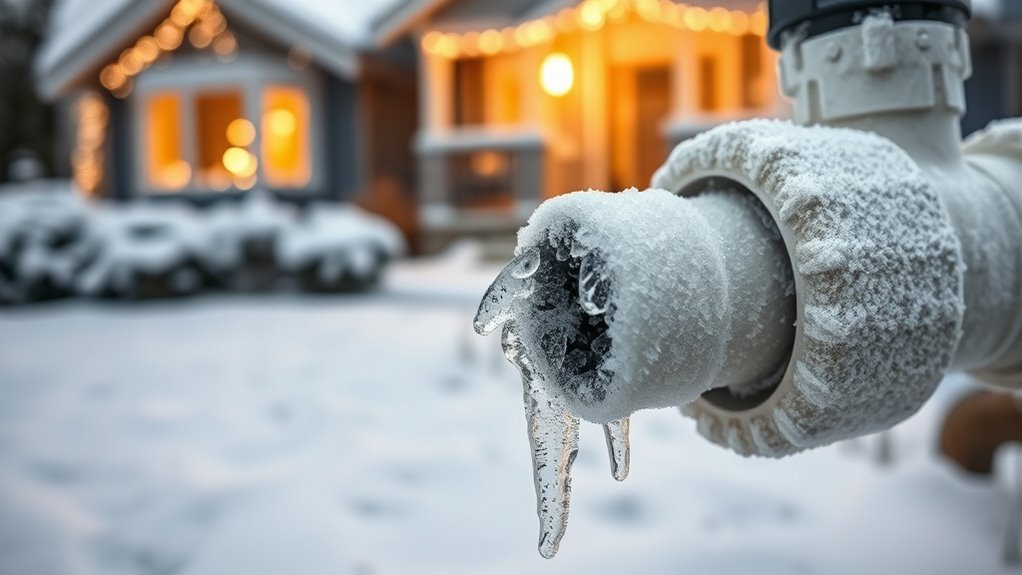

To prevent frozen pipes during winter, insulate vulnerable pipes in unheated areas with foam sleeves or wrap them tightly, securing with tape. Install pipe heating cables on exposed pipes and keep indoor temperatures above 55°F. Let faucets drip slightly, open cabinet doors, and keep garage doors closed if needed. Combining these tips helps protect your plumbing; discover more strategies to keep everything safe all winter long.
Listen free for 30 days with Audible
Thousands of audiobooks and originals — cancel anytime.
As an affiliate, we earn on qualifying purchases.
Key Takeaways
- Insulate vulnerable pipes in unheated areas with foam sleeves or wrapping to retain heat and prevent freezing.
- Install pipe heating cables on exposed or outdoor pipes to maintain safe temperatures during extreme cold.
- Keep garage doors closed, let faucets drip slightly, and open cabinet doors to circulate warm air around pipes.
- Set home thermostat no lower than 55°F and monitor weather conditions to adjust preventive measures accordingly.
- Combine insulation, active heating, and proper home management for comprehensive protection against frozen pipes.

Have you ever woken up to a burst pipe and faced costly repairs? If so, you know how disruptive and expensive frozen pipes can be. The good news is that you can take simple, effective steps to prevent this from happening. One of the most essential strategies involves proper insulation techniques. By insulating vulnerable pipes—especially those located in unheated areas like basements, attics, or garages—you create a barrier that helps retain heat and prevents the pipes from freezing. Foam pipe insulation sleeves or wrapping materials are affordable and easy to install. Wrap them tightly around the pipes, ensuring there are no gaps, and secure them with duct tape if needed. This simple step can considerably reduce the risk of freezing during cold snaps. Additionally, innovative materials are emerging that further enhance the effectiveness of insulation and can provide extra protection in extreme cold conditions.
Insulate vulnerable pipes in unheated areas to prevent freezing and costly repairs during winter.
In addition to insulation, consider installing pipe heating cables on pipes that are particularly exposed or prone to freezing. These cables act as a continuous source of heat, automatically turning on when temperatures drop below a certain point. They’re especially useful for outdoor pipes or those running through uninsulated walls. When you use pipe heating cables, you’re actively maintaining a safe temperature around the pipe, preventing ice formation even during severe cold weather. Remember to follow the manufacturer’s instructions carefully when installing these cables to ensure safety and effectiveness. Proper installation is vital for peak performance and to avoid electrical hazards.
Beyond insulation techniques and pipe heating cables, there are other proactive measures you can take. Keep garage doors closed if there are water supply lines inside, and let faucets drip slightly during extreme cold to relieve pressure and keep water moving. Opening cabinet doors under sinks can also allow warm indoor air to circulate around pipes, especially those on exterior walls. If you’re going away for an extended period, set your thermostat no lower than 55°F (13°C) to prevent indoor pipes from freezing. These small adjustments can make a big difference in maintaining a steady temperature and protecting your plumbing.
Ultimately, preventing frozen pipes requires a combination of insulation, active heating solutions, and thoughtful home management. Investing in quality insulation techniques and pipe heating cables offers peace of mind and can save you from expensive repairs down the line. By taking these precautions, you guarantee that the cold weather won’t catch you off guard and that your home’s plumbing remains safe and functional year-round.
Frequently Asked Questions
How Can I Tell if a Pipe Has Already Frozen?
You can tell if a pipe has frozen by feeling for unusual stiffness or a lack of water flow. Check for frost or ice on exposed pipes, especially in uninsulated areas. Use pipe insulation to prevent freezing and monitor the temperature around your pipes. If a pipe is frozen, it may feel firm or be cold to the touch. Acting quickly can prevent bursts and water damage.
What Materials Are Best for Insulating Pipes?
You might think all insulation works the same, but the truth is, pipe insulation types like foam, fiberglass, and rubber are your best bets for effective winter protection. These materials trap heat and prevent freezing. Use insulating techniques such as wrapping pipes snugly and sealing gaps. Don’t underestimate the power of proper insulation—it’s your first line of defense against burst pipes during cold snaps. Trust the right materials to keep water flowing smoothly.
Can Leaving a Faucet Dripping Prevent Freezing?
Yes, leaving a faucet dripping can prevent pipes from freezing. When you keep a small flow of water, it helps relieve pressure and prevents the water inside the pipes from solidifying. Combine this with proper pipe insulation to maximize protection. Dripping faucets work best for exposed or vulnerable pipes, especially during extremely cold nights, reducing the risk of costly pipe bursts and water damage.
How Do I Thaw a Frozen Pipe Safely?
Think of your frozen pipe as a trapped bird needing freedom—gentle and careful. To thaw it safely, turn on the faucet slightly, then apply heat using a hairdryer, heat tape, or a portable heater. Avoid open flames, which can cause damage. Make certain your pipe is insulated with pipe insulation or heat tape to prevent future freezes. Patience and gentle warmth will help you thaw your pipe safely and effectively.
What Are the Signs of a Burst Pipe After Freezing?
You’ll notice signs of a burst pipe when you see water leaking, water stains, or mold around walls and ceilings. Strange odors or decreased water pressure can also indicate damage. To prevent this, make certain your pipes are well-insulated with pipe insulation and keep an emergency kit handy for quick repairs. Regularly inspect your plumbing, especially during cold snaps, to catch issues early and avoid costly repairs.
Conclusion
If you take these simple steps to prevent frozen pipes, you’ll avoid costly repairs and winter headaches. Some say that a pipe bursting is just bad luck, but in reality, it’s often preventable with proper care. By staying proactive and keeping your pipes warm, you’re not just avoiding damage—you’re protecting your home and peace of mind. Remember, a little effort now can save you a lot of trouble later. Stay safe and warm this winter!
Flea & tick season Picks
flea and tick prevention
As an affiliate, we earn on qualifying purchases.